What Are List Crawlers? A Practical Guide
When we talk about how search engines and data aggregators explore the internet, we often focus on broad, top-level site scrapers. However, a specialized variation plays a massive role in organizing structured data: list crawlers. Whether you are an SEO professional, a web developer, or a data scientist, understanding how these automated systems work is essential for managing how your content is discovered and indexed.

In this guide, we will break down what list crawlers are, how they differ from traditional web scrapers, and how you can optimize your site to ensure these bots easily navigate your directory pages.
Understanding List Crawlers and Their Purpose
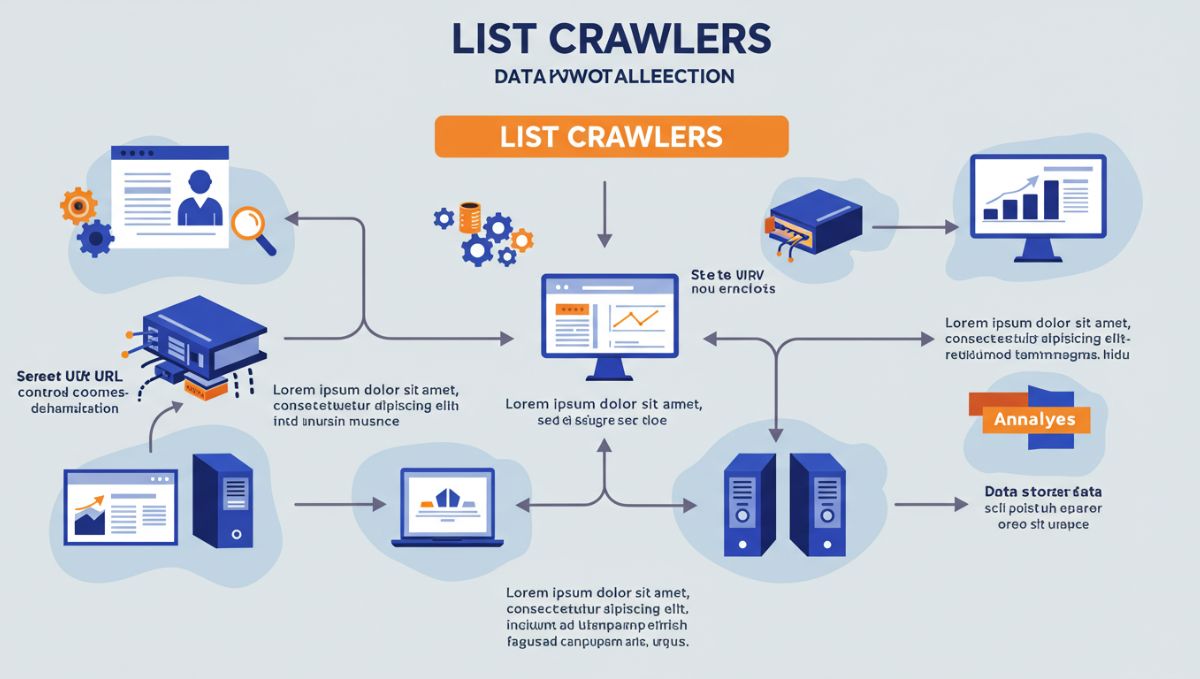
A list crawler is a targeted automated script or bot designed specifically to discover, extract, and process items from structured lists on the internet. Unlike a general-purpose crawler that wanders aimlessly from link to link across an entire website, a list crawler zeroes in on pages that contain enumerations, catalogs, directories, sitemaps, or pagination sequences.
These bots are heavily utilized by search engines, price comparison sites, real estate platforms, and job boards. Their primary goal is to parse collection pages—such as e-commerce category pages or blog index archives—and systematically pull every distinct item listed on those pages for further analysis or database storage.
How List Crawlers Differ From General Web Crawlers
While all web crawlers share the fundamental task of downloading HTML documents, their behavior and target patterns diverge:
- Scope of Focus: General crawlers map the entire topology of a website, following internal links indiscriminately. List crawlers specifically target URL patterns associated with catalogs, search results, and paginated archives.
- Pattern Recognition: List crawlers are often trained or programmed to recognize repetitive DOM structures (like unordered lists, tables, or grid cards) that signify a collection of distinct entities.
- Efficiency: Because they ignore peripheral content like sidebars, footers, and about pages, list crawlers operate with higher efficiency when harvesting structured data.
Key Components and Mechanics
To function effectively, a list crawler relies on a sequence of technical steps to ingest information without crashing target servers or getting trapped in infinite loops.
DOM Parsing and Pattern Detection
When a list crawler lands on a page, it analyzes the Document Object Model (DOM) to identify repetitive HTML tags. For instance, if a page features fifty products rendered inside identical <div class="product-card"> containers, the crawler recognizes this structural rhythm. It then extracts the target URLs, titles, prices, or descriptions associated with each item.
Handling Pagination and Infinite Scroll
Most lists span multiple pages. List crawlers must successfully navigate pagination mechanisms—such as numbered page links ("Page 1, 2, 3...") or "Load More" buttons powered by JavaScript. Advanced list crawlers simulate user clicks or API calls to scrape deep into multi-page directories without missing records.
Rate Limiting and Politeness

Responsible list crawlers respect a website's robots.txt file and implement delays between requests. Hammering a server with hundreds of rapid-fire requests to scrape a large directory can crash the host server, which is why proper rate limiting is a standard design requirement.
Common Use Cases Across Industries
List crawlers power numerous digital services that consumers use every single day. Here are the most prominent sectors where they operate:
- Search Engines: Major engines use them to process category pages and XML sitemaps, ensuring new blog posts or products are queued for deep crawling.
- E-Commerce Aggregators: Price comparison websites deploy list crawlers to continuously monitor product catalogs across dozens of online stores.
- Job Boards and Classifieds: Platforms aggregate job listings by crawling employment directories and real estate index pages.
- Lead Generation: B2B sales tools crawl business directory lists to compile contact databases and company profiles.
How to Optimize Your Website for List Crawlers
If you publish content in structured formats—such as an e-commerce store, a real estate site, or a blog archive—you want to make it as easy as possible for list crawlers to read your pages. Proper optimization ensures your content gets indexed faster and more accurately.
Use Semantic HTML Elements
Help bots understand your lists by using correct HTML markup. Instead of wrapping lists in generic <div> tags, utilize semantic tags:
- Use
<ul>and<ol>for standard lists. - Implement HTML5 structural elements like
<article>for individual items within a grid or catalog. - Ensure each list item contains clear, descriptive anchor texts (
<a href="...">) pointing to the detail pages.
Implement Clear Pagination and Canonical Tags
If your content spans multiple pages, avoid confusing crawlers with messy URL parameters. Use clean URL structures (e.g., /products?page=2 or /products/page/2/) and utilize rel="next" and rel="prev" link attributes where supported, alongside proper canonical tags to prevent duplicate content issues.
Maintain Up-to-Date XML Sitemaps
XML sitemaps act as the ultimate roadmap for crawlers. By organizing your category pages, product lists, and archive URLs in a clean sitemap submitted via Google Search Console or Bing Webmaster Tools, you guide list crawlers directly to the most valuable sections of your domain.
Conclusion
List crawlers are vital components of the modern web ecosystem, bridging the gap between massive index directories and individual content pages. By understanding how these automated systems parse HTML structures, handle pagination, and collect data, you can design better websites and structure your content for maximum visibility and indexing efficiency.