What Defines the Ideal Male Side Profile?
When we evaluate human facial aesthetics, we often focus on the front view. However, human interaction and perception rely heavily on profile views as well. The ideal male side profile has long been a subject of fascination in art, anthropology, and modern cosmetic science. While beauty is subjective and varies across cultures, certain geometric proportions and anatomical markers consistently emerge as universally appealing indicators of symmetry, health, and structural balance.
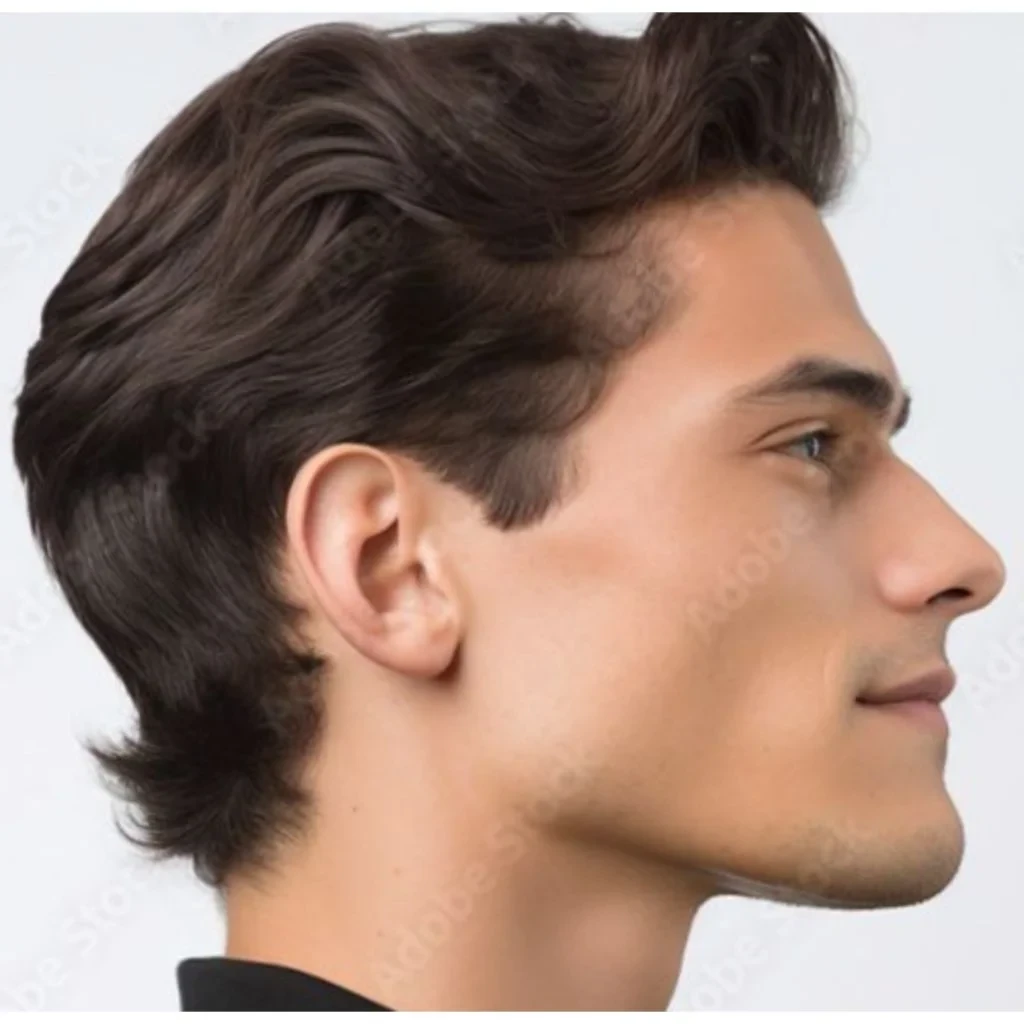
Achieving this balance is not about conforming to a single rigid standard. Instead, it involves an interplay of bone structure, soft tissue, and projection. Understanding these elements can help individuals appreciate facial anatomy or explore ways to enhance their features through non-surgical or surgical means.
Key Anatomy of the Ideal Male Side Profile
A balanced lateral view relies on how different facial thirds interact with one another. Unlike the frontal view, which emphasizes width and symmetry, the side profile highlights depth, projection, and angularity.
1. The Jawline and Gonial Angle
Perhaps the most prominent feature of a strong masculine profile is the jawline. A well-defined jaw creates a clear separation between the face and the neck. Anthropometric studies suggest that a sharp gonial angle—the point where the vertical ramus of the mandible meets the horizontal jawbone—is a hallmark of masculine facial structure. Ideally, this angle is crisp, hovering close to 90 to 110 degrees, avoiding a soft or obtuse transition that blends the chin into the neck.
2. Chin Projection and the Ricketts E-Line
The chin plays a critical role in anchoring the lower third of the face. In profile analysis, professionals often use the Ricketts E-line (aesthetic line) to measure harmony. This imaginary line extends from the tip of the nose to the most prominent point of the chin. In an ideal male profile, the lips should sit slightly behind this line, with the lower lip resting marginally closer to it than the upper lip. The chin itself should have strong forward projection, aligning vertically with the forehead and the base of the lower lip.
3. Nasal Structure and the Nasolabial Angle

The nose dictates the central silhouette of the face. An ideal male nose typically features a straight bridge (dorsum) with minimal to no dorsal hump. The tip should be well-defined and lifted slightly. The angle formed between the tissue beneath the nose and the upper lip—known as the nasolabial angle—generally measures between 90 and 95 degrees for men. This creates a sharp, defined transition rather than a drooping or excessively upturned nasal tip.
4. Brow Ridge and Forehead Slope
A prominent supraorbital ridge (brow bone) is another classic marker of masculinity driven by higher levels of testosterone during development. An ideal profile features a subtle slope of the forehead leading down to a defined brow ridge, which then casts a natural shadow over the eyes. This creates depth and intensity in the upper third of the face, contrasting with a flatter or more vertical female forehead.
The Role of Facial Harmony and Ratios
Individual features matter, but how they relate to one another is what truly defines an aesthetically pleasing profile. Facial planners and surgeons frequently look at vertical proportions:
- Upper Third: From the hairline to the eyebrows.
- Middle Third: From the eyebrows to the base of the nose.
- Lower Third: From the base of the nose to the chin.
In an ideal profile, these three thirds are balanced, though the lower third can sometimes possess slight dynamic dominance due to jaw development. Furthermore, the neck-to-chin length ratio is vital; a well-defined submental space (the area under the chin) with a sharp acute angle to the neck prevents the appearance of a "weak chin" or submental fullness.
How People Enhance Their Profile
Genetics dictate the vast majority of our bone structure, but modern aesthetic medicine and lifestyle changes offer ways to optimize what is already there.
- Weight Management: Reducing overall body fat percentage often reveals the underlying jawline and reduces submental fat beneath the chin.
- Non-Invasive Treatments: Dermal fillers can add projection to the chin or sharpen the jawline angles. Kybella or similar treatments can target localized fat under the chin.
- Orthodontic and Surgical Options: Jaw surgery (orthognathic surgery), genioplasty (chin augmentation), and rhinoplasty are permanent surgical methods used to correct functional and aesthetic imbalances in the side profile.
Ultimately, the ideal male side profile is less about perfection and more about structural harmony. When the brow, nose, lips, chin, and jawline work in unison, the result is a striking, balanced, and timeless aesthetic.