What Does DDLG Mean? A Guide to the Dynamic
When exploring alternative relationship structures and subcultures, you might come across terms that seem confusing at first glance. If you have ever wondered what does ddlg mean, you are looking at a specific type of consensual adult dynamic that combines elements of caregiving with roleplay. Understanding this concept requires looking past initial impressions to examine the definitions, relationship structures, and importance of consent.

What Does DDLG Mean in Relationships?
At its core, DDLG is an acronym that stands for 'Daddy Dom / Little Girl.' It is a specialized form of age play and a subset of BDSM (Bondage, Discipline, Dominance, Submission, Sadism, and Masochism) dynamics. Within this structure, two consenting adults agree to take on specific roles that mimic traditional caregiving and childhood, adapted for an adult relationship.
The dynamic is entirely voluntary and built on a foundation of trust, communication, and clear boundaries. While the terminology borrows familial and age-related words, it is strictly a consensual adult activity and should not be confused with or conflated with non-consensual behavior or real-world harm.
Defining the 'Daddy Dom' Role
The 'Daddy Dom' (or caregiver) is the dominant partner in the dynamic. This person takes on responsibilities similar to a protective mentor, guardian, or parent figure. Their role involves:
- Providing emotional and physical security
- Setting rules, boundaries, and structure for the relationship
- Nurturing, comforting, and taking care of the 'little' partner
- Encouraging personal growth, accountability, and positive behavior
Being a caregiver requires a high level of emotional intelligence, patience, and empathy. The dominant partner acts as a safe harbor, ensuring their partner feels valued and protected.
Defining the 'Little' Role
The 'Little' is the submissive partner in the dynamic. During designated times (often referred to as 'little space'), this person steps away from the stress, responsibilities, and decision-making of adult life. Characteristics of this role include:
- Engaging in childlike interests, such as coloring, watching cartoons, or playing with toys
- Wearing comfortable clothing, pacifiers, or specialized apparel
- Relinquishing control to the caregiver for a sense of relief and safety
- Expressing vulnerability and seeking comfort
Entering 'little space' acts as a form of escapism and emotional decompression for many practitioners, allowing them to process stress in a unique way.
How DDLG Dynamics Work in Practice
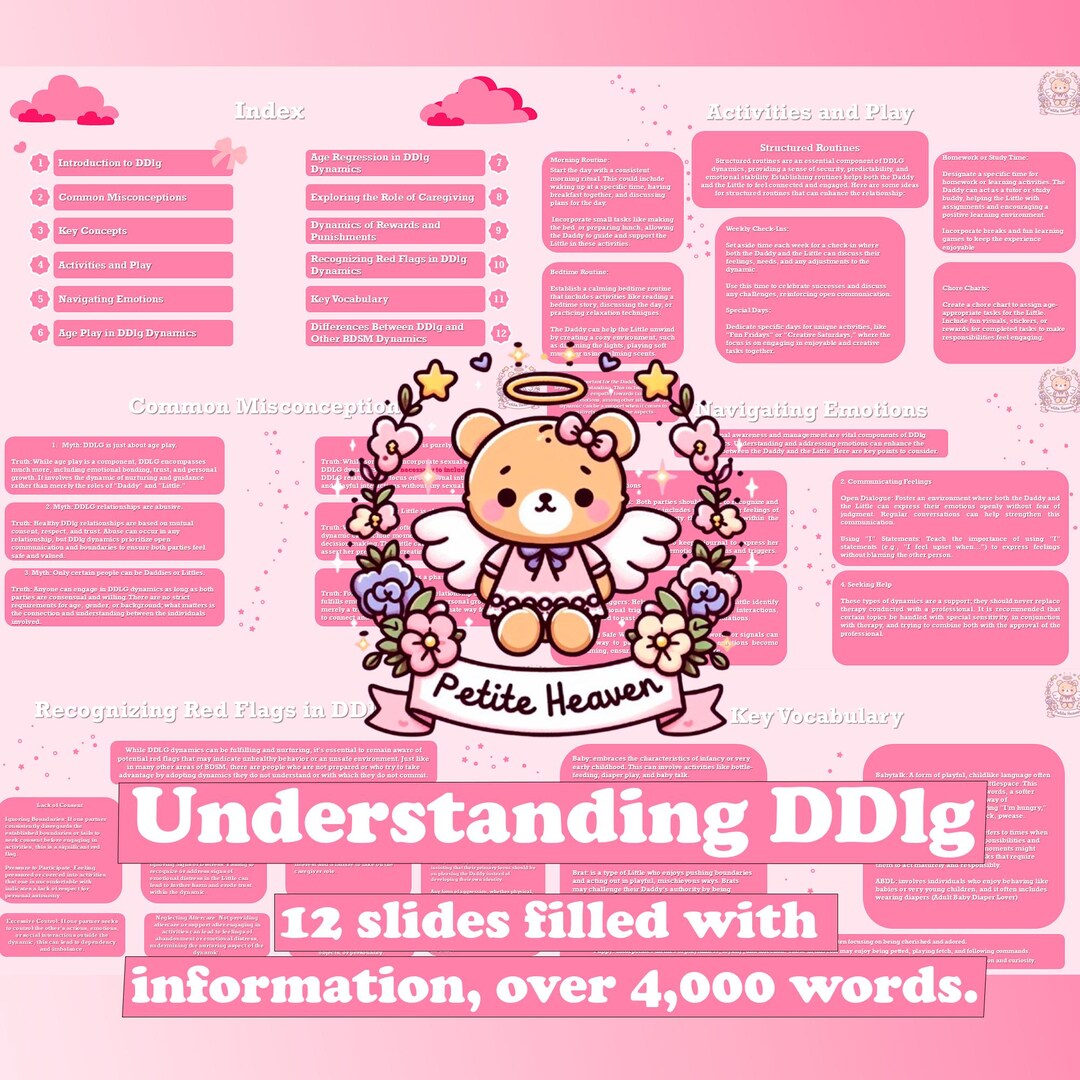
No two relationships are identical, and the way DDLG manifests depends entirely on the participants. Some couples integrate these roles into their daily lives 24/7, while others reserve these dynamics strictly for the bedroom or specific weekends.
A typical dynamic involves negotiation and rule-setting. The partners discuss what behaviors are expected, what rewards or consequences exist for breaking rules, and what hard limits must be respected. Communication is the engine that keeps the dynamic healthy, preventing misunderstandings and ensuring both partners feel fulfilled.
The Psychology Behind the Dynamic
Many people outside the subculture wonder why adults are drawn to this lifestyle. Psychologically, age play and caregiving dynamics often serve as coping mechanisms for stress, anxiety, or past trauma. For the 'little,' shedding adult responsibilities offers profound mental relief. For the caregiver, the satisfaction comes from nurturing, protecting, and seeing their partner thrive.
It is important to note that participating in these dynamics does not indicate a psychological disorder. For consenting adults, it is simply an unconventional way to experience intimacy, safety, and emotional connection.
Safety, Consent, and Boundaries
Because these dynamics involve power exchange and vulnerability, safety and consent are paramount. A healthy DDLG relationship relies on several key principles:
- Absolute Consent: Every aspect of the dynamic must be agreed upon by both adults. Consent can be revoked at any time.
- Safe Words: Just like in traditional BDSM, participants use safe words to instantly halt an activity if it becomes overwhelming or uncomfortable.
- Aftercare: After engaging in intense roleplay or emotional release, partners spend time reconnecting, offering physical comfort, and transitioning back to an egalitarian adult mindset.
By prioritizing open communication and mutual respect, practitioners ensure that the dynamic remains a positive, enriching part of their lives.
Conclusion
Understanding what DDLG means helps demystify an increasingly visible subculture. Far from being simple roleplay, it is a complex, consensual adult dynamic rooted in trust, emotional safety, and caregiving. Like any relationship structure, its success depends entirely on honesty, clear boundaries, and the mutual well-being of the participants involved.