What Does DOE on Salary Mean? Job Postings Explained
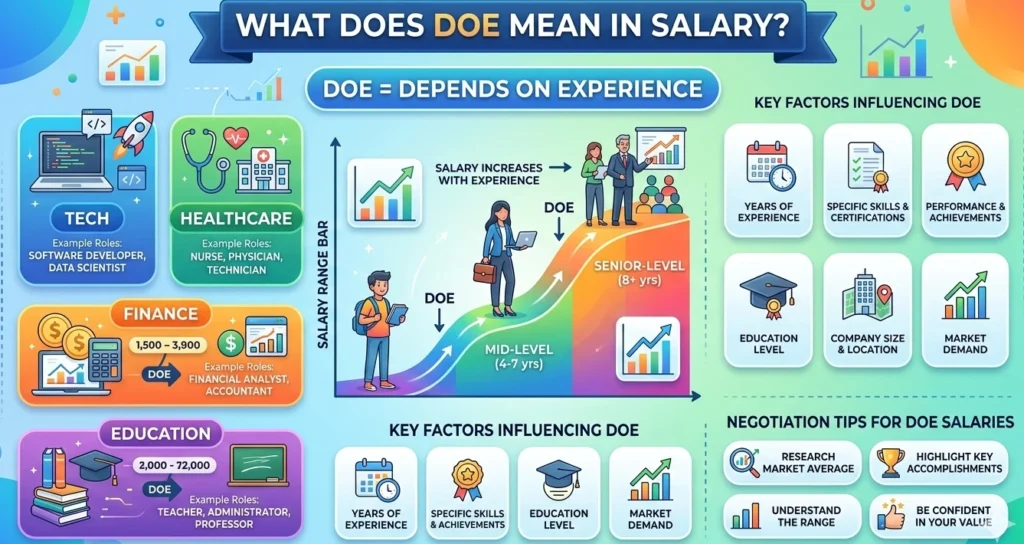
When browsing job boards, you will inevitably encounter acronyms and corporate shorthand that can be difficult to decipher. One of the most common terms you will see in compensation sections is DOE on salary. But what does it actually mean for your wallet, and how should you approach it during the application process?
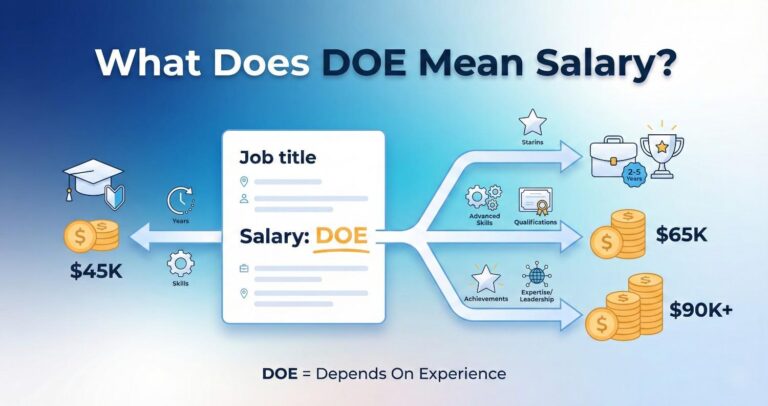
In short, DOE stands for "Dependent on Experience" (or sometimes "Depends on Experience"). When an employer lists a salary as DOE, it means they have not fixed a hard number for the position. Instead, the final compensation package will scale up or down based on how many years of relevant background, skill sets, and specialized knowledge the winning candidate brings to the table.
Why Do Companies Use DOE on Salary?
Employers do not use the DOE designation randomly. There are several strategic and practical reasons why a hiring manager chooses to leave a salary open-ended rather than posting a specific wage range.
Flexibility in Hiring
The primary reason companies use DOE is talent flexibility. A job description might attract a recent college graduate with minimal professional background, as well as a seasoned veteran with a decade of industry experience. By keeping the salary dependent on experience, the employer can hire either candidate without breaking their budget for the junior or turning away the senior professional with a lowball offer.
Budget and Market Competitiveness
Compensation trends shift rapidly. Employers use DOE to test the market and see what caliber of talent applies for the listed role. If they receive applications from high-level experts, they may adjust their internal budget upward to secure top-tier talent. Conversely, if the applicant pool leans junior, they can comfortably hire at a lower baseline rate.
Confidentiality and Internal Equity
Sometimes companies avoid posting exact salaries to prevent internal friction. If current employees doing similar work make a certain amount, posting a wide salary range protects internal morale while allowing the company to attract external talent at market rates.
The Pros and Cons of DOE Positions
Navigating job postings with open-ended compensation has distinct advantages and disadvantages for job seekers.
Video: What is doe salary

- Pro: High Earning Potential. If you possess rare skills or extensive experience, a DOE position gives you the room to negotiate a salary that genuinely reflects your worth, rather than being capped by an arbitrary company limit.
- Pro: Room for Growth. These roles often allow hiring managers to tailor the job responsibilities and compensation upward if your interview performance blows them away.
- Con: Lack of Transparency. The biggest drawback is uncertainty. You may invest hours into an application and multiple interview rounds only to discover the company’s maximum budget is far below your financial needs.
- Con: Negotiation Vulnerability. Without a posted salary range, you lack a benchmark, which can sometimes put you at a disadvantage during initial salary discussions.
How to Handle DOE in Your Job Search
Seeing a DOE salary tag shouldn't deter you from applying, but it does require a strategic approach. Here is how to handle it effectively from application to offer.
1. Research Industry Standards
Before applying or entering an interview, do your homework. Use platforms like Glassdoor, PayScale, LinkedIn Salary, and industry-specific surveys to determine the going rate for the role in your geographic area. Factor in your specific years of experience, certifications, and technical skills to arrive at a realistic market value.
2. Prepare Your Value Proposition
Because your pay will depend on your background, you need to make your resume and cover letter bulletproof. Clearly highlight quantifiable achievements, leadership roles, and specialized technical abilities that prove you sit on the higher end of the professional spectrum.
3. Bring Up Compensation at the Right Time
You don't want to waste weeks interviewing for a job that pays pennies, but you also don't want to price yourself out immediately. As a general rule, address salary during the initial phone screen with the recruiter. You can ask: "Before we move forward, could you share the approved budgetary range for this role to ensure our expectations align?"
4. Provide a Strategic Salary Range
If the recruiter pushes you to give a number first, never give a single flat figure. Instead, provide a well-researched salary range where your target number sits comfortably at the lower-middle end of the spectrum. For example: "Based on my eight years of experience and specialized background in project management, I am looking for a total compensation package between $85,000 and $95,000."
Conclusion
Encountering a DOE on salary listing simply means the employer is ready to pay for quality and wants flexibility in their hiring budget. While it requires a bit more research and caution than a transparent salary posting, it also opens the door for you to advocate for your true market value. By knowing your worth, doing thorough research, and communicating your value clearly, you can turn a vague DOE listing into a lucrative career opportunity.