What happens when your brain can’t distinguish “you” from “someone else”? This story predicts it
Every waking moment, your central nervous system performs an invisible miracle: it maintains the border between you and the rest of the universe. When someone across from you grimaces in pain, burns their hand on a mug, or bursts into tears, you register their state without absorbing it as your own flesh-and-blood experience. But what happens when your brain can’t distinguish “you” from “someone else”? This story predicts it with chilling precision, bridging the gap between speculative literature and cutting-edge cognitive neuroscience.
In 1992, Australian science fiction author Greg Egan published a visionary short story titled "Closer". Decades before modern neuroimaging could map the neural circuits of social agency, Egan mapped the existential horror of a mind stripped of its borders. By examining his narrative alongside modern clinical findings, we can understand why the neurological partition between "self" and "other" is not just a psychological convenience—it is the foundation of sanity.
The Narrative Lens: Greg Egan’s “Closer”
In Egan’s story, two lovers, Michael and Sian, seek total intimacy. Dissatisfied with the communicative limits of language and body language, they install a high-bandwidth digital conduit known as a "neural bridge." The bridge links their minds directly, feeding real-time sensory data, emotional impulses, and cognitive impressions back and forth across their cerebral hemispheres.
At first, the experience feels like transcendent empathy. They perceive the world through four eyes and feel each other's touch as a seamless feedback loop. But the experiment quickly decays into psychological collapse:
- Agency Dissolution: Michael tries to raise his left hand, but Sian's motor cortex is simultaneously preparing to sit still. The resulting motor command cancels itself out, leaving both bodies frozen.
- Desire Contamination: Michael cannot tell whether his sudden craving for a memory belongs to his childhood or Sian’s. Because desire requires an origin point, motivation completely evaporates.
- The Identity Cascade: When Michael asks himself, "Who am I?" the neural bridge relays the question to Sian, who mirrors it back as an echo. The distinct conscious agents blur into an unstable, turbulent feedback loop.
Egan’s thought experiment arrived at a profound conclusion: true union does not elevate consciousness; it dissolves it. Without a distinct boundary, the mind does not become infinite—it becomes noise.
The Neurology of the Border Patrol
Human beings do not require a futuristic neural bridge to experience ego dissolution. Our brains work relentlessly behind the scenes to maintain the "self-other boundary" through distinct neural structures.
1. The Right Temporoparietal Junction (rTPJ)
Located at the intersection of the temporal and parietal lobes, the rTPJ acts as the brain’s primary border guard. It integrates multisensory body signals with social cognition to determine agency—answering the basic biological question: "Did I cause that movement, or did someone else?"
When researchers temporarily disrupt the rTPJ using Transcranial Magnetic Stimulation (TMS), subjects display a degraded ability to separate their own bodily states from observed actions. They become hyper-susceptible to involuntary imitation and show impaired empathy, because true empathy requires knowing where you end and another person begins.
2. The Insula and Interoceptive Awareness
Your insular cortex maps internal visceral states: your heartbeat, gut motility, core temperature, and respiration. These internal signals provide the subconscious substrate of the "material self." When the brain cross-references external visual inputs with its own internal interoceptive signals, it confirms that your body is yours alone.
3. The Mirror Neuron System
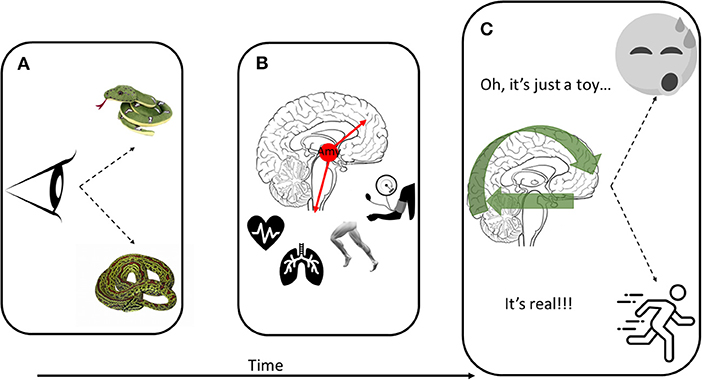
First identified in the premotor cortex and inferior parietal lobule, mirror neurons fire both when you execute an action and when you observe someone else executing it. Under normal conditions, inhibitory neural mechanisms suppress mirror activity just enough so that observing a kick does not cause your own leg to swing. If those inhibitory brakes fail, the line between observation and experience collapses.
What Happens When Your Brain Can’t Distinguish “You” from “Someone Else”? This Story Predicts It in Modern Medicine
Egan's fictional scenario is played out daily in neurological clinics around the world, most vividly in conditions where self-other distinctions fail.
Mirror-Touch Synesthesia: The Burden of Shared Sensation
Roughly 1.6% of the population lives with mirror-touch synesthesia (MTS). In people with MTS, seeing someone touched on their shoulder triggers an authentic, localized tactile sensation on their own body. In extreme cases, like that of neurologist Dr. Joel Salinas, observing physical distress triggers phantom trauma:
- Seeing a patient receive an injection causes an acute, piercing pain in the physician's own arm.
- Observing someone collapse into cardiac arrest can cause the synesthete's blood pressure to plummet, accompanied by visceral chest compression.
Neuroimaging reveals that mirror-touch synesthetes exhibit reduced grey-matter volume in the rTPJ and hyper-connectivity within the somatosensory and insular cortices. Their brains fail to suppress the sensory feedback of others, creating exactly the boundary crisis Egan described: social observation becomes involuntary physical reality.
The Rubber Hand Illusion and Embodiment Hacks
Cognitive psychologists can reliably trick healthy brains into absorbing external objects into their self-model using the famous "rubber hand illusion." By hiding a subject’s real hand out of sight while stroking both it and a visible rubber hand in identical synchrony, the brain resolves the sensory mismatch by adopting the rubber hand as its own flesh.
Neuroscientist Henrik Ehrsson expanded this paradigm using virtual reality head-mounted displays, creating full-body swap illusions. When participants look down and see another person's body being touched in real time while feeling corresponding touches on their own body, the brain rapidly re-anchors the ego inside the other person. Within seconds, participants react with visceral panic if the other body is threatened with a knife.
The Psychological Toll of Boundary Collapse
Evolutionary biology did not give us ego boundaries to make us selfish; it gave us ego boundaries to keep us operational. When self-other distinction breaks down, several catastrophic cognitive shifts take place:
- Decision Paralysis: If your goals cannot be isolated from the goals of those around you, executive function stalls. Autonomous agency requires an insulated workspace in the prefrontal cortex.
- Emotional Contamination: Without an intact border, other people's trauma, panic, and manic states flood your limbic system. Empathic distress replaces constructive compassion, leading to severe autonomic exhaustion.
- The Passivity Phenomenon: In psychiatric conditions such as schizophrenia, the breakdown of agency attribution leads to delusions of control—the terrifying sensation that one's thoughts, limbs, and choices are being piloted by an external entity.
Empathy Requires Distance
Society often treats self-interest and individuality as barriers to true connection, romanticizing the concept of total union. But science and speculative fiction both warn us of the opposite truth: meaningful connection requires two distinct entities.
To love someone, to comfort someone, or to help someone in pain, your brain must recognize that their suffering is occurring outside your own biological framework. Greg Egan’s "Closer" predicted that when you erase the wall between minds, you do not double the depth of human experience. You destroy the observer entirely.