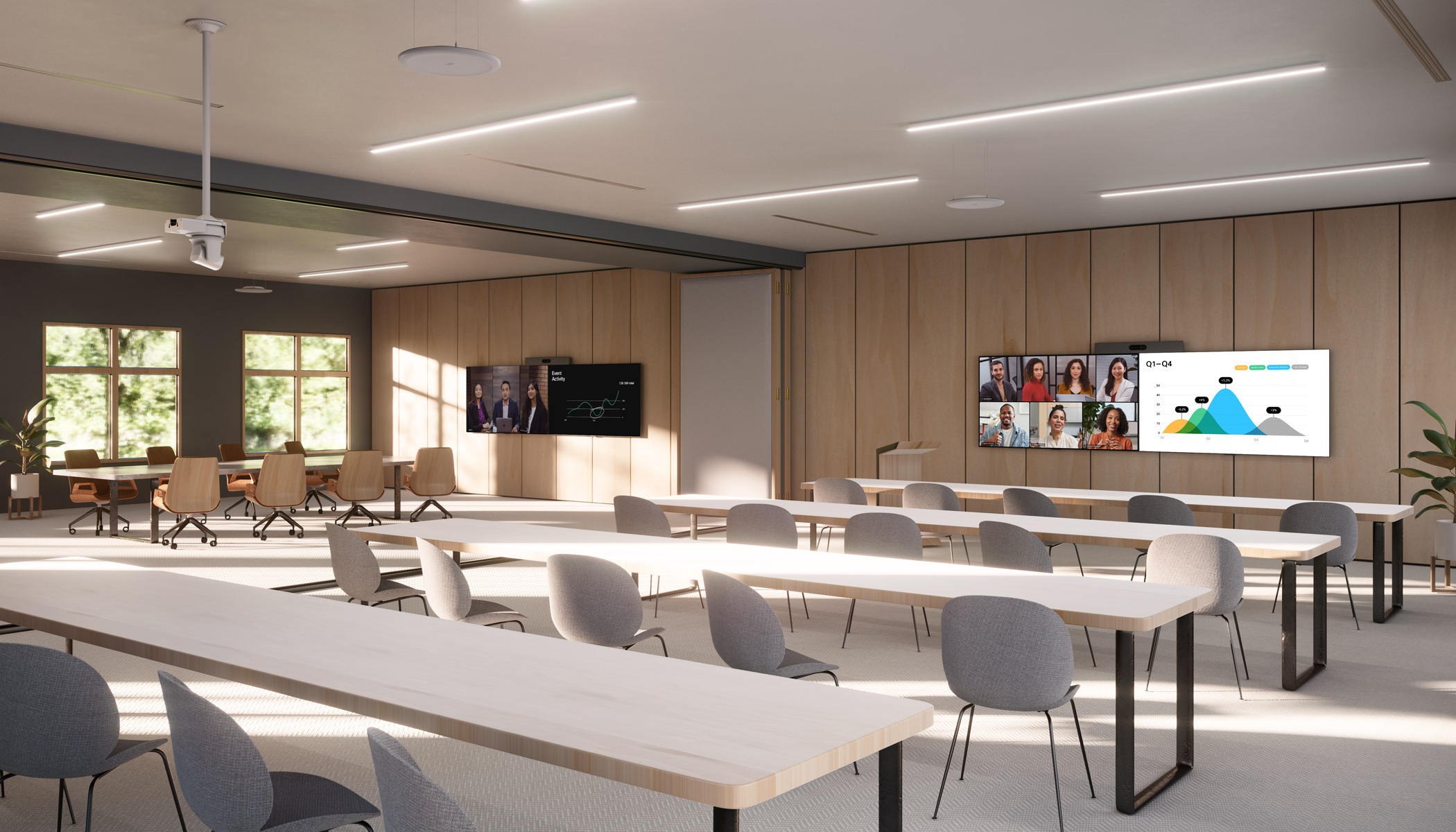
What Industry Leaders Are Saying About Zoom PNP Rooms
As enterprise hybrid work strategies mature, IT and facilities executives face mounting pressure to video-enable hundreds of physical meeting spaces without ballooning operational costs or overwhelming local support teams. In response, plug-and-play room architectures have surged in popularity. Examining what industry leaders are saying about Zoom PNP Rooms provides critical clarity for technology directors, AV specialists, and operations leads evaluating whether turnkey appliance solutions can truly replace traditional, custom-integrated conference setups.

The Evolution of Modern Conference Room Deployments
For decades, enterprise meeting rooms relied on bespoke audio-visual integration. These legacy setups typically featured discrete components: a dedicated PC or Mac mini hidden behind a display, separate DSPs (digital signal processors), ceiling-mounted microphone grids, dedicated pan-tilt-zoom cameras, and complex third-party control systems. While powerful, these rooms were notoriously expensive, slow to build out, and difficult to troubleshoot remotely.
Plug-and-play (PNP) Zoom Rooms—frequently deployed as all-in-one video bars or certified modular bundles—combine compute, camera, speaker, and microphone arrays into a single, unified hardware profile. By pairing appliance-mode operating systems with zero-touch cloud provisioning, IT departments can commission high-fidelity spaces in minutes rather than weeks.
What Industry Leaders Are Saying About Zoom PNP Rooms
Industry analysts, Chief Information Officers, and unified communications (UC) architects generally praise the shift toward PNP models, citing three recurring themes: deployment velocity, total cost reduction, and predictable end-user experiences.
1. Deployment Velocity at Global Scale
Leading enterprise systems architects emphasize that the primary value proposition of PNP rooms is standardized deployment. Historically, opening a satellite office required sending specialized field engineers on-site. Today, pre-configured hardware tied to Zoom Device Management (ZDM) allows non-technical local staff to mount a bar, plug in power and Ethernet, and bring the room online within twenty minutes.
Analysts from research firms like Metrigy and Wainhouse have noted that companies refreshing several hundred huddle and focus rooms simultaneously consider PNP hardware the only practical way to hit aggressive real estate timelines without hiring third-party integration contractors for every site.
2. Reductions in Total Cost of Ownership (TCO)
Cost discussions around Zoom PNP rooms extend far beyond the initial bill of materials. While an all-in-one bar is substantially less expensive than modular AV racks, finance and IT leaders report that the deepest savings manifest across ongoing lifecycle management:
- Reduced Cable Failure Points: Single-cable (PoE or USB-C) architectures drastically lower the number of physical connections that can degrade or loosen over time.
- Centralized Fleet Management: Hardware telemetry feeds directly into Zoom's administrative portal, allowing global IT desks to push firmware patches, monitor device health, and reboot hardware without field dispatches.
- Lower Power Consumption: Efficient appliance-mode chipsets consume a fraction of the electricity drawn by continuous desktop PCs running alongside external AV matrix switches.
3. Meeting Equity and User Adoption
Workplace experience executives frequently highlight how PNP systems reduce user friction. When conference rooms feature disparate hardware configurations, employees waste the first five to ten minutes of every collaborative session fiddling with HDMI inputs, audio switches, and camera angles.

Zoom Rooms running on certified PNP appliances present an identical interface across every room, regardless of square footage. Furthermore, built-in computational audio and multi-stream camera capabilities (such as Zoom's Smart Gallery) ensure that remote team members can clearly see and hear in-room attendees, leveling the collaborative playing field between remote and in-office participants.
Where Enterprise Leaders Urge Caution
Despite overwhelmingly positive sentiment, veteran AV consultants and enterprise technologists maintain that Zoom PNP setups are not an absolute panacea. Understanding their limitations prevents costly deployment errors.
Acoustic Boundaries in Large Spaces
While an all-in-one PNP bar excels in huddle, small, and medium spaces (up to roughly 10–12 seats), leaders caution against forcing them into expansive boardrooms or auditoriums. Integrated beamforming microphones have physical capture limits. In rooms with high ceilings, hard glass walls, or excessive ambient HVAC noise, enterprise leaders still advocate for dedicated acoustic ceiling tiles, distributed mic pods, and external DSP processing.
Hardware Lock-In and Appliance Limitations
Another talking point among UC directors is operating system flexibility. Traditional PC-based Zoom Rooms offer deep flexibility for custom peripherals and specialized drivers. Running an appliance-mode PNP device means relying strictly on the manufacturer's firmware cadence and certified feature set. While this guarantees stability, it can occasionally delay access to edge-case experimental features or restrict the use of niche third-party legacy hardware.
Key Hardware Vendors Powering the PNP Ecosystem
The conversation among industry leaders is tightly linked to the rapid innovation delivered by certified hardware manufacturers. Leading platforms include:
- Neat (Neat Bar, Neat Board): Highly praised for sleek Scandinavian design, robust environmental sensors, and native, deeply integrated Zoom software execution.
- Logitech (Rally Bar, Rally Bar Mini): Commended by global IT teams for exceptional supply chain availability, right-sight auto-framing, and compatibility with both Android appliance and PC-attached modes.
- Poly / HP (Studio X Series): Preferred in enterprise sectors requiring military-grade acoustic fencing and advanced noise-cancellation algorithms.
- Yealink: Recognized for exceptional price-to-performance ratios and modular expansion capabilities in rapidly growing organizations.
Strategic Best Practices for IT Decision-Makers
If your organization is planning an estate-wide refresh utilizing Zoom PNP architecture, enterprise peers recommend following a structured rollout methodology:
- Audit Room Dimensions and Reverberation: Map your real estate footprint by room size and material surfaces. Reserve PNP bars for standard focus, huddle, and medium conference rooms; deploy modular or hybrid solutions in executive boardrooms.
- Mandate Hardwired Network Connections: While most PNP devices support Wi-Fi, leaders uniformly advise running dedicated Cat6 PoE connections to prevent latency, packet loss, and jitter during video calls.
- Leverage Zero-Touch Activation: Utilize Zoom Device Management to pre-assign room profiles and licenses based on device MAC addresses before hardware ever ships to regional offices.
- Standardize Peripherals: Select a single primary vendor (or a maximum of two) across your entire footprint to simplify administrative training, warranty management, and sparing strategies.
The Final Verdict
The enterprise consensus is clear: Zoom PNP Rooms represent the modern baseline for enterprise collaborative spaces. By eliminating the friction of custom AV integration and streamlining lifecycle management, plug-and-play room solutions allow organizations to scale video enablement rapidly while keeping IT overhead tightly under control.