What Is E120 Ingredient? Source, Safety & Uses
If you have ever checked the back of a strawberry yogurt pot, a packet of red gummy candies, or a tube of lipstick, you may have spotted the e120 ingredient listed among the components. Despite its widespread presence in modern consumer goods, many shoppers are surprised to discover where this intensely vibrant red colorant actually comes from.
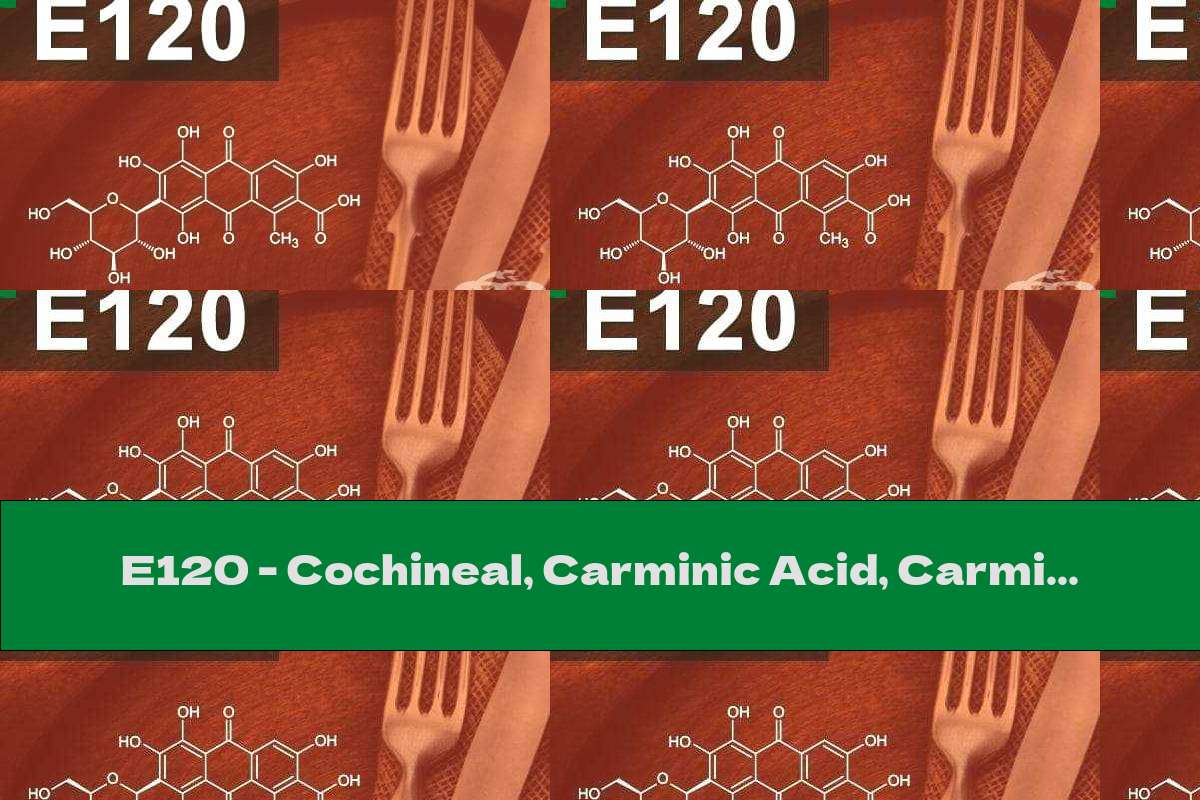
E120 is one of the oldest natural pigments in human history, valued for centuries for its heat stability, resistance to light, and brilliant crimson hue. However, because of its unique biological origin, it frequently sparks questions regarding allergies, safety, and suitability for specific diets.
What Is the E120 Ingredient Made From?
The E120 additive—widely known as carmine, carminic acid, or cochineal extract—is a natural crimson pigment derived from the female cochineal insect (Dactylopius coccus). These tiny scale insects are native to tropical and subtropical South America and Mexico, and they feed primarily on the moisture and nutrients of prickly pear cacti (Opuntia species).
The insect produces carminic acid as an internal chemical defense to deter predatory insects. To produce the commercial dye:
- Female cochineal insects are cultivated on cactus plantations or harvested from the wild, mostly in Peru, the Canary Islands, and parts of Mexico.
- The insects are dried using sunlight, ovens, or steam.
- Once dried, they are crushed into a fine powder and immersed in an aqueous, alkaline solution to extract the deep red carminic acid.
- The resulting liquid is treated with aluminum and calcium salts to precipitate the pigment, forming a stable, water-insoluble compound known as carmine lake (or purified into soluble cochineal extract).
It takes roughly 70,000 dried cochineal insects to produce just one pound (around 450 grams) of carmine dye. Because the pigment does not easily degrade when exposed to heat, stomach acid, or UV light, it remains one of the food and cosmetic industries’ most reliable natural red colorants.
Other Names for E120 on Product Labels
Depending on where you live and the category of product you are buying, food and cosmetic manufacturers may list E120 under several different names. In the European Union, the "E-number" system is the standard classification, but global regulations vary.
- Carmine or Carmines
- Cochineal or Cochineal Extract
- Carminic Acid
- Natural Red 4
- CI 75470 (standard terminology in cosmetics and personal care products)
- Crimson Lake
If you are trying to spot or avoid this additive, checking for both "E120" and "carmine" on ingredient labels is essential.
Common Foods and Products Containing E120
Because E120 provides a stable pink, red, or deep purple shade, manufacturers across multiple sectors rely on it to enhance appearance.
Processed Foods and Beverages
- Dairy products: Fruit yogurts, strawberry milk drinks, processed cheeses, and ice creams.
- Confectionery: Red licorice, hard candies, chewy sweets, cake icings, and gummy bears.
- Processed meats: Sausages, hot dogs, salamis, and pâtés, where the dye maintains a fresh, pinkish-red meat hue over extended shelf lives.
- Beverages: Ruby red grapefruit juices, berry-flavored soft drinks, syrups, and alcoholic aperitifs (such as historically in Campari).
- Bakery items: Red velvet cake mixes, donut glazes, and fruit fillings.
Cosmetics and Personal Care
In cosmetics, carmine is favored because it does not smudge easily and provides unmatched depth of color. It is routinely used in:
- Lipsticks, lip stains, and lip glosses
- Blushes and bronzers
- Eyeshadows and eyeliners
- Nail polishes
Pharmaceuticals
Many pharmaceutical companies use E120 as a coating agent to give tablets, capsules, and medicinal cough syrups an identifiable red or pink appearance.
Is the E120 Ingredient Safe to Consume?
Major food safety agencies around the world, including the European Food Safety Authority (EFSA) and the U.S. Food and Drug Administration (FDA), classify E120 as safe for general human consumption. It does not carry the behavioral or hyperactivity concerns sometimes linked to synthetic petrochemical dyes like Allura Red (Red 40).
However, safety evaluations highlight two specific considerations: acceptable daily intake and allergic potential.
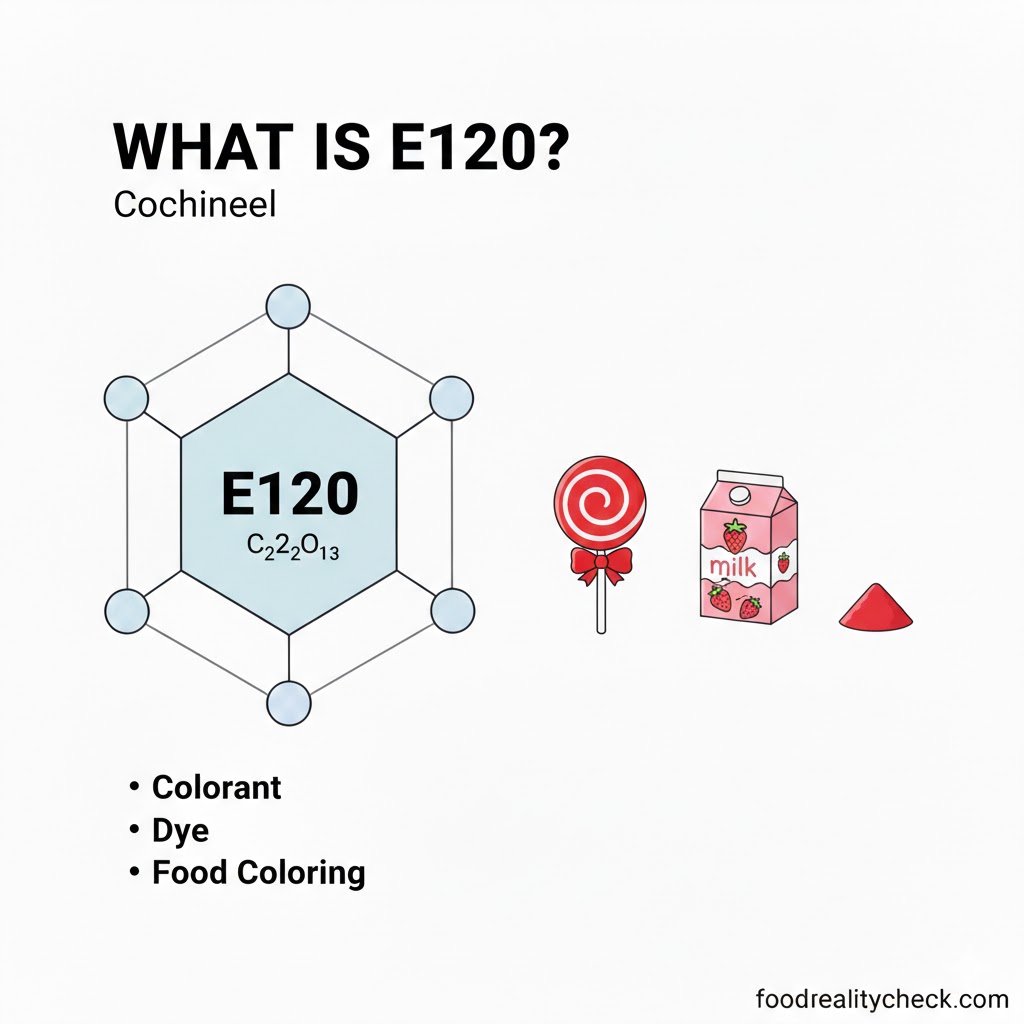
Acceptable Daily Intake (ADI)
The EFSA has established an Acceptable Daily Intake (ADI) for carmines of 2.5 mg per kilogram of body weight per day. Standard consumer exposure falls comfortably below this threshold in regular diets.
Allergic Reactions and Hypersensitivity
The primary medical concern surrounding E120 is its ability to trigger allergic reactions in sensitive individuals. The reaction is not caused by the carminic acid itself, but rather by residual insect proteins that remain in the pigment after processing.
Reactions can range from mild contact dermatitis, facial swelling, and hives to severe respiratory reactions such as asthma, wheezing, and—in rare instances—anaphylaxis. Because of these documented risks, both the FDA and EU authorities require clear labeling of carmine and cochineal on consumer goods so that allergic individuals can avoid exposure.
Dietary and Ethical Considerations: Vegan, Halal, and Kosher
Beyond safety and allergies, the insect-based origin of E120 poses substantial ethical and religious dilemmas for consumers adhering to specific dietary frameworks.
Vegetarian and Vegan Diets
E120 is strictly not vegan and not vegetarian. Because it is manufactured from dried insects, anyone following a plant-based diet must avoid products containing E120, carmine, or cochineal.
Kosher Status
Under traditional Jewish dietary laws (Kashrut), insects are generally considered non-kosher (treif). While some historical rabbinical opinions debated whether the chemical transformation during processing rendered the pigment neutral, modern kosher certifying bodies overwhelmingly prohibit carmine and decline to certify foods containing E120.
Halal Status
Within Islamic dietary jurisprudence, there is a divergence of opinion. According to most schools of Islamic law (including Hanafi), consuming insects is forbidden (haram), making E120 unsuitable. However, the Maliki school permits the consumption of certain non-harmful insects like cochineal under specific conditions. As a result, certain regional halal authorities allow it, while others ban it outright. Muslim consumers seeking strict adherence generally avoid products with carmine.
Natural and Synthetic Alternatives to E120
Due to consumer demand for plant-based, allergen-free, and cruelty-free options, food and cosmetic manufacturers increasingly use alternatives to replace E120.
- Beetroot Red (E162 / Betanin): Derived directly from red beets. It yields a strong magenta-to-pink shade. However, it is sensitive to high processing temperatures and degrades faster in sunlight than carmine.
- Anthocyanins (E163): Water-soluble pigments extracted from red cabbage, black carrots, grapes, or berries. They produce shades ranging from red to purple, though their color shifts depending on the food’s acidity (pH).
- Lycopene (E160d): Extracted from tomatoes or fermented fungi, lycopene provides an intense warm red or orange-red shade and holds up well against heat.
- Paprika Extract (E160c): A natural plant extract that offers warm orange-to-red hues, though it must be carefully filtered to remove distinct peppery flavors.
- Allura Red AC (Red 40 / E129): A synthetic, petroleum-derived dye widely used in North America. While vegan and free from insect proteins, it faces criticism from consumers seeking clean-label, non-synthetic ingredients.
How to Avoid E120 in Your Everyday Shopping
If you want to eliminate E120 from your diet or beauty routine, follow these practical steps:
- Read the full ingredient statement: Look beyond front-of-package marketing terms like "all-natural flavors" or "naturally colored." Check the ingredient list specifically for E120, carmine, carminic acid, or cochineal extract.
- Look for certified vegan labels: Products displaying certified vegan trademarks (such as the Vegan Society logo or the V-Label) are guaranteed to be 100% insect-free.
- Examine cosmetics carefully: In personal care, look out for CI 75470, particularly in red, pink, or plum lip products and blushes.
- Be alert with red and pink foods: Pay closest attention to processed meats, fruit-flavored dairy products, and red confectioneries, which historically rely on carmine for shelf-stable coloring.
By understanding what the E120 ingredient is and knowing where it appears, you can make clear, informed purchasing decisions that match your health needs, ethical principles, and dietary choices.


