What Is Grit? The Secret to Long-Term Success
We have all met people who seem effortlessly brilliant. They breeze through school, pick up complex skills in a matter of weeks, and look like naturals at everything they try. Yet, years later, many of these same prodigies stall out, while peers with more modest starting abilities pull far ahead. Why does this happen? The answer often comes down to a single psychological trait: grit.

Popularized by psychologist Angela Duckworth, grit is defined as passion and sustained perseverance applied toward long-term goals. It is not about sprinting through a short-term crisis; it is about running a marathon where the finish line is years—or even decades—away. In a world obsessed with overnight success and natural talent, grit provides the staying power required to turn ambitious visions into reality.
Understanding the Anatomy of Grit
To understand how grit operates, we need to look at its two core components: passion and perseverance. Neither component works effectively without the other.
- Passion: This is not about fleeting enthusiasm or a sudden hobby. True grit involves consistency of interests. It means having a North Star—a deeply meaningful goal that you care about deeply over a long period.
- Perseverance: This is the ability to withstand hardship, boredom, failure, and stagnation. It is getting back up after a setback and refusing to let temporary obstacles derail your ultimate direction.
Psychologists often measure this trait using the Grit Scale, a self-assessment tool that asks questions about how your interests change over time and how you handle adversity. High scorers are those who can maintain focus on the same ultimate objective even when progress is agonizingly slow.
Grit vs. Talent: Which Matters More?
For generations, society operated on the assumption that success was primarily a byproduct of innate talent. Schools selected for IQ, corporations hired based on pedigree, and cultural narratives celebrated the untouchable genius.
However, research consistently shows that talent only gets you so far. Duckworth famously expressed this through two simple equations:
- Talent $ imes$ Effort = Skill: Talent is how quickly your skills improve when you invest effort.
- Skill $ imes$ Effort = Achievement: Skill is what you can do when you use your trained abilities.
Notice that effort appears in both equations. Effort counts twice. Without effort, talent remains nothing more than unmet potential. A talented individual who quits at the first sign of frustration will always be outperformed by a less naturally gifted person who refuses to give up.
How to Build More Grit in Your Life
Unlike fixed biological traits like eye color or height, grit is a psychological muscle. It can be trained, strengthened, and applied to almost any area of your life, whether you are trying to build a business, master an instrument, or improve your health.
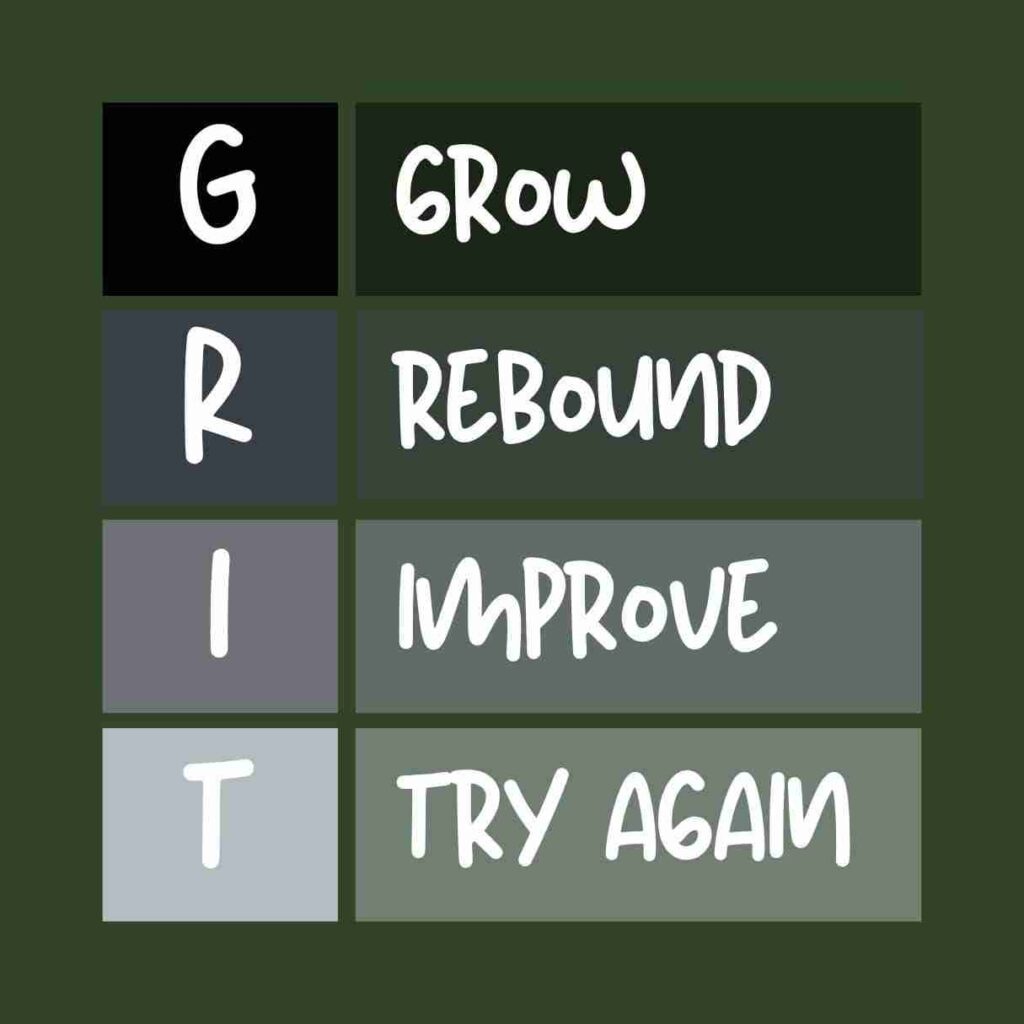
1. Cultivate a Growth Mindset
Rooted in the research of Carol Dweck, a growth mindset is the belief that your abilities and intelligence can be developed through dedication and hard work. People with a fixed mindset believe talent is static, making failure a devastating blow to their self-worth. People with a growth mindset view failure simply as information—feedback on what needs to change.
2. Find Your Ultimate Purpose
It is nearly impossible to maintain long-term perseverance for something you do not genuinely care about. Connect your daily tasks to a larger purpose. Ask yourself: Who does this help? Why does this matter? When your work aligns with your deepest values, endurance becomes much easier to muster.
3. Practice Deliberate Practice
Grit is not just about grinding mindlessly for hours; it is about quality of effort. Adopt the principles of deliberate practice by identifying your weaknesses, setting hyper-specific micro-goals, seeking immediate feedback, and pushing past your comfort zone daily.
4. Build Psychological Resilience
Setbacks are guaranteed. Whether you face rejection, financial strain, or personal loss, resilient individuals reframe adversity. Instead of asking, 'Why is this happening to me?' they ask, 'What can I learn from this?' Developing emotional regulation helps you bounce back faster from temporary defeats.
The Bottom Line
Talent opens doors, but grit keeps you in the room. By shifting your focus away from how 'natural' you are at something and toward how consistently you can show up, practice, and learn, you unlock a profound capacity for enduring achievement. Start small, pick a meaningful goal, and commit to playing the long game.