What Is Multimedia Messaging Service (MMS)?
What Is Multimedia Messaging Service (MMS)?

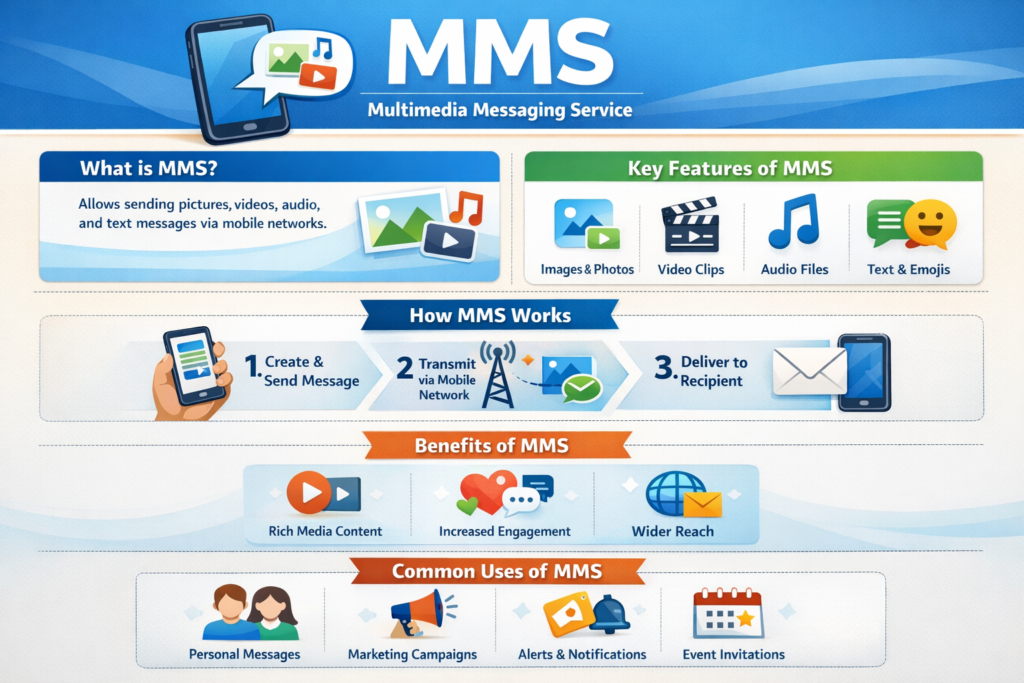
Multimedia Messaging Service (MMS) is an evolution of the traditional Short Message Service (SMS) text messaging standard. While SMS is restricted to plain text up to 160 characters, MMS allows mobile phone users to send and receive rich media content over cellular networks. This includes photographs, animated GIFs, short video clips, audio files, and vCards.
Introduced globally in the early 2000s alongside the rollout of 2G and 3G networks, MMS transformed mobile phones from simple voice-and-text devices into pocket-sized multimedia centers. Today, it remains an essential component of personal and commercial mobile communication, bridging the gap between basic text messages and data-heavy messaging apps like WhatsApp or iMessage.
How MMS Technology Works
Unlike internet-based messaging apps that require a Wi-Fi or cellular data connection to transmit media via VoIP protocols, MMS operates entirely through cellular carrier networks. When you hit send on a multimedia message, the process involves several distinct steps behind the scenes:
- Content Assembly: Your device packages the text, image, or video into a single file payload.
- Carrier Routing: The phone sends the message to your cellular provider's Multimedia Messaging Service Center (MMSC).
- Temporary Storage: The MMSC stores the media file temporarily and determines the recipient's mobile network operator.
- Delivery Notification: The MMSC sends a WAP (Wireless Application Protocol) push notification to the recipient's device containing a URL link to the stored media.
- Download: The recipient's phone automatically downloads the media file from the URL using either cellular data or mobile internet settings.
Because MMS relies on carrier networks, sending and receiving these messages traditionally required a mobile data plan, even though they bypass internet-based applications.
SMS vs. MMS: Key Differences
Understanding the distinctions between SMS and MMS helps users and marketers choose the right channel for their communication goals. While both use the carrier's cellular network rather than the internet, their capabilities vary significantly:
- Character Limit: SMS is strictly capped at 160 characters per message segment. MMS supports up to 1,600 characters (depending on the carrier), allowing for much longer, more detailed messages.
- Media Support: SMS cannot handle images, audio, or video. MMS natively supports JPEGs, PNGs, GIFs, MP3s, and MP4s.
- Cost: Historically, carriers charged significantly more for sending MMS compared to standard SMS, though most modern unlimited plans include both at no extra per-message cost.
- Group Messaging: MMS enables seamless group chat functionality across mixed operating systems (such as Android and iOS), ensuring all participants receive replies in a single thread.
Advantages of Using MMS
Despite the dominance of internet-based messaging apps, MMS offers unique advantages that keep it relevant for both consumers and enterprises.

Universal Accessibility
Unlike third-party applications like Telegram, Signal, or Facebook Messenger, MMS works out of the box on virtually every mobile phone with a cellular connection. The recipient does not need to download a specific app, create an account, or be connected to the internet to view the message.
Higher Engagement Rates in Marketing
In the realm of mobile marketing, MMS outperforms standard SMS significantly. Studies show that text messages containing rich media enjoy higher open rates and click-through rates. Brands use MMS to send coupons with barcodes, product lookbooks, event invitations, and promotional videos directly to a consumer's lock screen.
Limitations and Drawbacks
While versatile, MMS comes with certain technical limitations that users and developers must keep in mind:
- File Size Restrictions: Most carriers limit individual MMS file sizes to between 300 KB and 1 MB. Sending high-resolution photos or long videos requires compression, which can degrade media quality.
- Delivery Variability: Because MMS relies on carrier routing and varying network speeds, delivery can occasionally be delayed compared to instant internet-based messaging.
- Carrier Compatibility Issues: Cross-carrier multimedia messaging can occasionally experience glitches, resulting in failed deliveries or heavily compressed, pixelated images.
The Future of MMS in the Digital Age
As telecommunication standards evolve, technologies like Rich Communication Services (RCS) are stepping in to replace traditional SMS and MMS. RCS offers modern features like read receipts, high-resolution media sharing, and secure group chats over data networks, acting as the native successor for Android devices.
However, because RCS adoption across all global carriers and Apple devices is still progressing, Multimedia Messaging Service (MMS) remains a reliable fallback standard. It ensures that media can be reliably transmitted across disparate networks and legacy devices without requiring internet access, cementing its enduring role in mobile communication.