What is the Secret to Perfect Spelling Sentences
When you read a well-written paragraph, correct spelling and punctuation fade into the background, allowing the ideas to shine. However, a single misspelled word can instantly distract a reader, undermining the authority of the message. If you have ever wondered what is the secret to perfect spelling sentences, you are not alone. Many writers assume flawless spelling is an innate talent, but in reality, it is a combination of systematic habits, active pattern recognition, and strategic editing.

Achieving absolute precision in your writing requires more than just relying on automated spellcheckers. Technology often misses homophones, contextual errors, and newly coined terminology. To truly master the craft, you need a reliable framework that addresses both cognitive habits and practical mechanics.
Understanding What Is the Secret to Perfect Spelling Sentences
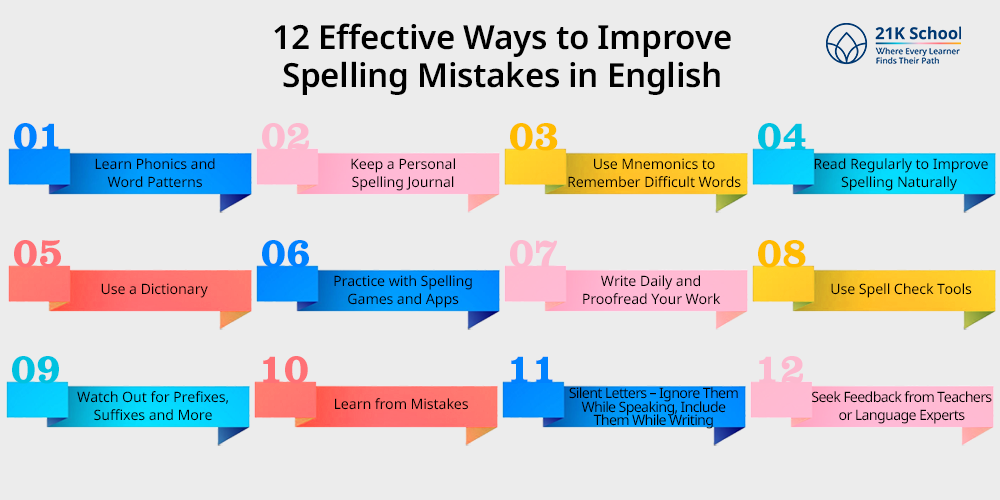
The core of perfect spelling sentences does not lie in memorizing the dictionary from cover to cover. Instead, it relies on understanding how words are constructed, recognizing common traps, and engaging in deliberate practice. By breaking the process down into actionable steps, anyone can dramatically improve their written accuracy.
1. Master Morphology and Etymology
Words are rarely random collections of letters; they are built from meaningful parts. Morphology—the study of word forms and parts—is a powerful tool for spelling. Most English words are composed of prefixes, root words, and suffixes.
- Prefixes: Prefixes like un-, dis-, or re- rarely change the spelling of the root word they attach to. Knowing this prevents common mistakes like misspelling "disappoint" as "dissapoint."
- Roots: Understanding Latin and Greek roots helps you spell entire families of related words simultaneously.
- Suffixes: Rules governing suffixes—such as dropping the silent 'e' before adding a vowel suffix—provide a predictable roadmap for spelling complex words.
2. Conquer Context-Dependent Homophones
Many spelling errors happen not because a writer does not know how to spell a word, but because they choose the wrong homophone. Standard spellcheckers frequently fail here because both "there," "their," and "they're" are technically correctly spelled words, yet they are incorrect in specific contexts.
To fix this, train your brain to associate the spelling with the specific meaning:
- Principal vs. Principle: The principal is your pal; a principle is a rule.
- Stationary vs. Stationery: Paper has an 'e' for envelope and stationery.
- Complement vs. Compliment: An 'e' completes (complement) something, while an 'i' involves a nice polite I-to-you remark (compliment).
3. Engage in Multisensory Encoding
Simply staring at a spelling list is one of the least effective ways to learn. To move words from your short-term memory into long-term retention, you need multisensory encoding. When you write a sentence, your brain coordinates visual input, auditory processing, and physical motor skills.
Say difficult words aloud, pronouncing them precisely as they are spelled rather than how they are spoken conversationally. For instance, deliberately over-pronouncing the 'a' in "separate" or the middle 'g' in "recognize" creates a distinct auditory anchor that guides your hand when typing.

Practical Strategies for Daily Writing
Translating spelling theory into daily practice requires changing how you draft and edit your work. Implement these practical strategies to catch errors before they reach your audience.
Isolate and Read Backward
Our brains are master editors when reading forward. If you wrote a sentence with a typo, your brain will often automatically supply the correct word during a standard proofread, effectively blinding you to the mistake.
To bypass this cognitive shortcut, try reading your sentences backward, starting from the final word of the paragraph and moving to the first. This forces your brain to process each word individually as an isolated data point, making misspelled words stand out immediately.
Keep a Personal Error Log
Everyone has a unique set of spelling blind spots. Instead of making the same mistakes repeatedly, keep a dedicated notebook or digital document for words that trip you up.
Reviewing this personal log weekly does more for your writing accuracy than reading general spelling rules ever will. Focus your energy on mastering your personal weak points rather than studying words you already spell correctly ninety-nine percent of the time.
Conclusion
Perfect spelling in sentences is not an elusive gift reserved for linguistics experts; it is the natural byproduct of mindfulness, structural understanding, and smart editing habits. By paying attention to word roots, respecting the power of context, and utilizing backward proofreading techniques, you can eliminate careless errors entirely. Implement these habits today, and watch your written confidence grow with every sentence you construct.