What Really Made Howard Hughes a Billionaire: How Much Cash Did He Control?
When the public thinks of Howard Hughes, the images that come to mind belong to cinema and myth: the daredevil aviator piloting the Spruce Goose, the glamorous Hollywood producer squiring Katharine Hepburn, or the eccentric recluse holed up in a darkened Las Vegas penthouse. Yet none of those colorful endeavors explain how he amassed one of the largest private fortunes in American history. To understand his financial empire, one must separate the headline-grabbing spectacles from the balance sheets and answer the core question: What really made Howard Hughes a billionaire: how much cash did he control?
While Hughes spent decades chasing high-profile passions in Hollywood and commercial aviation, his billionaire status was anchored by an unglamorous industrial patent, sustained by Cold War defense contracts, and ultimately crystallized by one of the largest single liquid cash payouts ever received by an individual.
The Bedrock: The Hughes Tool Company Monopoly
Every dollar Howard Hughes ever gambled on movies or experimental aircraft originated from a single industrial breakthrough: the dual-cone roller rock bit. Invented in 1909 by his father, Howard Hughes Sr., the bit could grind through hard rock that stopped conventional fishtail drills dead in their tracks. It revolutionized the petroleum sector precisely as the global oil boom took off.
When his father died in 1924, an 18-year-old Hughes inherited a 75% stake in the Hughes Tool Company. Demonstrating early financial ruthlessness, Hughes bought out his relatives to secure 100% private ownership. That decision shaped the rest of his life. Because Hughes Tool was privately held, Hughes never had to answer to public shareholders, justify quarterly losses, or heed a board of directors.
More importantly, the company operated on an ingenious business model: it rarely sold drill bits. Instead, it leased them to oil drillers by the hour or the job, recovering the worn bits for analysis, repair, and engineering improvements. This gave Hughes Tool two decisive advantages:
- A technological moat: Competitors could not easily reverse-engineer the proprietary metallurgy or tooth design.
- An unbreakable annuity: As long as global oil exploration expanded, Hughes collected continuous, high-margin cash flow.
By the 1930s and 1940s, Hughes Tool controlled an estimated 75% to 85% of the global rotary rock bit market. During the depths of the Great Depression, while other industrial titans were failing, Hughes Tool was pumping tens of millions of dollars into Hughes’s personal accounts, quietly financing his aviation records and film extravaganzas like Hell’s Angels and The Outlaw.
The Aerospace Expansion: Hughes Aircraft
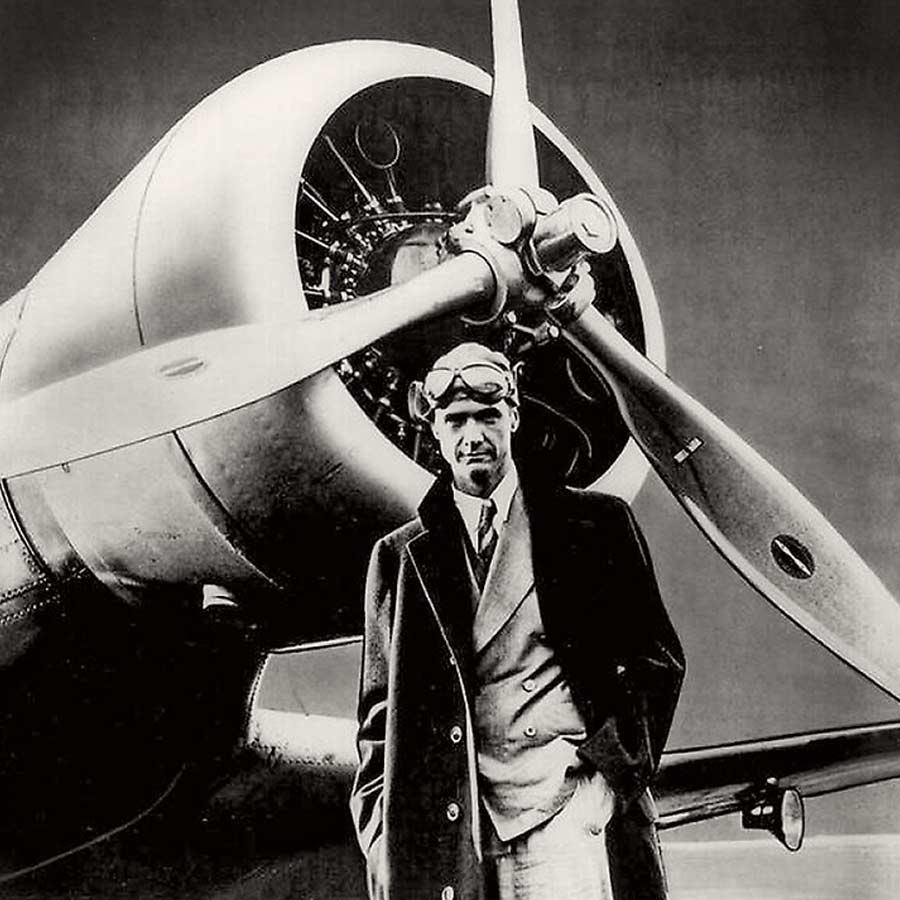
In 1932, Hughes formed Hughes Aircraft as a specialized division of Hughes Tool to design custom planes for his speed-record attempts. During World War II, the division secured major government contracts, including the infamous $18 million contract for the H-4 Hercules flying boat, better known as the "Spruce Goose." While that wooden behemoth flew only once, the company itself evolved into a defense juggernaut.
Recognizing the shift toward electronics in modern warfare, Hughes recruited top scientists from Caltech and MIT in the late 1940s. Hughes Aircraft soon became the Pentagon’s premier supplier of airborne fire-control radar, air-to-air guided missiles (such as the AIM-4 Falcon), and sophisticated satellite communications systems.
In 1953, facing scrutiny over defense profits and wanting to shield his empire from high corporate income tax rates, Hughes executed a masterstroke of corporate restructuring. He spun off Hughes Aircraft into the newly created Howard Hughes Medical Institute (HHMI), establishing it as a tax-exempt charity while retaining absolute managerial authority. This move allowed Hughes Aircraft to reinvest massive, untaxed profits into advanced research, dramatically expanding the underlying valuation of his aerospace assets.
What Really Made Howard Hughes a Billionaire: How Much Cash Did He Control?
For most of his adult life, Hughes was notoriously asset-rich and cash-strapped. His holding companies owned hundreds of millions of dollars in factories, oil equipment, and real estate, but his liquidity was regularly tied up in debt covenants and heavy capital expenditures. That dynamic shifted permanently on May 3, 1966.

Throughout the 1940s and 1950s, Hughes had accumulated a 78% controlling interest in Trans World Airlines (TWA). However, his eccentric meddling—delaying orders for modern commercial jetliners while obsessing over minute cabin details—infuriated TWA executives and institutional financiers. In 1960, creditors forced him to surrender voting control of his stock to an independent voting trust. A bitter antitrust lawsuit followed, and Hughes was eventually ordered to divest his holdings.
On May 3, 1966, a consortium of 411 underwriters sold 6,584,937 shares of Hughes’s TWA common stock in an unprecedented public offering. The resulting transaction produced a single check made out to Howard Hughes for:
$546,549,771 (equivalent to roughly $5.2 billion today, adjusted for inflation).
To understand how much cash he controlled, one must place that number in the context of the mid-1960s financial system. In 1966, the total federal budget of the United States was approximately $134 billion. A private individual holding more than half a billion dollars in pure, unencumbered liquid funds was unheard of in modern banking. Hughes did not just have access to credit lines; he held a balance in short-term Treasury bills and commercial bank accounts that made him, in raw liquid terms, arguably the most cash-rich private citizen on Earth.
Later, in December 1972, Hughes engineered another massive liquidity event by selling the core manufacturing operations of Hughes Tool Company through an initial public offering, pocketing an additional $150 million in cash while retaining the company's non-tool assets under a restructured holding entity named the Summa Corporation.
The Las Vegas Buying Spree: Converting Cash to Concrete
Controlling $546.5 million in cash created an urgent dilemma: under Section 1033 of the Internal Revenue Code, Hughes faced massive capital gains taxes unless he reinvested the proceeds into productive business assets within a strict statutory deadline. Hughes despised paying taxes above all else.
In late 1966, Hughes arrived by private train in Las Vegas, taking over the top two floors of the Desert Inn. When the hotel’s owners asked him to vacate before New Year's Eve to accommodate high-rolling gamblers, Hughes resolved the dispute by purchasing the entire resort for $13.2 million. That purchase ignited one of the fastest commercial buying sprees in American history:
- The Sands Hotel: Purchased for $14.6 million
- The Castaways: Purchased for $3 million
- The Frontier: Purchased for $14 million
- The Silver Slipper: Purchased for $5.4 million (primarily so he could turn off its flashing neon sign, which annoyed him in his bedroom)
- The Landmark: Purchased for $17.3 million
- Harold's Club (Reno): Purchased for $11 million
- Land and Infrastructure: Thousands of unpatented mining claims across Nevada and 25,000 acres of raw desert west of Las Vegas (which later became the master-planned community of Summerlin).
By the time his shopping spree concluded, Hughes had spent roughly $300 million of his cash hoard. In doing so, he displaced the organized crime figures who had previously operated the Strip, legitimizing Las Vegas in the eyes of Wall Street and institutional lenders while deferring his federal tax liabilities.
The Reality of Hughes’s Wealth at His Death
When Howard Hughes died of kidney failure aboard an air ambulance on April 5, 1976, his estate was valued between $1.5 billion and $2.5 billion. Because he died without leaving an authenticated, legally undisputed will, his assets were tangled in probate litigation for nearly two decades, involving over 600 purported heirs and the infamous forged "Mormon Will."
Ultimately, what made Howard Hughes a billionaire was not his daredevil aviation feats or his Hollywood output—both of which lost significant sums over his lifetime. It was the unyielding, monopolistic cash engine of the Hughes Tool Company, coupled with the defense electronics contracts of Hughes Aircraft and a disciplined tax-deferral strategy that converted his historic $546.5 million TWA liquidity event into an enduring real estate empire.