What SF's Listings Reveal About Urban Greed and Desperation
A quick scroll through Craigslist or Zillow in the Bay Area can feel less like an apartment hunt and more like an anthropological study of a broken economic system. A converted pantry marketed as an “efficient micro-studio” for $1,400 a month; a dorm-style bunk bed inside a shared living room listed for $1,100; a vacant luxury high-rise offering two months of free rent rather than lowering its sticker price. What SF’s listings reveal about urban greed and desperation is a stark portrait of an American metropolis caught between speculative real estate mechanics and basic human survival.
While San Francisco has long been the poster child for hyper-gentrification and astronomical housing costs, recent market shifts have exposed the underlying friction in new ways. Even as remote work altered urban demographics and office towers hollowed out, residential listings continue to reflect an uncompromising tug-of-war between property owners protecting paper wealth and residents fighting to remain in the city they build and maintain.
The Anatomy of Desperation: Dehumanizing Micro-Units
At the lower end of the rental pool, market desperation manifests in the normalization of substandard living spaces. Over the last decade, communal living transitioned from counter-cultural cooperative housing into an extractive business model. For-profit “pod living” companies and opportunistic master-lease tenants routinely carve up residential Victorians into hyper-dense tenement-like arrangements.
- Bunk Bed Economy: Unpermitted sleeping pods in the Tenderloin or SoMa demanding $800 to $1,200 per month, frequently sold as “networking hubs for founders.”
- Illegal Conversions: Windowless closets, uninsulated basements, and curtained living room corners marketed as “cozy private spaces.”
- Conditional Leases: Listings stipulating no overnight guests, no kitchen access between certain hours, or mandatory chores to subsidize lower rent tiers.
These listings persist because entry-level service workers, students, and early-career creatives have virtually nowhere else to go. The floor of the private market has detached entirely from local minimum wage realities, leaving desperate renters with no choice but to trade privacy and dignity for a San Francisco zip code.
The Architecture of Greed: Speculative Withholding and Paper Rents
If low-end listings highlight renter desperation, high-end listings expose how systemic greed distorts housing availability. Observers often wonder why landlords do not simply lower prices across the board when inventory sits vacant for months. The answer lies in the financialization of modern multi-family housing.
Many institutional landlords and corporate property developers finance their buildings through commercial loans tied strictly to projected baseline rents. Dropping a unit’s actual lease price from $4,000 to $3,000 permanently devalues the asset in the eyes of lenders, potentially triggering margin calls or refinancing penalties.
Instead of true price discovery, listings reveal a widespread reliance on temporary concessions:
- “Net Effective Rent” Gimmicks: Listings advertise an artificially lowered rate with “six weeks free,” ensuring the contractual rate stays inflated on the property ledger.
- Strategic Warehousing: Units are held intentionally off the market to avoid flooding inventory, an uncoordinated yet structurally collective effort to keep supply artificially constrained.
- Algorithmic Price-Fixing: Many corporate landlords utilize yield management software to optimize for higher vacancy paired with peak rents, prioritizing maximizing revenue over providing occupied shelter.
What SF’s Listings Reveal About Urban Greed and Desperation
Video: SF presents real estate opportunity as city dedicates to tackling homelessness, says Greg Flynn
When examined together, these two ends of the spectrum demonstrate that San Francisco’s real estate ecosystem does not operate as a normal, healthy market. In a standard market, supply and demand reach an equilibrium that serves the broad population. In SF, structural market distortions shield capital from risk while pushing vulnerability onto working tenants.

The listings showcase a dual reality. On one side are owners whose balance sheets require them to maintain the illusion of an untouchable luxury enclave. On the other side are retail clerks, restaurant staff, teachers, and municipal workers forced into shared bedrooms or grueling multi-hour commutes from distant suburbs. The city’s classifieds provide unvarnished, daily proof that shelter has been systematically transformed from a foundational civic necessity into a leveraged financial instrument.
The Erosion of the City's Social Fabric
The consequences of this listing environment extend far beyond real estate portals. When the middle tiers of housing vanish, a city undergoes a rapid monocultural shift. San Francisco has watched its neighborhood character hollow out as independent shops, community-run spaces, and artistic institutions are priced out alongside the people who staff them.
The Disappearance of Intermediate Housing
There is a conspicuous absence in San Francisco’s rental marketplace: standard, moderately priced, two-bedroom apartments suitable for middle-income families. Listings jump from squalid or shared quarters straight to renovated luxury developments with stainless steel appliances, pet spas, and mandatory amenity fees. Families, teachers, and mid-level healthcare workers are simply engineered out of the ecosystem.
Neighborhood Disconnect and Ghost Inventory
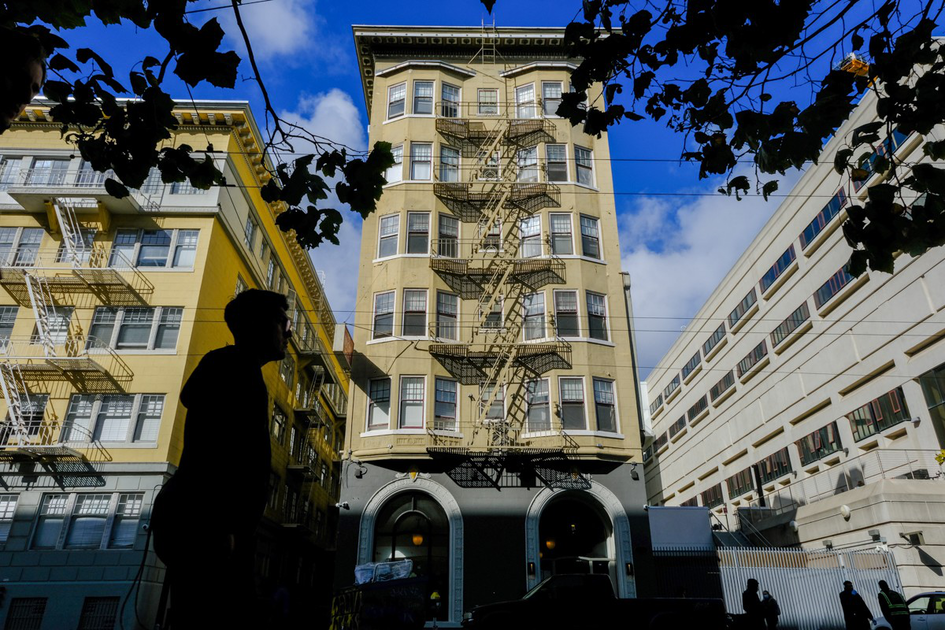
In high-density corridors like Mission Bay or Rincon Hill, lit windows are notoriously sparse at night. Yet real estate platforms continue to show identical, sterilized one-bedroom units cycling through listings for years. This ghost inventory coexists alongside visible street-level homelessness, creating a visual and ethical juxtaposition that defines contemporary San Francisco.
Pathways to a Functional Urban Marketplace
Resolving the extremes shown in San Francisco’s listings requires dismantling the perverse incentives that reward speculative vacancy and exploitation. Meaningful stabilization will require targeted policy interventions:
- Enforcing Residential Vacancy Taxes: Expanding and rigorously enforcing penalties on landlords who leave habitable units empty for extended periods to preserve debt valuations.
- Cracking Down on Coordinated Pricing: Investigating and banning software platforms that allow corporate landlords to coordinate rental rates across entire neighborhoods.
- Aggressive Permitting for Middle-Income Housing: Slashing the red tape and discretionary review periods that add hundreds of thousands of dollars to the construction cost of every single apartment unit.
- Tenant Protections and Code Enforcement: Systematically inspecting predatory multi-tenant rentals to ensure minimum habitability, fire safety, and tenant legal rights.
Until San Francisco treats housing as an essential civic infrastructure rather than a speculative asset class, its rental listings will remain a mirror to urban inequality. The listings do not lie: they show an ecosystem where excessive financial leverage on one end inevitably breeds quiet, grinding desperation on the other.