What The Lorax Can Teach Us About Conservation Efforts
When Theodor Geisel—better known as Dr. Seuss—published The Lorax in 1971, the modern environmental movement was still finding its footing. The first Earth Day had taken place just a year earlier, the U.S. Environmental Protection Agency was in its infancy, and public discourse around industrial waste was only beginning to shift. More than five decades later, evaluating what The Lorax can teach us about conservation efforts reveals that the picture book is not merely a whimsical bedtime story; it is a foundational masterclass in ecological economics, systems ecology, and environmental ethics.
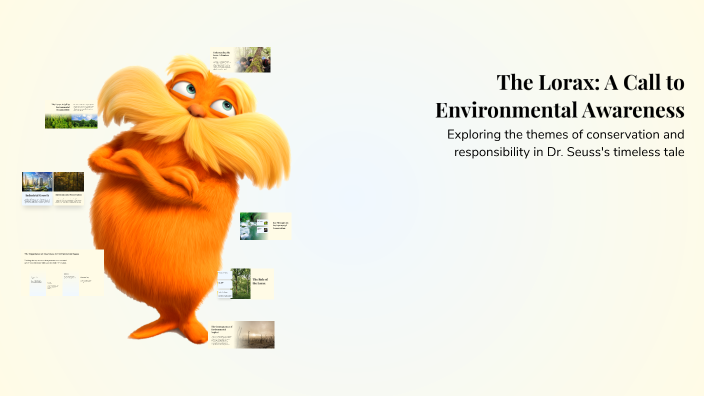
Through the cautionary tale of the Once-ler, the Truffula Trees, and the outspoken creature who "speaks for the trees," Geisel diagnosed the precise structural flaws that drive environmental degradation today. Understanding these narrative lessons provides conservationists, policymakers, and everyday citizens with actionable clarity on how to safeguard the natural world.
The Illusion of Infinite Resources and Trophic Cascades
At the heart of the Once-ler’s enterprise was a lethal assumption: that the Truffula forest was vast enough to endure unending extraction. He viewed nature as an inventory of commodities waiting to be monetized rather than an interdependent living system. This mindset mirrors the history of resource management across the globe, from the clear-cutting of old-growth temperate rainforests in the Pacific Northwest to the ongoing deforestation of the Amazon Basin.
In ecology, removing a single keystone resource rarely triggers a linear decline; instead, it unleashes a trophic cascade. Dr. Seuss illustrated this dynamic long before the phrase entered mainstream conversation:
- Loss of Food and Habitat: As Truffula Trees fall, the Brown Bar-ba-loots starve without Truffula fruits to eat, forcing them to migrate into an uncertain future.
- Atmospheric Degradation: The mechanical "Super-Axe-Hacker" and factory chimneys fill the sky with smog, choking the Swomee-Swans and rendering their habitat unlivable.
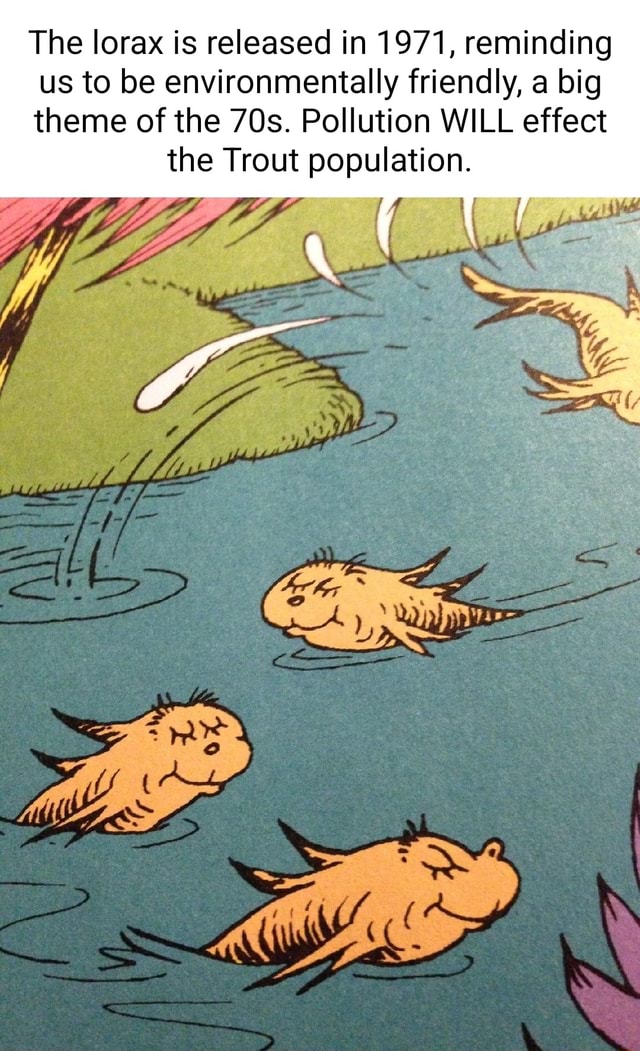
- Water System Collapse: Industrial effluents ("Schlopp" and "Ghlump") foul the ponds, blinding and sickening the Humming-Fish until they can no longer swim in their native waters.
The lesson here is profound: conservation cannot operate in functional silos. Protecting a single bird species or safeguarding a waterway fails if the surrounding forest is destroyed. Modern conservation efforts must manage landscapes holistically, treating watersheds, soil biology, and canopy cover as unified systems.
"Biggering": The Flaw of Growth-Obsessed Economics
When the Lorax confronts the Once-ler about the devastation around them, the Once-ler admits some regret but insists that his enterprise cannot stop. He must "bigger" his business, his roads, his factory, and his bank accounts. In this single invented verb, Dr. Seuss captured the core challenge of modern sustainability: unconstrained industrial throughput within a biophysically finite biosphere.
In traditional economics, companies often externalize the true cost of production. When a corporation pollutes a river or destroys an ecosystem to produce goods, society bears the ecological and public health costs while the business captures the profits. The Once-ler never paid for clean air, clean water, or the rehabilitation of displaced fauna. Because these natural assets carried no price tag on his balance sheet, they were treated as zero-value inputs.
Contemporary conservation initiatives increasingly rely on natural capital accounting to correct this market failure. By quantifying the economic value of ecosystem services—such as wetland flood control, mangrove storm mitigation, and wild pollinator yields—scientists and economists demonstrate that destroying habitats is far more expensive in the long run than conserving them.
What The Lorax Can Teach Us About Conservation Efforts
Looking at the story through a contemporary lens yields several crucial insights for grassroots conservation, international treaties, and climate policy.
1. The Pitfall of Shifting Baseline Syndrome
"Shifting baseline syndrome" describes how each generation accepts the degraded state of the natural world they inherited as normal. The boy who visits the Once-ler at the beginning of the book only knows the "Street of the Lifted Lorax" as a bleak, windswept wasteland where no birds sing and the Grickle-grass grows sour. He has no baseline memory of sweet air or singing fish.
Without conservation storytelling and historical ecological records, communities lose sight of what true environmental abundance looks like. Conservation goals must not simply settle for preventing further damage; they must aim for ambitious ecological restoration and rewilding that revive lost biodiversity.
2. The Limit of Individual Guilt vs. Structural Accountability
The Lorax repeatedly appeals to the Once-ler's conscience, pleading for the creatures who have no voice. Yet moral appeals alone were insufficient to stop the industrial machinery. The Once-ler felt intermittent twinges of guilt, but the financial momentum of his enterprise overwhelmed his ethical reservations.
Modern conservation efforts have learned this lesson the hard way. Relying exclusively on consumer choices—such as opting out of plastic bags or buying eco-friendly shirts—rarely halts large-scale ecocide. Durable conservation requires binding regulatory frameworks, enforceable environmental laws, protected area designations, and penalties strong enough to dissuade bad actors.
3. The Danger of Delaying Action to the Point of Exhaustion
The Once-ler did not halt production because he had an ethical awakening. He stopped only when the mechanical axe struck the very last Truffula Tree with a sickening thud. The industry collapsed instantly, leaving behind stranded industrial infrastructure and a dead ecosystem.
Conservation cannot wait until a resource is functionally extinct before pivoting toward sustainable alternatives. Fisheries management, groundwater management, and decarbonization strategies all demonstrate that proactive restrictions prevent systemic economic and social collapse.
The Responsibility of "Unless"
Before leaving the blighted landscape, the Lorax leaves behind a cairn of stones carved with a single word: "UNLESS." The Once-ler spends decades in self-imposed exile, staring at that word without understanding it, until the curious boy arrives.
"Unless someone like you cares a whole awful lot, nothing is going to get better. It's not."
This couplet carries the core philosophical message of modern environmentalism. It bridges the gap between fatalistic despair and passive complacency. Dr. Seuss emphasizes that ecosystems rarely recover through accidental neglect; deliberate, intentional human care is required to jumpstart ecological healing.
Importantly, the Once-ler hands the boy the very last Truffula seed, charging him with the responsibility to cultivate it:
- Protect the Seed: Treat natural resources as priceless heritage rather than disposable tools.
- Nurture the Soil: Restore the degraded environmental conditions needed for new life to thrive.
- Provide Clean Water and Fresh Air: Secure the fundamental abiotic building blocks of the habitat.
- Build a Community of Care: Forest stewardship is an intergenerational project that extends far beyond a single political cycle.
Translating the Fable into Action
How do we translate this 50-year-old allegory into modern conservation wins? We do it by actively speaking for species and natural systems that have no legal standing, financial wealth, or voice in legislative chambers.
This means advocating for the legal rights of nature, supporting indigenous-led conservation—which currently protects roughly 80% of the world’s remaining biodiversity—and holding extraction industries accountable for their operational footprints. It requires protecting the "Truffula seeds" in our own communities, whether that means preserving local wetlands from suburban sprawl, re-establishing native flora to support pollinator populations, or pressing local representatives for cleaner energy grids.
The Lorax ends not with the triumphant return of the forest, but in the tense, hopeful space between ruin and recovery. We are currently holding that final seed. The future of the forest depends entirely on whether we possess the collective will to plant it.