When Primates Kiss: The Truth Behind Monkeys Kissing
Introduction to Primate Affection

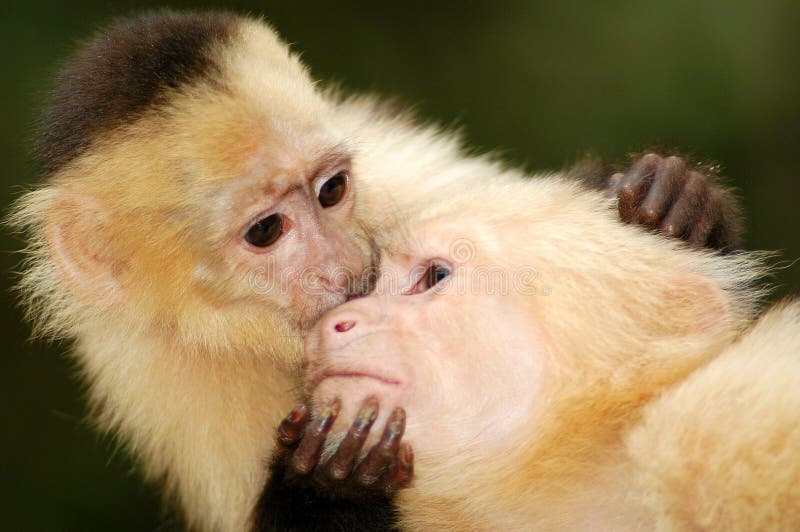
When observers capture a moment of a mono besando a otro mono (one monkey kissing another), the image often goes viral on social media. Humans naturally project their own emotional frameworks onto these intimate gestures, viewing them as romantic expressions of deep love. However, the animal kingdom operates on a complex set of evolutionary rules. While primates do engage in mouth-to-mouth contact, grooming, and embracing, the motivations behind these behaviors are deeply rooted in survival, conflict resolution, and social hierarchy.
Understanding what is actually happening during these interactions requires a look into primatology, behavioral science, and evolutionary biology. Far from simple romantic gestures, these moments reveal the intricate social politics of our closest animal relatives.
The Science Behind Monkeys Kissing
To understand why monkeys and apes engage in kissing-like behaviors, we must first separate our human interpretation from the biological reality. Primates—particularly chimpanzees, bonobos, and macaques—use physical touch to maintain group cohesion. Mouth-to-mouth contact serves several distinct physiological and social purposes within a troop.
Reconciliation and Conflict Resolution
One of the primary drivers of kissing and embracing in primates is conflict resolution. In many primate societies, aggression is a normal part of daily life used to establish dominance and secure resources. However, prolonged hostility threatens the stability of the entire group.
After a fight, dominant and subordinate individuals often seek reconciliation to reduce tension. Kissing and touch-based greetings act as 'pacifying mechanisms.' They signal an end to hostility, reassuring both parties that the conflict is resolved and reducing stress hormones like cortisol in the process.
Social Bonding and Grooming Substitutes
Grooming is the currency of the primate world. It removes parasites, reinforces social bonds, and builds alliances. When direct grooming isn't practical, other forms of physical contact take its place:
- Lip-smacking: A common visual signal of friendly intent, often preceding close physical contact or grooming.
- Embracing: Used to provide comfort during stressful events, such as the arrival of a predator or a sudden drop in troop hierarchy.
- Mouth-to-mouth contact: Used primarily by intelligent, highly social species to assess the emotional state of a peer or share food scents.
Species Differences: Who Kisses and Why?
Video: Mono besando
Not all primates interact the same way. The frequency and style of kissing-like behaviors vary significantly depending on the species, their social structure, and their evolutionary branch.

Bonobos: The Masters of Peace
Bonobos are famous for using sexual and physical contact to resolve nearly every social issue. Unlike chimpanzees, who have male-dominated hierarchies prone to lethal violence, bonobos live in female-led, egalitarian societies. When two bonobos meet, they frequently engage in intense kissing, embracing, and various forms of socio-sexual contact to diffuse tension, welcome newcomers, and share excitement over food.
Chimpanzees and Political Alliances
Chimpanzees also kiss, but their motivations are often tied to political maneuvering. High-ranking males may kiss, pat, or groom one another to solidify coalitions against rivals. In this context, a kiss is not merely a sign of affection; it is a strategic alliance builder essential for maintaining power within the troop.
Old World Monkeys vs. Apes
While apes (chimpanzees, bonobos, orangutans, gorillas) exhibit complex facial expressions and close mouth-to-mouth behaviors resembling human kissing, Old World monkeys (like macaques and baboons) rely more heavily on lip-smacking, mounting, and grooming. True mouth-to-mouth contact is less common among monkeys compared to apes, though similar appeasement rituals are widespread across the primate order.
Human Projection vs. Primate Reality
Humans have a strong psychological tendency toward anthropomorphism—attributing human traits, emotions, and intentions to animals. When we see a photograph of a mono besando a otro mono, we immediately think of human romance, parental love, or marital devotion.
While primates undeniably experience complex emotions—including grief, joy, empathy, and anger—their version of a 'kiss' carries evolutionary weight that goes far beyond romantic sentiment. It is a vital communication tool. Every touch, gesture, and vocalization helps individuals navigate a high-stakes social environment where cooperation often means the difference between life and death.
Conclusion
The sight of primates kissing reminds us of our shared evolutionary ancestry. While the underlying reasons are driven by survival, stress reduction, and alliance-building rather than human-style romance, the emotional resonance remains fascinating. Whether it is bonobos resolving a dispute or chimpanzees cementing a political partnership, physical affection is an essential language understood across the primate world.