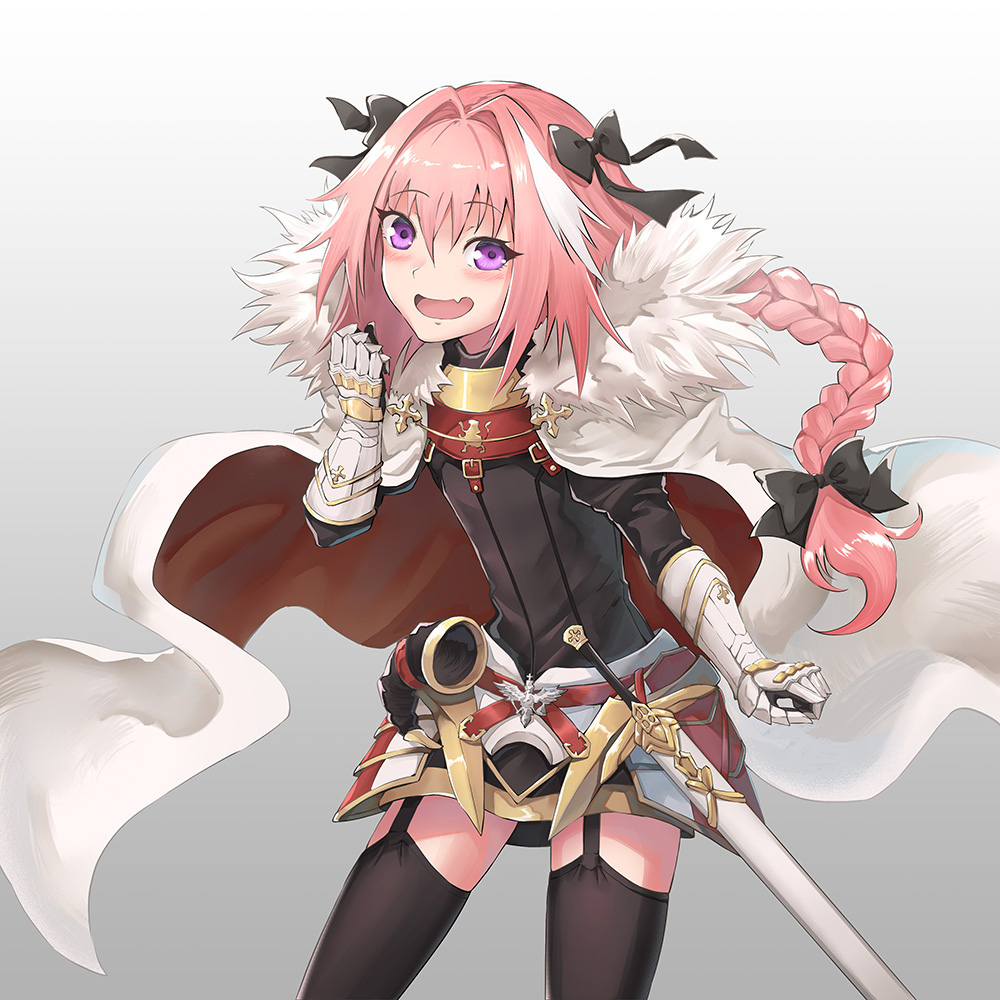
Where Is Astolfo From? Origin, Legend, and Anime Lore
If you have spent any time browsing gaming communities, anime forums, or medieval mythology boards, you have likely encountered the character Astolfo. With long pink hair, an irrepressible personality, and a massive following, the character has taken pop culture by storm. But for newcomers and lore enthusiasts alike, one fundamental question often surfaces: where is astolfo from? The answer spans over eight centuries of storytelling, connecting Renaissance Italian poetry, medieval French epics, and modern Japanese animation.

At the most direct level, Astolfo originates from medieval European folklore as an English prince serving Emperor Charlemagne. However, depending on whether you are looking through the lens of classic chivalric literature or modern multimedia franchises like Fate/Apocrypha, the context behind the character shifts dramatically.
The Mythological Origin: An English Prince in Charlemagne’s Court
In literary history, Astolfo (sometimes rendered as Astolpho or Estout) is introduced as the son of Otto (or Otho), the fictionalized King of England. Despite his English royal bloodline, Astolfo spends his narrative life in continental Europe, serving as one of the twelve legendary Paladins of Charlemagne.
The Paladins were the legendary core of the Matter of France—a body of medieval literature celebrating the court of Charlemagne, much like the Knights of the Round Table represent King Arthur's Britain. Within this cycle, Astolfo is the cousin of other renowned heroes, including Roland (Orlando in Italian) and Renaud de Montauban (Rinaldo).
Unlike his fiercely stoic and peerlessly strong peers, Astolfo is traditionally characterized as reckless, witty, and exceptionally adventurous. His English heritage gave medieval continental writers an exotic outsider figure to deploy across grand, fantastical settings.
Where Is Astolfo From? The Legend vs. Fate/Apocrypha
To fully answer the question of origin, it is necessary to contrast the medieval literary figure with the famous modern anime adaptation.
1. The Literary Roots: Italian Renaissance Romance
While the character originally emerged in early French chansons de geste, Astolfo received his definitive personality in Italy. Two poets transformed him into a celebrated figure of Renaissance literature:
- Matteo Maria Boiardo’s Orlando Innamorato (1495): Introduced Astolfo as a brave, handsome, but somewhat boastful knight whose luck and magical trinkets carry him through impossible trials.
- Ludovico Ariosto’s Orlando Furioso (1516): Solidified Astolfo’s legacy. In this epic poem, Astolfo undertakes bizarre quests across the globe. He rides a hippogriff through Africa and Asia, visits the Earthly Paradise, and eventually travels to the Moon in the fiery chariot of Elijah to retrieve the lost sanity of Orlando.
2. The Modern Phenomenon: Type-Moon’s Fate Universe

If you encountered Astolfo through memes, cosplay, or gaming clips, you are likely looking at the version created by Japanese game company Type-Moon. Astolfo debuted in the light novel series Fate/Apocrypha, written by Yūichirō Higashide and illustrated by Ototsugu Konoe, before reaching mainstream global fame in the 2017 anime adaptation produced by A-1 Pictures.
In the Fate universe, Astolfo is summoned as the Rider of "Black" during the Great Holy Grail War. The series faithfully retains Astolfo's canonical backstory: he remains an English prince and the twelfth Paladin of Charlemagne. However, the anime redesigns him with an androgynous aesthetic, pastel pink hair, and a famously cheerful, carefree disposition that defies traditional heroic conventions.
Key Magical Items Associated with Astolfo
Both historical literature and modern adaptations equip Astolfo with iconic magical artifacts obtained throughout his travels. These relics explain how a knight who was rarely the strongest fighter consistently achieved the most absurd victories:
- The Golden Lance (Trap of Argalia): A jousting lance that knocks any rider from their mount upon the slightest touch, regardless of the opponent's physical strength.
- The Magical Horn (La Black Luna): A horn capable of emitting a sound so terrifying and deafening that entire armies flee in sheer panic.
- The Magic Book (Casseur de Logistille): A grimoire given to him to dispel illusions, reverse enchantments, and grant knowledge of arcane workings.
- The Hippogriff: A mythical creature born from a gryphon and a mare. In Ariosto's epic, Astolfo uses it to travel across the globe, a mount that serves as his signature Noble Phantasm in anime adaptations.
Did Astolfo Really Exist in History?
Astolfo is purely a work of legendary fiction. While his liege, Charlemagne (King of the Franks and Emperor of the Romans), was an authentic historical figure who ruled during the early Middle Ages, the twelve paladins featured in the Matter of France are largely mythologized amalgamations.
Some paladins, such as Roland, have verified historical roots (a military commander named Hruodland died at the Battle of Roncevaux Pass in 778). Astolfo, however, has no documented counterpart in the historical court of Charlemagne or in early Anglo-Saxon royal genealogies. He was created by medieval troubadours to provide comic relief, charm, and fantastical wonder alongside the grim battles of chivalric epics.
Why Astolfo’s Origin Matters Today
Astolfo represents one of the most successful character reinventions in contemporary media. A minor prince from medieval English legend became an Italian Renaissance icon of whimsy, and half a millennium later evolved into a cornerstone of Japanese pop culture.
Whether you know him as the daring knight who flew to the Moon to cure his cousin's madness or the energetic Rider of Fate/Grand Order, Astolfo's geographical home remains the royal court of historical England, while his literary home belongs to the boundless realm of world romance and fantasy.