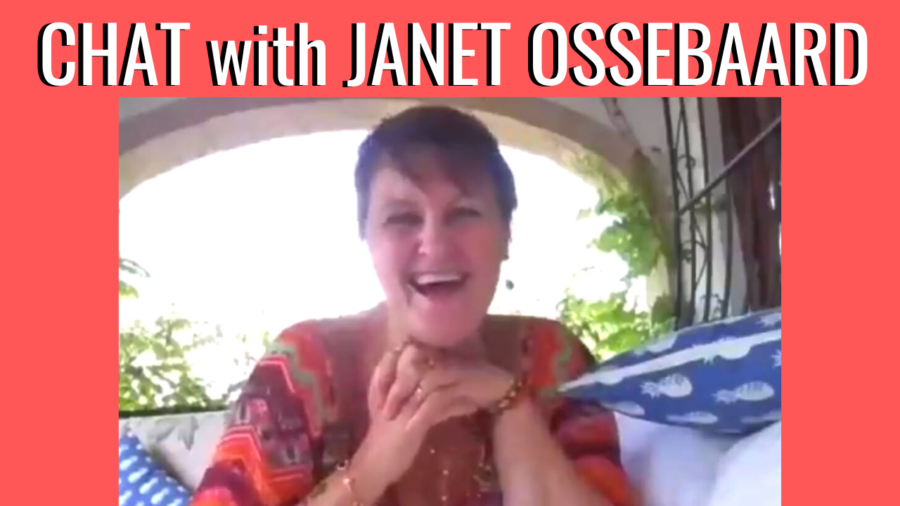
Who Is Janet Ossebaard? The Fall of a Conspiracist
Introduction

In the expansive and often turbulent world of online conspiracy theories, few figures gained as much viral traction in Europe as Dutch filmmaker Janet Ossebaard. For millions of followers navigating the uncertainty of the global pandemic, her work served as an entry point into alternative narratives. But who is Janet Ossebaard, and how did she transition from a mainstream researcher of crop circles to one of the most prominent promoters of QAnon outside the United States?
Understanding her trajectory requires examining her media projects, her ideological evolution, and the strange circumstances surrounding her sudden withdrawal from the public eye. This article explores the background, the major works, and the ultimate fallout of Ossebaard's career.
Early Life and Crop Circle Research
Before achieving notoriety for geopolitical conspiracy theories, Ossebaard spent over two decades focused on a very different niche: crop circles. Beginning in the late 1990s, she established herself as a passionate ufologist and researcher of unexplained phenomena.
- Published Author: She authored several books and produced documentaries investigating the geometry, history, and alleged paranormal origins of crop circles, primarily in the United Kingdom and the Netherlands.
- Mainstream Curiosity: During this phase, her work was generally viewed as fringe paranormal investigation rather than dangerous political extremism. She operated within the traditional bounds of alternative culture and unexplained mysteries.
- Shift in Focus: As interest in crop circles waned and digital media platforms transformed how fringe ideas were consumed, Ossebaard began shifting her focus toward broader, more systemic conspiracy theories regarding global finance and politics.
The Rise of 'The Fall Cabal'
Ossebaard's global reach exploded in 2020 with the release of her multi-part documentary series, The Fall of the Cabal (often shortened to Fall Cabal). Released just as the COVID-19 pandemic began locking down populations worldwide, the series capitalized on mass anxiety and digital isolation.
The documentary synthesized decades-old conspiracy theories—ranging from the Illuminati and the New World Order to anti-vaccine rhetoric and ritual abuse claims—and neatly packaged them into a serialized, easily digestible format. By weaving these narratives together with early QAnon talking points, Ossebaard provided a European audience with a localized version of the American-born political movement.
Key Characteristics of Her Filmmaking
Ossebaard's success was largely attributed to her production style. Unlike unpolished webcam rants, The Fall of the Cabal featured dramatic voiceovers, slick video editing, sweeping orchestral soundtracks, and a fast-paced narrative structure. This polished aesthetic lent her claims a false sense of documentary legitimacy, making it easier for mainstream social media users to share her content before platforms began implementing strict moderation policies.
Video: The Mysterious Disappearance of Janet Ossebaard

Embracing QAnon and COVID-19 Skepticism
Following the viral success of her initial series, Ossebaard fully embraced the QAnon framework. She argued that a secret cabal of pedophilic global elites controlled governments, media outlets, and pharmaceutical companies, and that Donald Trump was leading a secret military operation to overthrow them.
When the COVID-19 pandemic unfolded, Ossebaard pivoted heavily into medical disinformation. She claimed the virus was a hoax or a bioweapon engineered to enforce global totalitarian control, and she aggressively campaigned against public health measures, masks, and vaccines. Her videos were translated into dozens of languages, cementing her status as a leading voice in the European anti-lockdown and sovereign citizen movements.
Deplatforming and the Sequel Series
As her content violated the terms of service of nearly every major tech platform, Ossebaard faced systematic deplatforming. YouTube, Facebook, Twitter, and Instagram repeatedly removed her accounts, channels, and videos to curb the spread of harmful medical and political misinformation.
Undeterred, Ossebaard and her frequent collaborator, Cyntha Koeter, migrated to alternative, uncensored video-hosting platforms like Telegram and BitChute. There, they released a sequel series titled The Sequels, continuing to push discredited narratives while growing increasingly isolated from mainstream discourse.
Disappearance and Current Status
By late 2023, a new kind of mystery began to surround Janet Ossebaard. Unlike her previous public-facing persona, she abruptly stopped publishing content, deleted several of her active channels, and seemingly vanished from the internet. This sudden silence sparked widespread speculation among her follower base.
- Health Concerns: Some of her former associates and followers suggested she was suffering from severe mental health crises or physical exhaustion after years of consuming and producing high-stress, apocalyptic content.
- Internal Fractures: Rumors within the alternative media ecosystem pointed to infighting and financial disputes among fringe creators.
- Welfare Concerns: In late 2023, Dutch authorities and concerned observers raised alarms regarding her safety, leading to brief missing-person investigations that concluded she was alive but choosing to remain out of the public eye.
Conclusion
The story of Janet Ossebaard serves as a prominent case study in the mechanics of modern internet radicalization. From researching abstract geometric patterns in wheat fields to producing high-production-value political propaganda that divided families and fueled public health skepticism, her career illustrates the powerful pull of alternative narratives in the digital age. Whether she remains permanently retired from public life or eventually resurfaces, her digital footprint remains a significant chapter in the history of online conspiracy culture.