Who Was the Jewish Sage the Elder?
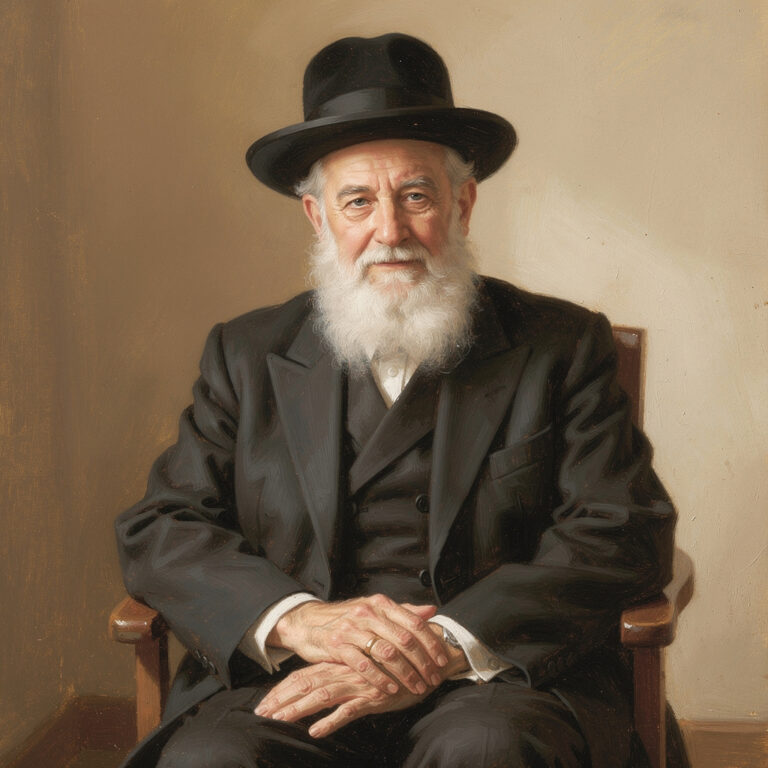
When historians and religious scholars speak of the preeminent jewish sage the elder, they are almost universally referring to Hillel the Elder (known in Hebrew as Hillel HaZaken). Active during the late first century BCE and the dawn of the first century CE in Jerusalem, Hillel was not merely a teacher of statutes; he was a visionary scholar whose temperament, interpretive methods, and moral clarity laid the bedrock for Rabbinic Judaism.
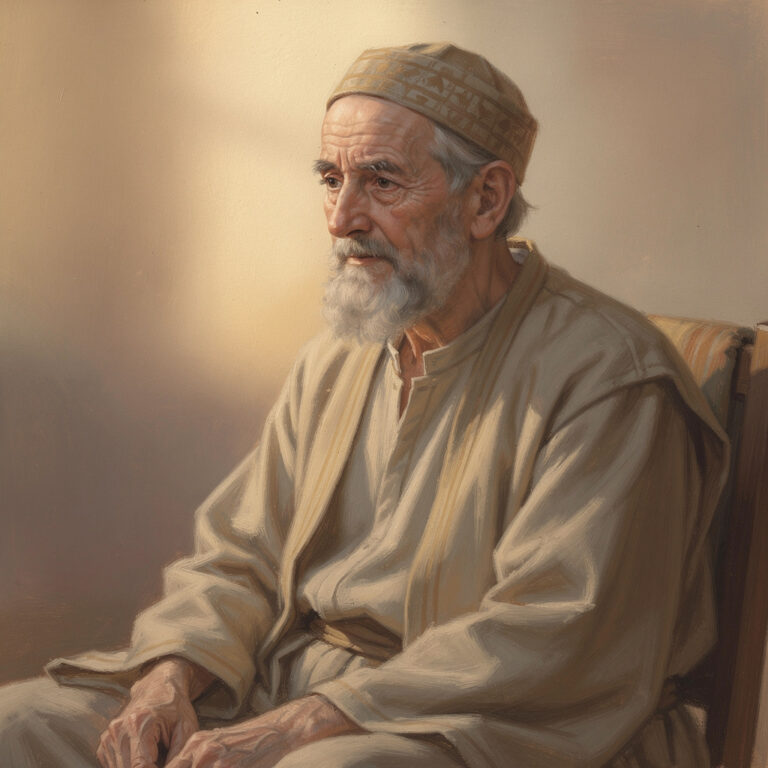
While the honorific HaZaken ("the Elder") was occasionally bestowed upon other notable leaders in antiquity—most notably Hillel's grandson, Rabban Gamaliel the Elder, and his intellectual sparring partner, Shammai the Elder—it is Hillel who immortalized the epithet. His life story bridges the era of the late Second Temple and the emergence of the Mishnah, fundamentally altering how divine law intersects with human compassion.
From Babylonian Immigrant to Nasi
According to classical talmudic accounts, Hillel was born into a Jewish family in Babylonia. Despite tracing his lineage back to King David, he arrived in Roman-occupied Judea with neither wealth nor social status. Driven by an intense desire to master the Torah, he traveled to Jerusalem to study under the two greatest sages of the era: Shemaya and Avtalyon.
A famous passage in the Babylonian Talmud (Tractate Yoma 35b) illustrates his legendary determination. Working as an impoverished woodcutter, Hillel earned only a modest copper coin each day, half of which went to support his family, while the other half was paid to the doorkeeper of the study house. One freezing Friday evening, having earned no money, the doorkeeper refused him entry. Refusing to miss a lesson, Hillel climbed onto the roof and listened through the skylight. During the night, a heavy snowfall buried him three cubits deep. The next morning, the masters noticed the light blocked from above, discovered the frozen student, and carried him down, breaking the Sabbath to save his life—stating that a man of such devotion was worthy of having the Sabbath violated for his survival.
Through intellectual brilliance, peerless knowledge of oral traditions, and profound personal humility, Hillel rose from obscurity to become the Nasi (President) of the Sanhedrin, the highest judicial and legislative council in ancient Israel.
Core Teachings of Jewish Sage the Elder
Hillel's lasting influence stems primarily from his ethical stance and humanistic approach to religious practice. He consistently emphasized that the core purpose of divine law is to elevate human conduct, foster peace, and cultivate mutual respect.
The Golden Rule on One Foot
Perhaps the most famous episode in Hillel's life (Talmud, Tractate Shabbat 31a) involves a non-Jewish inquirer who approached Shammai, asking to be converted on the condition that Shammai teach him the entire Torah while he stood on one foot. Shammai, renowned for strict adherence to rigorous standards, chased the man away with a builder's measuring rod.
Undeterred, the man posed the exact same challenge to Hillel. The sage calmly accepted, delivering an answer that would reverberate through two millennia of philosophy:
"What is hateful to you, do not do to your neighbor. That is the entire Torah; the rest is commentary. Go and study it."
Rather than presenting Judaism as an insurmountable checklist of ritual commands, Hillel distilled its entire cosmic framework into a fundamental rule of universal empathy. Rituals and observances, in his view, served as structural training grounds to habituate people toward kindness, justice, and self-restraint.
Key Sayings from Ethics of the Fathers (Pirkei Avot)
Hillel's aphorisms recorded in Pirkei Avot remain foundational to Jewish thought:

- On balanced self-worth: "If I am not for myself, who will be for me? But if I am only for myself, what am I? And if not now, when?" (Avot 1:14)
- On the pursuit of harmony: "Be of the disciples of Aaron: loving peace and pursuing peace, loving your fellow creatures and drawing them near to the Torah." (Avot 1:12)
- On intellectual modesty: "Do not judge your fellow until you have reached their place, and do not say something that cannot be understood immediately on the assumption that it will be understood later." (Avot 2:4)
The Great Debates: Beit Hillel vs. Beit Shammai
Throughout the late Second Temple era, Jewish jurisprudence was defined by the dialectic tension between the school of Hillel (Beit Hillel) and the school of Shammai (Beit Shammai). These two institutions debated hundreds of questions covering ritual purity, marriage, property rights, and festival observances.
Where Shammai prioritized unbending ideological purity and letter-of-the-law consistency, Hillel prioritized the practical limitations of human nature, societal harmony, and institutional accessibility. A canonical rabbinic passage (Eruvin 13b) states that a heavenly voice intervened during one prolonged dispute, declaring:
"These and those are the words of the living God, but the legal ruling follows the House of Hillel."
The Talmud clarifies why Hillel's school was awarded legal precedence: not because their arguments were necessarily sharper, but because they were kindly, modest, and taught the opposing arguments of Shammai before presenting their own. In doing so, Hillel established an intellectual tradition where intellectual generosity and empathy supersede dogmatic certainty.
The Prozbul: A Masterclass in Legal Innovation
Beyond abstract ethics, Hillel introduced groundbreaking legal mechanisms designed to protect the vulnerable. The clearest example is the Prozbul.
According to biblical law in Deuteronomy 15, the seventh year (Shmita) cancels all private debts among Israelites. While this law was intended as a social safety net to prevent generational poverty, its practical effect in late antiquity was catastrophic. As the sabbatical year approached, wealthy landowners refused to lend money to poor farmers out of fear that their capital would simply evaporate, leaving the poor without sustenance during difficult planting seasons.
Recognizing that the literal execution of the law was violating its core humanitarian intent, Hillel devised the Prozbul:
- The creditor transfers the collection rights of their private loans to the local rabbinic court (Beit Din).
- Because the biblical cancellation applied specifically to debts owed between individuals, court-held debts remained legally enforceable after the seventh year.
- Creditors regained the security needed to extend loans, and the poor preserved access to vital credit.
This innovation demonstrated that Torah law possesses the internal resilience to adapt to shifting socio-economic environments without abandoning its ethical compass.
Other Historical Sages Titled "The Elder"
While Hillel holds the primary mantle of this title, students of rabbinic history will encounter other figures who carried the designation HaZaken:
- Rabban Gamaliel the Elder: Grandson of Hillel, who continued the dynasty of the Patriarchate (Nesi'ut) and is famously cited in early Christian scriptures (Acts of the Apostles) as an advocate of moderation.
- Shammai the Elder: Hillel's fierce contemporary and head of the Sanhedrin's opposition bench, respected for his strict righteousness and legal precision.
- Simeon the Elder: A figure referenced in Christian tradition, often conflated with Hillel's son or contemporaries in early Roman Jerusalem.
The Enduring Legacy of Hillel HaZaken
Hillel the Elder died around 10 CE, but the framework he established survived the Roman destruction of the Second Temple in 70 CE. When the Temple rites and political apparatus ceased to exist, it was Hillel's decentralized, study-focused, compassion-driven vision of Jewish law that sustained the Jewish people through centuries of exile.
By defining spiritual maturity through the lens of human empathy and intellectual integrity, this iconic Jewish sage transformed an ancient temple-centered cult into a durable, global civilization centered on study, justice, and human dignity.

.png)