Why Escapist Browsing Boosts Creativity
Why Escapist Browsing Boosts Creativity

We have all been there. You sit down to finish a critical work report or study for an exam, but within ten minutes, you find yourself deep down a rabbit hole of Wikipedia biographies, obscure architecture blogs, or Reddit threads about ancient Roman plumbing. Guilt immediately sets in. You click the tabs shut, scolding yourself for lacking discipline and succumbing to digital distraction.
However, modern cognitive science suggests you might be punishing yourself for the wrong reason. While chronic distraction destroys deep focus, a specific kind of digital wandering—known as escapist browsing—can actually act as a powerful catalyst for innovative thinking. Far from being just a productivity killer, this is why escapist browsing boosts creativity (science proves it), offering your brain the exact psychological break it needs to solve complex problems.
The Neuroscience of the Wandering Mind
To understand why browsing the web aimlessly helps your brain, we first need to look at what happens when you stop focusing intently on a single task. For decades, productivity culture has treated the human brain like a machine: input goes in, work comes out. But neuroscientists know that the brain is never truly idle.
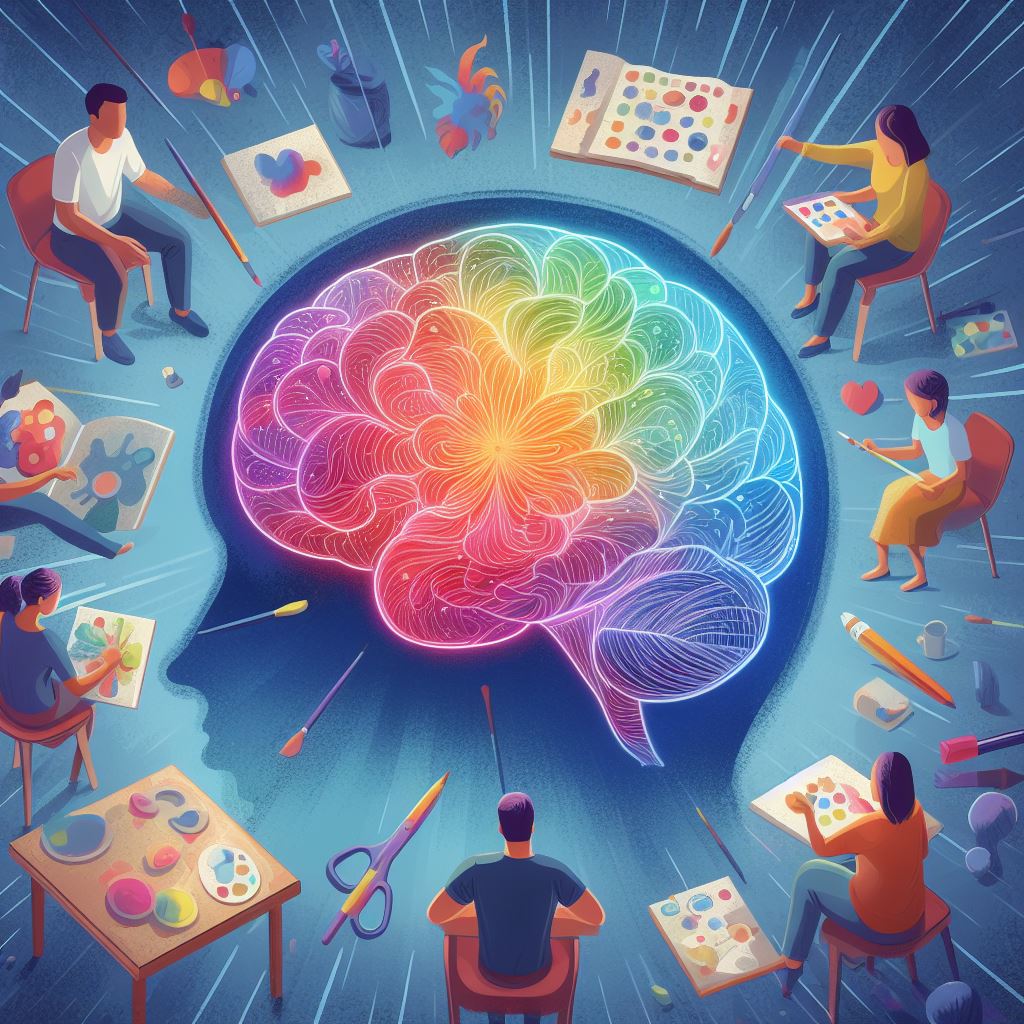
When you disengage from active goal-directed tasks, your brain activates a network of interconnected regions known as the Default Mode Network (DMN). The DMN lights up when you daydream, reminisce about the past, imagine the future, or connect seemingly unrelated ideas. It is the engine room of human creativity.
Incubation and the Aha! Moment
Psychologists refer to the period when you step away from a problem as the "incubation period." When you stare at a blank document trying to force a creative breakthrough, you rely heavily on your Task-Positive Network (TPN). The TPN is great for executing linear, logical steps, but it suffers from tunnel vision. It keeps your thoughts trapped inside a rigid cognitive box.
When you pivot to escapist browsing, you disrupt the TPN and allow the DMN to take the wheel. The internet serves as a unique medium for this process because it provides a low-stakes, highly stimulating stream of inputs. As you click from one unexpected topic to another, your brain quietly cross-references these random digital snippets with the unsolved problems lingering in your subconscious.
How the Internet Fuels Associative Thinking
Creativity is rarely about inventing something entirely out of nothing. Instead, as cognitive scientist Arthur Koestler famously argued, creativity is "bisociation"—the ability to connect two previously unrelated frames of reference to form a brand-new idea.

Escapist browsing is a supreme engine for bisociation because the architecture of the internet is built on hyperlinks. It mimics the associative nature of human memory.
- Serendipitous discovery: Unlike a physical book where you move sequentially, a click can instantly transport you from marine biology to medieval art history.
- Low cognitive friction: Reading about unrelated topics requires minimal mental effort, keeping you relaxed enough for insights to bubble up.
- Visual and narrative stimulation: Images, short videos, and storytelling formats trigger emotional and sensory memories that logic-driven work suppresses.
These random encounters act as conceptual fertilizer. A design quirk you notice on an obscure furniture blog might spark the exact layout solution you need for your software project.
The Fine Line Between Creative Browsing and Avoidance
Of course, there is a massive catch. There is a distinct psychological difference between intentional micro-breaks for exploration and compulsive avoidance driven by anxiety or burnout.
If you are using the internet to numb yourself out of fear of failure, escapist browsing quickly devolves into doomscrolling or a hours-long vortex of guilt. To harness the creative benefits of the web, you have to approach your browsing with a sense of playful curiosity rather than frantic escapism.
Tips for Productive Digital Wandering
If you want to leverage your browsing habits to boost your imagination without derailing your entire workday, follow these evidence-based guidelines:
- Set a timer: Give yourself a strict 10-to-15-minute window for wandering. Boundaries prevent exploration from turning into procrastination.
- Curate for wonder, not outrage: Steer clear of algorithmic social media feeds designed to trigger anger or anxiety. Instead, visit sites dedicated to design, nature, history, or science.
- Keep a capture tool nearby: Keep a physical notebook next to your keyboard. When a brilliant (or bizarre) connection pops into your head, jot it down immediately so you can return to work.
Embrace the Digital Stroll
We live in an era that demands relentless optimization, treating every waking minute as a metric for output. Yet human beings are biological organisms, not silicon processors. We require white space, wandering, and wonder to generate our best work.
The next time you find yourself clicking away from your primary task to explore a bizarre corner of the internet, don't panic. Take a deep breath, embrace the digital stroll, and trust that your brain is simply connecting the dots behind the scenes.