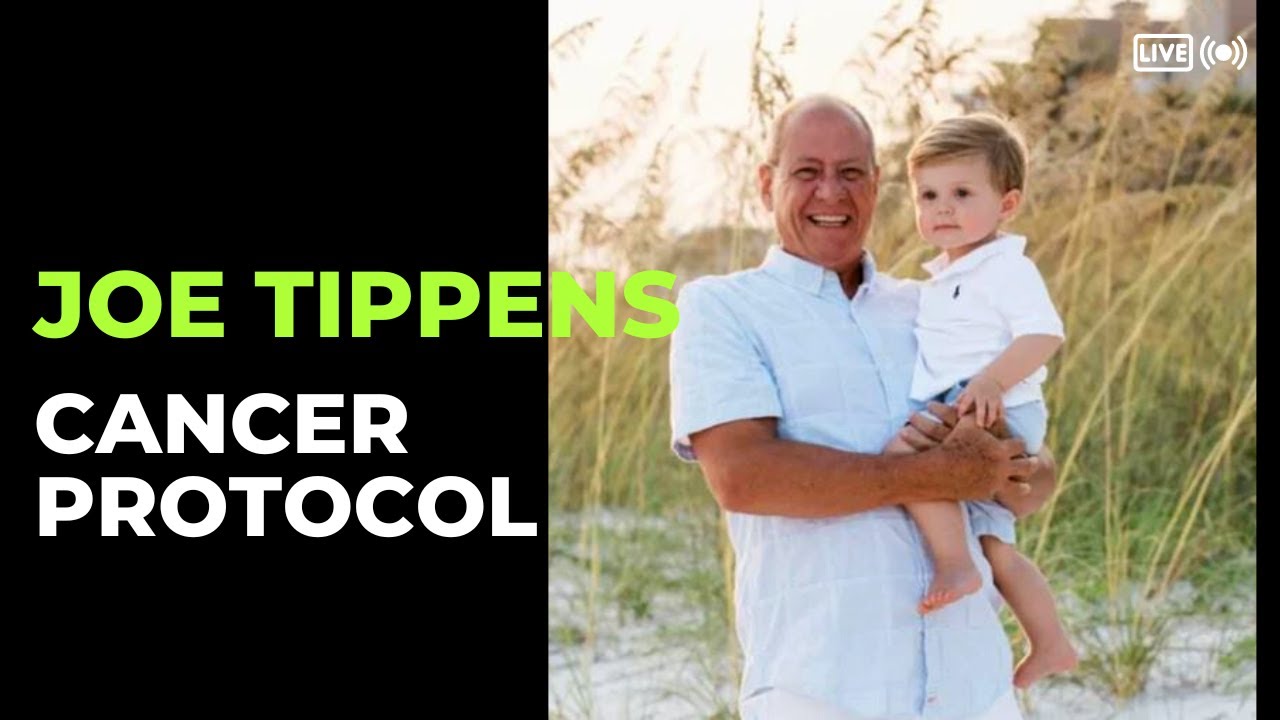
Why Joe Tippens Is Trending Again After All These Years
In 2017, an Oklahoma businessman named Joe Tippens was told he had mere months to live following a diagnosis of metastatic small cell lung cancer. Months later, scans showed he was completely cancer-free. Tippens credited his survival not to standard oncology alone, but to a cheap canine dewormer called fenbendazole. Today, online interest in his story has surged to levels not seen since his initial blog posts went viral. Understanding why Joe Tippens is trending again after all these years requires looking at a convergence of algorithmic shifts, changing attitudes toward repurposed medications, and ongoing debates in integrative oncology.
The Origin of the "Joe Tippens Protocol"
To understand the current resurgence, one must revisit how Tippens became a household name in alternative cancer communities. After standard chemotherapy and radiation failed to halt the spread of cancer across his neck, lungs, liver, bladder, and bones, Tippens received a tip from a veterinarian friend. The veterinarian claimed a scientist had eradicated brain cancer in mice using a common veterinary anthelmintic: fenbendazole.
With nothing left to lose, Tippens designed a regimen that quickly became known worldwide as the "Joe Tippens Protocol." The regimen typically consists of:
- Fenbendazole: Originally administered at 222 mg per day (standard dog paste or powder), taken three to seven days per week.
- Curcumin: A bioavailable turmeric extract taken to reduce inflammation and support systemic health.
- CBD Oil: Broad-spectrum cannabidiol taken sublingually to relieve inflammation and cell stress.
- Vitamin E (specifically tocotrienols): Added to support cell protection and antioxidant activity.
When PET scans in May 2017 showed no remaining signs of active malignancy, Tippens started a blog titled Get Busy Living. It rapidly accumulated millions of readers seeking hope against dire terminal prognoses.
Why Joe Tippens Is Trending Again After All These Years
Viral stories usually have a finite lifespan, fading as news cycles turn. Yet Tippens has re-emerged across Google Search, X (formerly Twitter), TikTok, and alternative health forums. Several distinct catalysts explain this renewed momentum.
1. The Explosion of Short-Form Video and TikTok Algorithms
The original Tippens boom was driven primarily by Facebook groups and traditional blogs. Over the past year, short-form creators on TikTok, YouTube Shorts, and Instagram Reels have discovered the story, repackaging it into 60-second clips featuring dramatic hooks like, "The $10 drug big pharma doesn't want you to know about." Because the algorithm rewards high-engagement, emotionally charged content, these videos regularly harvest millions of views, introducing a completely new, younger demographic to Tippens' story.
2. Post-Pandemic Fascination with Repurposed Drugs
The global pandemic ignited widespread debate over drug repurposing—the practice of using off-patent, existing medications for novel therapeutic purposes. While ivermectin drew the bulk of public controversy, it opened a massive psychological and cultural door. Everyday readers and independent researchers became deeply invested in researching antiparasitic compounds, leading directly back to fenbendazole and mebendazole.
3. Mainstream Podcasters and Independent Media
Long-form wellness podcasts and alternative medical programs have recently revisited anthelmintics. High-profile biohackers, integrative practitioners, and alternative health advocates frequently cite Tippens when debating whether established oncology ignores off-patent molecules. Each time a popular health host mentions "the dog dewormer guy," search volume spikes dramatically.
The Scientific Reality: How Anthelmintics Interact with Cancer

While the internet often reduces the Tippens protocol to folklore, the underlying biochemistry of benzimidazoles (the class of drugs containing fenbendazole and mebendazole) is a legitimate topic of laboratory research.
Benzimidazoles work in parasites by binding to tubulin, a protein necessary for building the internal scaffolding (microtubules) of cells. Without functional microtubules, cells cannot divide and undergo programmed cell death (apoptosis). Because cancer cells divide rapidly, they are uniquely sensitive to microtubule disruption—the same biological target exploited by established chemotherapy drugs such as paclitaxel and vincristine.
Preclinical studies in cell cultures and rodent models have indicated that fenbendazole can:
- Disrupt microtubule dynamics similar to certain chemotherapy agents.
- Inhibit glucose uptake by downregulating glucose transporter (GLUT) expression, effectively starving metabolically hyperactive tumor cells.
- Activate p53, a critical tumor-suppressor protein often mutated or dormant in malignant cells.
However, an enormous gap exists between a Petri dish and a living human body. Many compounds kill cancer cells in laboratory environments but fail entirely in clinical human trials due to poor bioavailability, liver toxicity, or metabolic breakdown.
The Confounding Variable: The Keytruda Clinical Trial
Perhaps the most critical—and frequently overlooked—detail in Joe Tippens' case is that he was not taking fenbendazole in total isolation. At the exact time he began taking the dewormer, he was enrolled in a clinical trial at MD Anderson Cancer Center receiving pembrolizumab (Keytruda).
Keytruda is a revolutionary immune checkpoint inhibitor (anti-PD-1 therapy) that unleashes the body’s own T-cells to identify and attack cancer. It has transformed the standard of care for numerous malignancies and is well documented to produce dramatic, durable complete remissions in a subset of patients with advanced cancers—even without any adjunct therapies.
Oncologists emphasize that Tippens’ survival is far more plausibly attributed to Keytruda, or potentially to an unknown synergistic reaction, rather than the anthelmintic alone. Because of this major confounding factor, single-patient anecdotes cannot serve as reliable proof of drug efficacy.
Medical Community Warnings and Safety Risks
Mainstream oncologists urge extreme caution for patients considering veterinary formulations. Relying on unverified online protocols carries concrete hazards:
- Hepatotoxicity: High-dose or prolonged benzimidazole administration can cause acute liver injury and elevated liver enzymes, potentially disqualifying patients from life-saving conventional trials.
- Purity and Regulation: Veterinary products are not manufactured under human pharmaceutical-grade Good Manufacturing Practices (GMP) and may contain contaminants, inconsistent dosages, or undisclosed additives.
- Treatment Delay: The greatest risk occurs when patients forgo proven, curative standard-of-care treatments in favor of self-administered protocols found on social media.
Summary: Hope, Hype, and the Future of Repurposing
Joe Tippens is trending again because his story taps into universal human emotions: hope against insurmountable odds, frustration with the cost of healthcare, and a natural attraction to simple, accessible remedies. While the science of repurposing anthelmintics like mebendazole remains an active, credible area of formal academic research, self-prescribing animal medication based on algorithmic social media trends remains a high-stakes gamble. Rigorous clinical trials, rather than viral videos, remain the only dependable way to separate medical breakthroughs from wishful thinking.

.png)