Why John McEnroe’s Game Was Considered 'Too Much'
When John McEnroe burst onto the professional tennis scene in the late 1970s, the sport was still recovering from its transition into the Open Era. Tennis was viewed as a pristine gentleman’s game characterized by all-white attire, quiet crowds, and stoic athletes who accepted line calls without a flinch. McEnroe shattered that polished image completely. To the establishment, why John McEnroe’s game was considered 'too much' was a burning question of etiquette, temperament, and style.
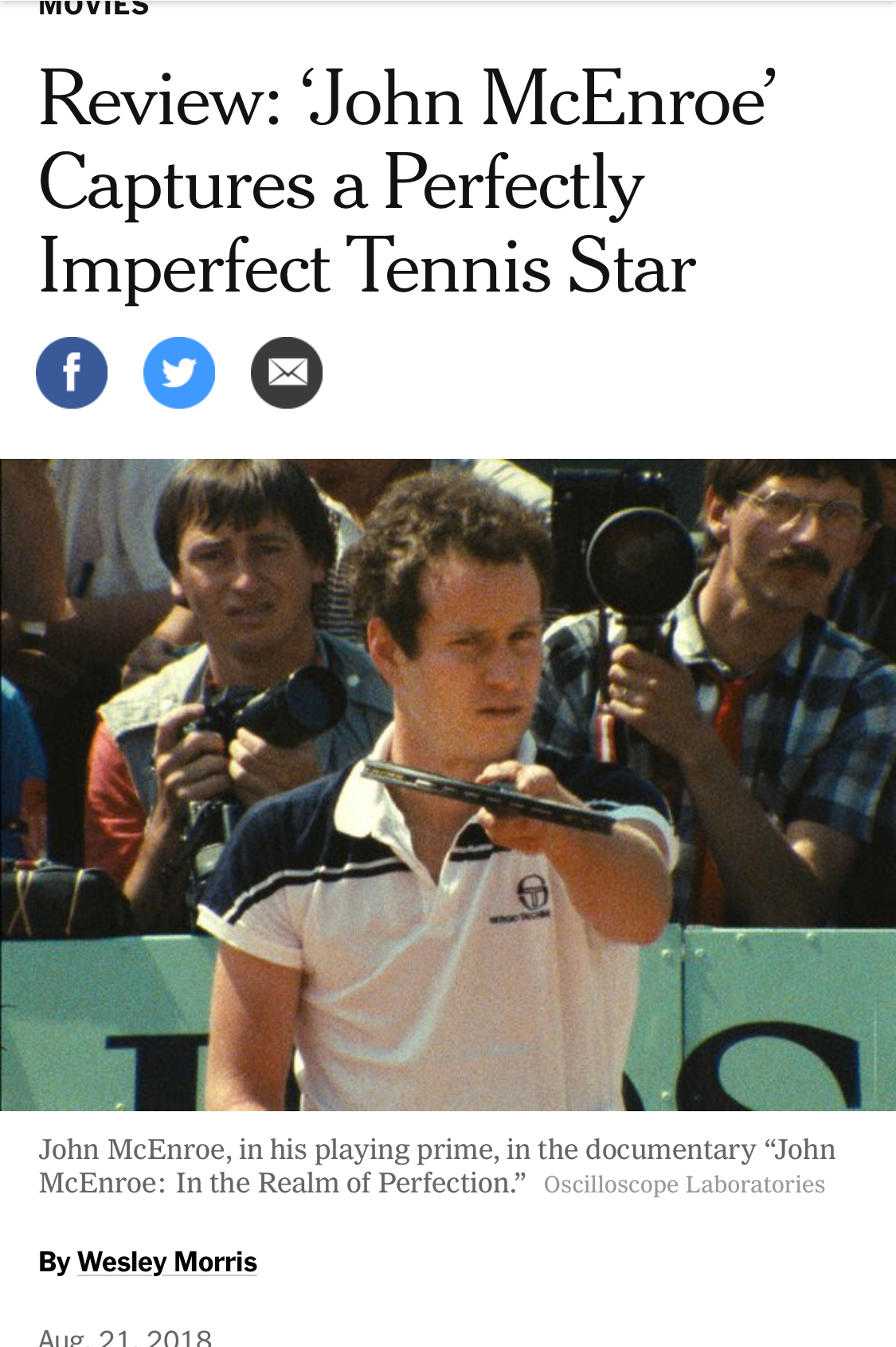
Yet, beneath the explosive tirades and the relentless arguing with chair umpires lay a tactical genius. McEnroe was not just a disruptive force; he was a revolutionary player whose unorthodox abilities rewrote the rulebook on how tennis could be played at the highest level.
The Clash of Temperament: Why John McEnroe’s Game Was Considered 'Too Much'
Tennis in the 1970s and 80s was defined by the cool, calculating grace of players like Björn Borg and the classic technique of Arthur Ashe. McEnroe, by contrast, was a bundle of raw, unvarnished nerves. His outbursts directed at officials—most famously resulting in his disqualification from the 1990 Australian Open—became his signature outside of his trophy collection.
Critics argued that his behavior tarnished the prestige of historic venues like Wimbledon. To conservative tennis fans and tournament officials, his explosive personality was simply too much to handle. He personalized every point, wore his heart on his sleeve, and transformed the quiet cathedral of tennis into a gladiatorial arena. But this emotional intensity was not just for show; it was the engine that drove his competitive fire.
Unorthodox Technique on the Court
Beyond his on-court tantrums, McEnroe’s playing style baffled traditional coaches. He did not rely on the heavy baseline topspin that would later dominate the sport. Instead, he employed a game built on geometry, touch, and anticipation.
- The Slew-Foot Service Motion: McEnroe turned his back almost entirely to the net during his wind-up, hiding the ball until the last fraction of a second to disguise his placement.
- Sublime Volleying: He possessed arguably the softest hands in tennis history, ending points at the net with delicate touch rather than brute force.
- Pure Left-Handed Angles: Playing as a southpaw on fast surfaces allowed him to slice serves wide into the deuce court, pulling opponents completely off the court.
Why It Worked: The Strategic Brilliance Behind the Madness
Video: McEnroe And Gilbert SLAM Alex Eala’s Serve, Can She SILENCE Them In Wuhan?

While purists rolled their eyes at his antics and doubted his longevity, McEnroe's approach was remarkably effective. He reached the World No. 1 ranking in both singles and doubles, capturing seven Grand Slam singles titles and nine major doubles titles.
His strategy relied on disrupting his opponent's rhythm. By rushing the net off almost every serve—including the second serve—he forced opponents to make difficult passing shots under immense pressure. He shortened points, neutralized powerful baseline hitters, and used psychological intimidation as a calculated weapon.
Mental Warfare as a Tactical Edge
McEnroe weaponized his own volatility. By constantly engaging with the crowd and the officials, he managed to keep his own adrenaline surging while successfully rattling his opponents. Players like Björn Borg managed to tune it out, but many others allowed McEnroe's theatrics to distract them from their game plans. It was psychological warfare disguised as a meltdown.
The Legacy of a Tennis Icon
Time has softened the perception of John McEnroe. What was once viewed as disruptive and unacceptable is now recognized as authentic passion. Modern tennis embraces players who show emotion, and analysts universally praise the tactical genius of his serve-and-volley mastery.
Ultimately, McEnroe proved that excellence does not need to conform to a specific mold. By leaning into his unique strengths—and his fiery disposition—he forced the tennis world to expand its boundaries. The game may have thought he was too much at the time, but tennis is undeniably better because he played it his way.


