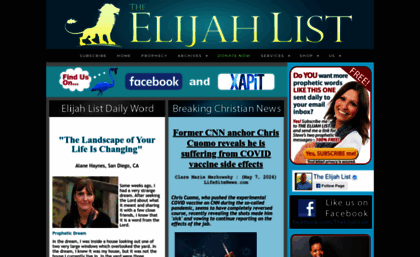
Why the Elijah List Feels More Relevant Than Ever
Introduction

In an era defined by rapid technological change, political polarization, and widespread cultural anxiety, millions of people worldwide find themselves searching for stability, meaning, and a sense of the future. Among Christian audiences, this search often leads toward prophetic ministries and digital media hubs. Few platforms have captured this contemporary hunger quite like the Elijah List. For observers of modern religion and media, understanding why the Elijah List feels more relevant than ever requires looking past simple skepticism or uncritical devotion, and instead examining how digital platforms meet deep spiritual and psychological needs in turbulent times.
Founded decades ago as a modest email newsletter sharing prophetic words and dreams, the platform has evolved into a multimedia powerhouse. It features daily video broadcasts, interviews with prominent charismatic leaders, and a steady stream of written commentary. To understand its current cultural footprint, we have to look at the intersection of modern anxiety, digital communication, and the enduring human desire for divine reassurance.
The Psychology of Prophecy in Times of Crisis
Throughout history, periods of intense societal upheaval have consistently triggered surges in prophetic and apocalyptic movements. When traditional institutions—whether governmental, financial, or religious—fail to provide clear answers or security, individuals naturally look for alternative sources of authority and insight.
The Elijah List operates precisely in this space. By framing current events through a cosmic lens, the platform offers its readers and viewers a narrative that makes sense of chaos. Instead of viewing global conflicts, economic shifts, or political elections as random, chaotic accidents, the prophetic framework presents them as part of a grander, purposeful design.
Finding Agency Through Spiritual Warfare
Another reason for the platform's resonance is its emphasis on active spiritual participation. Rather than encouraging passivity in the face of bad news, content on the platform frequently calls adherents to specific actions, such as:
- Engaging in targeted intercessory prayer for national leaders and institutions.
- Participating in online prayer chains and global fasting initiatives.
- Rebranding personal setbacks as preparation for future spiritual breakthroughs.
- Sharing prophetic words on social media to counter mainstream news narratives.
This active posture gives participants a profound sense of agency. In a world where ordinary citizens often feel powerless against macro-level forces, believing that one's prayers can shift geopolitical outcomes is deeply empowering.
The Digital Ecosystem and Direct-to-Consumer Faith
The rise of the internet fundamentally dismantled traditional gatekeepers in religion, just as it did in journalism and entertainment. In the past, prophetic voices had to pass through denominational filters, publishing houses, and established church hierarchies to reach an audience.
Platforms like the Elijah List bypassed these hurdles entirely, utilizing a direct-to-consumer model that relies on email subscriptions, YouTube algorithms, and independent websites. This disintermediation creates an intimate bond between the speakers and the audience.
Video: The God Who Answers By Fire! Elijah and YOU!

Community and Belonging Online
For many believers—particularly those who feel isolated in their local churches or live in secularized urban areas—the Elijah List provides a virtual community. The live chat rooms during daily video broadcasts buzz with comments from viewers across the globe. They share prayer requests, express mutual encouragement, and validate each other's spiritual experiences. This digital fellowship fosters a powerful sense of belonging, convincing participants that they are part of a remnant movement standing strong in a changing world.
Why the Elijah List Feels More Relevant Than Ever in Modern Media
Beyond theology and community, the enduring and growing appeal of the platform comes down to media strategy and cultural positioning. In an attention economy dominated by sensationalism and 24-hour news cycles, the Elijah List mirrors the pacing and urgency of modern digital journalism.
Headlines often feature high-stakes terminology, urgent warnings, and dramatic predictions about impending cultural shifts. By adopting the urgency of a news channel while maintaining the authority of a prophetic oracle, the platform successfully bridges the gap between sacred devotion and secular media consumption habits.
The Allure of Alternative Narratives
Trust in mainstream media institutions has hit historic lows across various demographic groups. When traditional news outlets report on economic instability or cultural divides, many consumers look elsewhere for alternative interpretations. The Elijah List offers a complete counter-narrative—one where the struggles of today are viewed as the birth pangs of a miraculous tomorrow. This consistent message of ultimate victory and restoration acts as a powerful antidote to modern despair.
Navigating Complexity and Critiques
While the platform enjoys immense popularity, it is not without its critics. Sociologists, theologians, and even fellow Christians frequently raise concerns regarding the track record of specific predictions, the commercialization of spiritual content, and the blending of partisan politics with prophetic declarations.
However, for the dedicated audience, these criticisms often reinforce rather than diminish the platform's appeal. In the eyes of many followers, pushback from mainstream institutions or critical theologians is seen as confirmation that the message is counter-cultural and disruptive to the status quo.
Conclusion
The widespread resonance of the Elijah List is a fascinating case study in modern religious sociology. It thrives because it meets authentic human needs: the desire for hope in dark times, the longing for direct spiritual community, and the search for a meaningful narrative amidst global chaos. Whether viewed as a source of divine insight or a reflection of contemporary psychological trends, the platform demonstrates the enduring power of faith-based media to shape how people perceive and navigate their world today.