Why Valerie Used Reverse Chronological Order
When seasoned professionals hit a plateau in their job searches, the problem rarely lies in their qualifications. Instead, it often comes down to how those qualifications are presented. Faced with weeks of radio silence from hiring teams, Valerie revamped her entire application approach. The breakthrough came when Valerie used reverse chronological organization to restructure her work history, shifting the immediate focus onto her most recent leadership wins and quantifiable achievements.

Understanding why Valerie made this pivot—and how it directly solved her hiring challenges—reveals practical strategies any job seeker can use to catch the eye of recruiters and pass automated screenings.
Understanding the Reverse Chronological Resume Layout
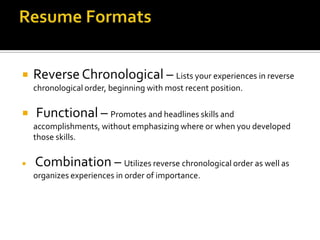
The reverse chronological resume is the most traditional and widely recognized resume format in the modern job market. In this layout, your professional experience is listed starting with your current or most recent position at the top, followed by previous roles arranged backward in time.
Each entry typically features:
- Job title and company name
- Employment dates (month and year)
- Location (city, state, or remote)
- Bullet points detailing core responsibilities, key projects, and measurable results
While newer formats like functional (skills-based) or hybrid (combination) resumes have emerged, the reverse chronological format remains the undisputed standard across virtually every industry.
Why Valerie Used Reverse Chronological Formatting
Valerie had initially experimented with a functional resume. She thought grouping her skills into thematic categories like "Brand Strategy" and "Cross-Functional Leadership" would emphasize her versatility. However, that layout obscured her career trajectory, leaving recruiters guessing about where and when she had delivered those results.
Here is why switching formats made all the difference for Valerie:
1. Immediate Alignment with Recruiter Habits
Recruiters spend an average of six to eight seconds during their initial scan of a resume. During that brief window, they look for predictable markers: your current title, your current employer, and how long you have been in that position. When Valerie used reverse chronological styling, she gave recruiters exactly what they expected, removing friction and making her resume effortless to evaluate.
2. Highlighting Natural Career Progression
Valerie had earned two promotions over six years, moving from Senior Strategist to Associate Director, and finally to Director of Marketing. A functional resume hid this growth inside generic skill buckets. By organizing her career backward from her latest title, she visually demonstrated upward mobility, increasing responsibility, and sustained loyalty.
3. Optimization for Applicant Tracking Systems (ATS)
Most corporate recruiting platforms use Applicant Tracking Systems (ATS) to parse candidate profiles. These algorithms are programmed to extract employment history in sequential order. Functional resumes often confuse ATS parsers, resulting in missing dates, misattributed skills, or unparsed experience. The chronological sequence allowed the software to accurately index her experience level, qualification matches, and tenure.
Video: A twist in Gilmore girls
The Anatomy of Valerie's Winning Resume

To replicate Valerie's turnaround, examine how she arranged each section to maximize readability and impact:
Header and Professional Summary
Valerie placed her contact details at the top, followed by a concise three-sentence summary. Rather than an outdated "Objective" statement, her summary clearly stated her professional identity, years of experience, and signature capability:
"Results-driven Marketing Director with over eight years of experience scaling B2B SaaS brands. Proven track record of growing inbound pipeline by 42% through integrated content and demand generation strategies. Adept at leading cross-functional teams of 15+ specialists to achieve aggressive revenue targets."
Professional Experience (The Core)
Valerie structured her work history with precision. Under her most recent position, she included four targeted bullet points using the "Action Verb + Context + Metric" formula:
- Spearheaded a full brand repositioning that expanded qualified lead volume by 38% year-over-year.
- Restructured a 12-person digital acquisition team, reducing customer acquisition cost (CAC) by 18% in nine months.
- Managed an annual marketing budget of $2.4M, maintaining fiscal variance within 1.5%.
For positions held earlier in her career, she reduced the number of bullets, providing only the high-level scope and most prominent successes. This tapered approach kept the spotlight firmly on her executive-level contributions.
Education and Technical Skills
Because Valerie had nearly a decade of experience, her education section was placed near the bottom. Her degrees were listed simply without high school information or graduation years that might invite age bias. Beneath her education, she included a targeted technical skills matrix highlighting marketing automation platforms, CRM software, and data analytics tools.
When Should You Use Reverse Chronological Order?
While Valerie's pivot produced rapid interviews, this format is especially effective in specific circumstances:
- You have a steady career path: If each of your roles shows steady advancement or logical lateral movement within the same field, this format tells that story better than any other.
- You are staying in the same industry: Demonstrating recent, relevant domain expertise assures hiring managers that you require minimal onboarding time.
- Your recent achievements are your strongest: If your best work occurred in the last three to five years, placing it at the very top ensures it is seen first.
When an Alternative Format Makes More Sense
Although reverse chronological is the standard, it is not universally ideal for every candidate. You might consider a hybrid or functional structure if:
- You are changing careers entirely: If your recent job has no relevance to your target position, leading with transferable skill categories may help bridge the gap.
- You have long, unexplained employment gaps: A chronological format makes multi-year gaps immediately obvious, which may require a hybrid format to contextualize.
- You have frequently hopped jobs: If you have held four or five short-term roles in a two-year span, grouping your accomplishments by project or competency can prevent the appearance of instability.
Key Steps to Build Your Reverse Chronological Resume
To build a high-performing document modeled on Valerie's success, follow these practical steps:
- Limit your scope: Focus intensely on the last 10 to 15 years. Roles older than 15 years can be omitted entirely or summarized in an "Earlier Career History" section without dates.
- Quantify outcomes: Avoid simply listing daily duties. Replace passive phrases like "Responsible for managing social media" with active, data-backed statements like "Grew organic social engagement by 65% across three primary channels."
- Use clean formatting: Rely on standard fonts (such as Calibri, Arial, or Georgia), clear margins (0.5 to 1 inch), and consistent date formats (e.g., "MM/YYYY – MM/YYYY"). Avoid graphics, text boxes, and tables that could disrupt ATS parsing.
- Tailor to the job description: Align your bullets with the specific keywords and core competencies listed in the job posting to ensure your resume scores high on relevance.
By swapping out an unconventional layout for a clean, reverse chronological framework, Valerie eliminated ambiguity and presented recruiters with an undeniable record of progression. For job seekers looking to showcase recent momentum and career growth, this classic format remains the most reliable pathway to interview invitations.