Why You Need a Countdown Calendar for Small Business
Running an independent enterprise means operating without the safety net of massive corporate departments. When a high-stakes product release, holiday promotional rush, or quarterly tax deadline looms, every hour counts. Too often, critical initiatives stall because standard project schedules fail to convey a true sense of urgency. Understanding why you need a countdown calendar for your small business success can mean the difference between scrambling across the finish line and executing a composed, profitable campaign.

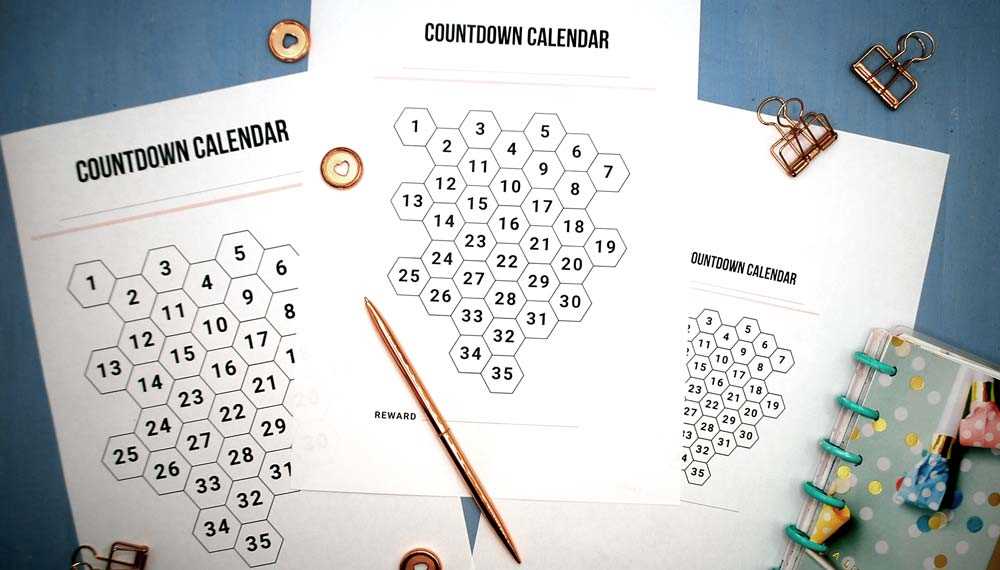
Unlike traditional monthly wall planners or static project spreadsheets, a countdown calendar flips the temporal perspective. Instead of tracking what day of the week it is, it relentlessly displays how much runway you have left. For lean teams wearing multiple hats, this subtle psychological shift turns abstract timelines into tangible momentum.
The Psychology Behind Countdown Planning
Human beings respond differently to shrinking deadlines than they do to fixed calendar points. Behavioral psychologists call this the Goal Gradient Effect—the closer we perceive ourselves to be to a finish line, the faster and more focused our efforts become. Traditional calendars display dates in an expansive grid that creates an illusion of boundless time. In contrast, countdown systems leverage two critical psychological drivers:
- Combating Parkinson’s Law: Work expands to fill the time allotted for its completion. By measuring time as diminishing units (T-minus 30 days, 15 days, 48 hours), team members allocate effort with immediate discipline rather than deferring tough tasks until the final week.
- Cognitive Clarity: A single number—days remaining—cuts through the noise of competing daily priorities. It provides an instantaneous filter for deciding whether an ad-hoc meeting or non-essential task deserves attention right now.
Why You Need a Countdown Calendar for Your Small Business Success
For independent founders and small teams, the benefits of visual countdown management extend far beyond personal motivation. It acts as an operational anchor across several vital areas of small business execution.
1. Synchronizing Cross-Functional Dependencies
Consider an e-commerce brand launching a fall apparel collection. Marketing cannot finalize promotional assets until photography is complete; inventory cannot be photographed until manufacturing samples arrive; sales pages cannot go live until stock quantities are verified. When these interdependent workflows rely on disconnected calendar dates, handoffs slip silently.
A central countdown aligns every stakeholder around universal markers. A packaging delay at T-minus 14 days immediately triggers contingency plans across shipping, social media scheduling, and customer support before a full-blown crisis erupts.
2. Eliminating Costly Launch-Week Panic
Last-minute rushes are expensive. They lead to overnight shipping surcharges, rushed contractor fees, missed QA steps, and preventable website crashes. Reverse-engineering a project from your target launch date establishes clear milestone gates:
- T-minus 60 Days: Product finalization, vendor agreements locked.
- T-minus 30 Days: Creative assets produced, initial email sequences drafted.
- T-minus 14 Days: Beta testing, checkout flow stress tests, customer service briefings.
- T-minus 48 Hours: Final staging, review of automated workflows, team rest before kickoff.
Tracking progress in reverse guarantees that the final 48 hours are dedicated to monitoring and execution, not desperate problem-solving.
3. Building External Anticipation and Revenue Momentum
Countdown calendars are not just internal management assets; they are potent sales mechanisms. Sharing your countdown publicly on social media channels, website banners, and email newsletters creates genuine anticipation. In an era where consumers face endless options, visual timers cultivate scarcity and excitement, dramatically boosting opening-day conversion rates.
High-Impact Scenarios for Countdown Implementation

While every business operates on a rhythm of recurring tasks, countdown frameworks deliver the highest return when applied to high-stakes, revenue-generating events:
- Holiday and Peak Season Readiness: Q4 retail events like Black Friday and Cyber Monday require months of preparation. Initiating a 90-day countdown in August ensures inventory procurement, marketing automation, and logistics stress-testing happen on schedule.
- Physical Store Openings or Pop-Up Events: Coordinating commercial permits, retail buildouts, signage, and staffing demands a hard, immovable deadline.
- Major Software or Digital Product Drops: Running beta releases and security audits through a T-minus framework prevents feature creep from delaying launch dates indefinitely.
- Crowdfunding and Financing Milestones: Time-sensitive capital raises on platforms like Kickstarter require intensive community-building in the exact 30 days preceding the campaign.
How to Set Up Your Business Countdown System
Implementing a countdown calendar does not require complex enterprise software. The effectiveness of the system rests on consistency and visibility.
Step 1: Anchor the Absolute Zero Point (T-0)
Choose an unmovable launch date and time. Ambiguity here destroys urgency. Ensure every team member knows that T-0 represents the moment the doors open or the product goes live to the public.
Step 2: Map Backward Milestones
List every critical dependency and assign it a specific "T-minus" day rather than a calendar date. For instance, rather than scheduling an audit for "October 12th," make it "T-minus 10 Days." This reinforces the connection between the sub-task and the ultimate outcome.
Step 3: Select the Optimal Medium
Choose a format that matches your team’s working style:
- For Co-located Teams: A large, prominent digital display or magnetic whiteboard in your main workspace keeps the timeline front and center every working hour.
- For Remote Teams: Shared dashboard widgets in platforms like Notion, ClickUp, or dedicated countdown Slack integrations preserve visible urgency across different time zones.
Step 4: Establish Daily Check-Ins
During the final two weeks of an initiative, anchor your daily five-minute standup around the remaining time. Ask team members: "Given that we are at T-minus 8 days, what is the single most critical block standing between your milestone and completion today?"
Avoiding Countdown Fatigue
Urgency is a powerful catalyst, but perpetual crisis mode breeds burnout. To preserve the potency of your countdown calendars, maintain strategic boundaries:
- Reserve for Major Milestones: Do not maintain permanent countdowns for mundane administrative routines. Limit active countdowns to your top one or two quarterly priorities.
- Include Built-In Buffer Windows: Build a 3- to 5-day contingency block directly into your schedule ahead of T-0. If complications arise, your timeline absorbs the shock without throwing the team into disarray.
- Celebrate the Finish Line: When the counter reaches zero and the campaign launches, pause to recognize team effort. Acknowledging milestone achievements recharges morale for the next sprint.
Final Thoughts: Turn Time into Your Competitive Advantage
Small businesses cannot outspend corporate conglomerates, but they can outmaneuver them through agility, focus, and rapid execution. A countdown calendar converts the abstract passage of days into an actionable driver of performance. By locking in clear targets, aligning team energy, and eliminating avoidable delays, you position your venture to hit its goals consistently and capture predictable commercial success.