Why You Need an Application I 90 Expert
Filing United States Citizenship and Immigration Services (USCIS) Form I-90, Application to Replace Permanent Resident Card, often strikes lawful permanent residents as a routine administrative chore. Many assume it functions just like renewing a driver's license: pay a fee, upload a photo, and wait for the new card in the mail. However, the reality of immigration law is rarely that simple. A single oversight on this form can lead to processing delays of over a year, forfeiture of filing fees, or even unexpected scrutiny of your lawful status. Understanding why you need an Application I 90 expert can make the difference between a smooth renewal and a stressful legal ordeal.

What Is Form I-90 and Who Uses It?
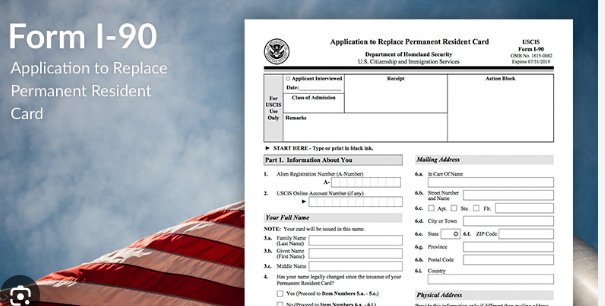
Form I-90 serves one primary function: it is the official application used by lawful permanent residents to renew or replace their Permanent Resident Card (commonly known as a Green Card). You typically file Form I-90 under the following circumstances:
- Your 10-year permanent resident card has expired or will expire within the next six months.
- Your card was lost, stolen, destroyed, or mutilated.
- Your legal name or other biographical information has legally changed since your last card was issued.
- Your card contains typographic errors made by USCIS.
- You never received the physical card originally mailed to you.
- You took up commuter status or are transitioning out of commuter status.
- You reached your 14th birthday (which triggers mandatory re-registration and fingerprinting requirements).
While the form itself is only a few pages long, the legal implications tied to every question on it are substantial.
The Mistake That Ruins Filings: Conditional Residents
One of the most catastrophic and common mistakes Green Card holders make is filing Form I-90 when they hold a 2-year conditional Green Card (often obtained through marriage or an EB-5 investment). If you hold a conditional card, you cannot use Form I-90 to renew your status.
Instead, marriage-based conditional residents must file Form I-751 (Petition to Remove Conditions on Residence), and investors must file Form I-829. If you mistakenly file Form I-90, USCIS will eventually reject or deny the petition, typically months later. By that time, your 2-year conditional status may have expired, potentially placing you out of status and at risk of removal proceedings. An expert immediately flags this distinction, preventing devastating procedural errors.
Why You Need an Application I 90 Expert for Complex Filings
Not every Green Card renewal is clean-cut. Over a 10-year span, life happens: careers change, people travel abroad for extended periods, and legal issues can arise. Here is why self-filing can be dangerous if your background is not entirely free of complications.
1. Extended Travel and Abandonment Concerns
To maintain permanent resident status, you must intend to reside permanently in the United States. If you spent more than 180 consecutive days outside the U.S.—or made multiple long trips abroad over several years—USCIS officers reviewing your I-90 may question whether you abandoned your permanent residency.
An immigration specialist evaluates your travel history before submitting your application. If abandonment risks exist, they can help you assemble corroborating evidence (such as U.S. tax returns, property leases, bank accounts, and employment ties) to prove your continuous intent to maintain U.S. domicile.
2. Criminal Citations or Arrests
Video: ⚠️ I-90 Renewal Risks
Whenever you submit an application to USCIS, you must attend a biometrics appointment where your fingerprints are captured and run through federal databases. Any arrest, citation, charge, or conviction that occurred since your initial Green Card issuance—or even prior offenses that were expunged—will resurface.
Certain offenses categorized under immigration law as "crimes involving moral turpitude" (CIMT) or aggravated felonies can turn a routine I-90 renewal into a referral to an immigration judge for deportation. An immigration attorney will examine certified court dispositions and advise whether filing I-90 triggers deportability or if post-conviction relief is required first.
3. Discrepancies in Personal Details
Applying for a replacement card due to an error, a legal name change, or gender marker update requires rigorous documentary proof. If your foreign birth certificate, passport, marriage certificate, or divorce decree fails to match USCIS standards or lacks certified translations, your case will be met with Requests for Evidence (RFEs), causing months of delay.
The High Cost of USCIS Delays
USCIS processing times for Form I-90 regularly fluctuate between 12 and 24 months. While your petition is pending, your physical Green Card may expire. An expired card creates tangible disruptions in everyday life:
- Employment Verification: Employers reviewing your Form I-9 may request valid proof of employment authorization. While USCIS grants automatic extension notices on I-90 receipt notices, not all HR departments understand how to process them properly.
- International Travel: Airlines often refuse boarding to travelers who lack an unexpired physical card or an official, valid travel stamp.
- Mortgage Applications: Financial institutions frequently delay or deny home loan approvals if the borrower cannot prove ongoing lawful permanent resident status.
- Driver's License Renewal: State DMVs often issue licenses matching the expiration date on your immigration paperwork.
An expert knows how to secure temporary proof of status—such as an Alien Documentation, Identification, and Telecommunication (ADIT) stamp, also known as an I-551 stamp—directly in your passport while your I-90 remains pending.
Is It Better to Apply for Citizenship Instead?
In many situations, filing Form I-90 is an unnecessary expense. If your 10-year card is expiring and you are already eligible for naturalization (Form N-400), you might bypass the I-90 altogether or use your naturalization filing to obtain an automatic extension.
A qualified practitioner looks at your entire immigration trajectory rather than just the immediate form in front of them. If applying for U.S. citizenship is legally viable and strategically advantageous, an expert will guide you in that direction, saving you hundreds of dollars in filing fees and securing permanent protection against future renewal requirements.
Self-Filing vs. Hiring an Expert: Making the Right Choice
Deciding whether to handle Form I-90 independently comes down to your personal legal history and comfort level with federal agency guidelines:
- You may be able to file independently if: You are simply renewing a standard 10-year card, have lived continuously in the U.S. without extensive foreign travel, have zero criminal records or interactions with law enforcement, and your biographical details remain identical to your previous card.
- You should hire an expert if: You have any history of arrests or criminal court appearances, spent more than 6 months abroad in a single trip, hold a 2-year conditional card, need an expedited replacement for critical travel, or received an RFE or Notice of Intent to Deny (NOID) from USCIS.
Final Thoughts
Your Green Card is the single most valuable document safeguarding your ability to live, work, and build a life in the United States. Treating its renewal as mere paperwork overlooks the strict enforcement standards governing lawful permanent residence. By consulting an experienced immigration professional, you safeguard your legal status, prevent costly filing errors, and maintain your peace of mind.