Why You Scroll: The Science of Endless Feeds
It usually starts innocently. You pick up your phone to verify the weather forecast, reply to an urgent message, or check the time. Ten minutes later, your initial goal is entirely forgotten. Instead, you scroll through a seamless cascade of short videos, opinion pieces, vacation photos, and breaking news headlines. Your thumb moves on autopilot, flicking upward every few seconds in search of the next micro-dose of stimulation.
This behavior is rarely a conscious choice. Understanding why you scroll requires peeling back the layers of behavioral psychology, interface design, and neurochemistry that make digital feeds so difficult to abandon.
What Happens in Your Brain When You Scroll
The compulsion to keep dragging your finger down a screen is rooted in evolutionary biology. Human brains are wired to seek novel information. In ancestral environments, gathering fresh data about terrain, resources, or social hierarchies was a survival advantage. Modern feeds weaponize this instinct by providing a seemingly limitless supply of novelty.
The primary driver behind this mechanism is dopamine. Contrary to popular belief, dopamine is not purely a pleasure chemical; it is primarily a chemical of anticipation. It surges not when you receive a reward, but when you anticipate receiving one. Digital platforms rely on what behavioral psychologists call a variable ratio schedule of reinforcement—the exact same psychological mechanism that powers slot machines.
When you pull the lever on a slot machine, you do not win every time. The unpredictability of the payout is what makes the game compelling. Similarly, when you swipe up on an infinite feed:
- Most posts are mundane, irrelevant, or mildly entertaining.
- Occasionally, you encounter a post that genuinely delights, outrages, or informs you.
- Because your brain cannot predict which flick will deliver that emotional hit, it compels you to keep checking.
The Architecture of Frictionless Consumption
Human behavior is heavily shaped by friction. If a task requires extra steps or physical effort, participation drops dramatically. Before the late 2000s, digital content had built-in stopping cues. Web pages had pagination: you had to reach the bottom of page one and deliberately click a link to reach page two. That tiny interruption provided a natural pause point—a brief window for your executive function to ask, Do I really want to keep reading?
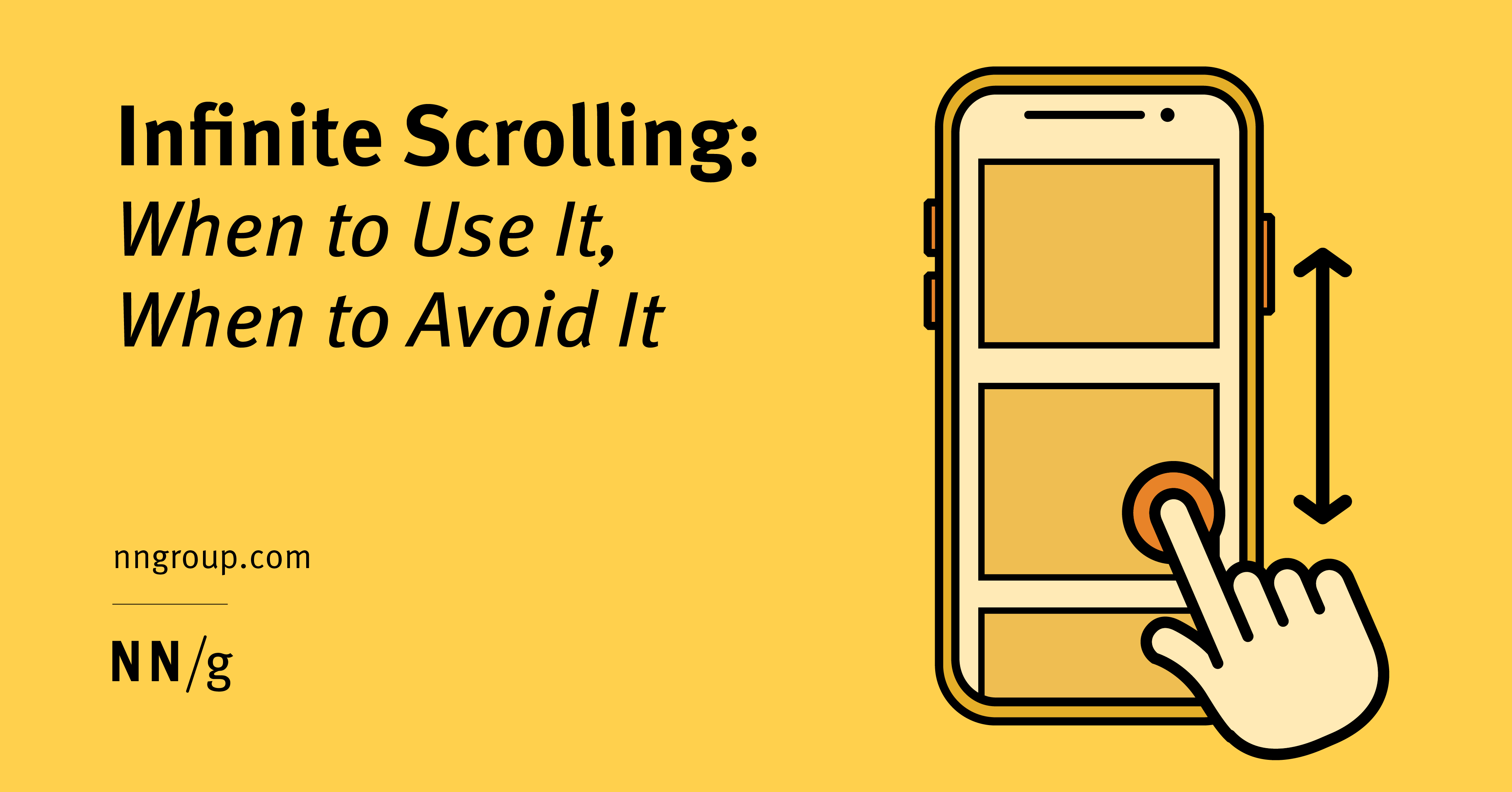
In 2006, interface designer Aza Raskin introduced the concept of infinite scroll. By eliminating pagination, platforms removed the natural boundary between content chunks. The feed anticipates your movement, pre-loading subsequent content before you even reach the bottom of your current view.
When combined with autoplaying videos and personalized recommendation algorithms, the interface strips away all friction. Without physical or visual boundaries telling your brain that an activity has ended, passive momentum takes over.
The Emotional Triggers: Boredom, Anxiety, and Avoidance
While algorithmic architecture creates the trap, internal emotional states push you into it. Scrolling is rarely just about entertainment; it often functions as a low-effort emotional regulator.
1. Escaping Micro-Boredom
Historically, human life was filled with interstitial moments of downtime: standing in an elevator, waiting in line at the grocery store, or sitting at a red light. Today, our tolerance for unstructured stillness has dropped to near zero. At the first sensation of under-stimulation, reaching for the phone provides instant cognitive relief.
Video: s0cliché - you and i
2. Soothing Ambient Anxiety
When faced with a complex work project, a difficult conversation, or underlying life stress, the brain seeks a quick path to comfort. Scrolling provides an immediate distraction that masquerades as an activity. It consumes enough working memory to quiet internal worries without demanding the active cognitive energy required for real problem-solving.
3. The Information Trap (Doomscrolling)
During times of political instability, economic uncertainty, or global crises, the instinct to scroll often morphs into doomscrolling. Driven by anxiety, users consume negative news compulsively under the mistaken impression that gathering more information will provide safety or control. In reality, it floods the nervous system with stress hormones while offering no actionable solutions.
The Hidden Costs of Unconscious Scrolling
Because the physical act of swiping requires minimal effort, it is easy to dismiss endless browsing as harmless downtime. However, chronic and fragmented screen consumption extracts significant tolls on cognitive health:
- Attention Fragmentation: Rapid switching between unrelated topics—from a tragic news item to a slapstick comedy video within seconds—erodes the capacity for sustained focus (deep work).
- Disrupted Sleep Architecture: Engaging with bright screens and high-arousal content directly before bed suppresses melatonin production and delays the onset of restorative sleep phases.
- Subconscious Social Comparison: Constant exposure to curated highlights of other people's careers, bodies, and lifestyles triggers subconscious comparisons, often leading to diminished self-worth and chronic dissatisfaction.
- Lost Time Wealth: Spending thirty minutes scrolling across four different intervals consumes two full hours of the day—time that could otherwise be invested in creative projects, physical health, or genuine rest.
How to Regain Agency Over Your Screen
Breaking the habit does not require abandoning technology entirely. Instead, the goal is to reintroduce intentionality and friction where platforms have systematically removed them.
Reintroduce Deliberate Friction
Because scrolling happens automatically, you need physical barriers that interrupt your muscle memory:
- Turn your display to grayscale: Much of the feed's allure lies in vibrant, saturated notification badges and video thumbnails. Stripping away the color makes the screen look functional rather than intoxicating.
- Move feed-based apps off your home screen: Bury social media apps inside folders, or better yet, delete them and access them only through a mobile browser, which is inherently slower and clunkier.
- Use physical stopping cues: Set a physical kitchen timer across the room before opening an app, or use built-in operating system limits that require an intentional passcode entry to bypass.
Define Clear Consumption Boundaries
Ambiguous rules like "I will use my phone less" rarely succeed. Replace vague intentions with clear, binary parameters:
- Declare screen-free zones: Keep phones entirely out of the bedroom and off the dinner table.
- Time-box your browsing: Schedule specific windows for social media—such as 20 minutes at 4:00 PM—rather than snacking on content intermittently throughout the entire day.
- Practice the "One Out, One In" rule: Before opening an app to consume someone else's thoughts, commit to producing something first, whether it is writing a journal entry, sending an authentic check-in message to a friend, or completing a tangible task.
Shifting from Passive Consumer to Intentional Creator
Ultimately, scrolling is a passive posture. It places you on the receiving end of an algorithmic conveyor belt designed to capture your attention and sell it to advertisers. Regaining control begins with recognizing that your focus is a finite, valuable resource.
The next time you catch your thumb flicking upward, pause for three seconds. Acknowledge the emotional trigger behind the impulse—whether it is boredom, fatigue, or loneliness—and ask yourself if the next swipe will genuinely satisfy that need. Most of the time, the real remedy is not found at the bottom of the feed, but in stepping away from the glass entirely.