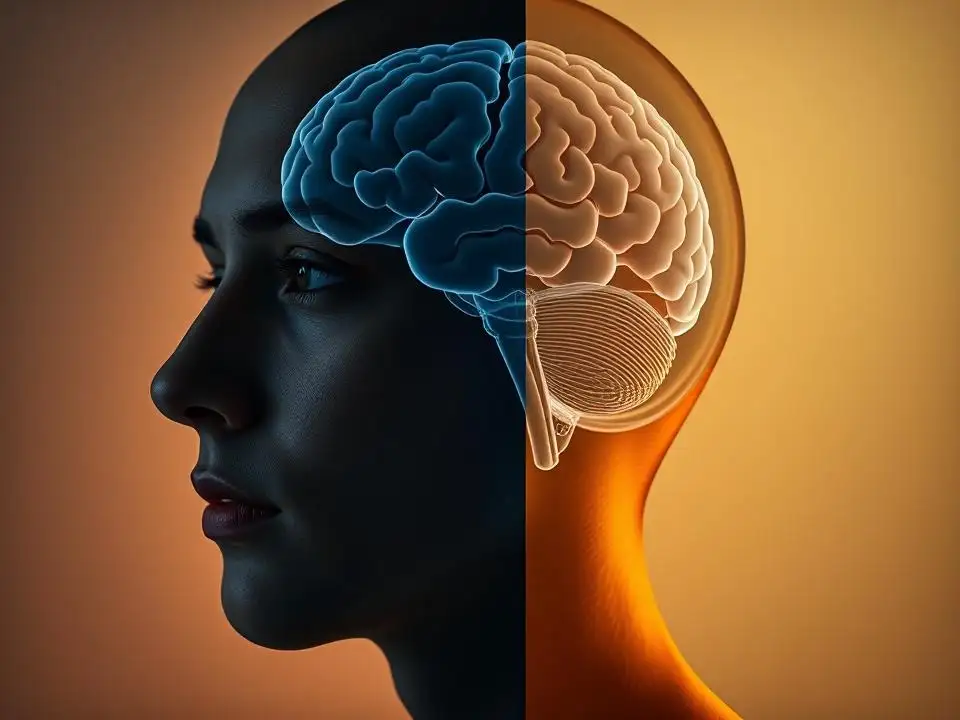
Why Your Brain Lights Up When You Experience This Tension
The Anatomy of Suspense

Imagine sitting in a dark theater as the music swells, a character slowly opens a creaking door, and the camera lingers on the shadows inside. Instantly, your posture shifts. Your heart rate ticks upward slightly, and your focus locks onto the screen. You are hooked. But what is happening beneath the surface? When you watch a gripping movie, read a thriller, or even wait for the punchline of a joke, why your brain lights up when you experience this tension becomes a fascinating study in neurobiology.
Suspense and unresolved conflict are not merely entertaining; they are powerful cognitive triggers. For decades, psychologists and neuroscientists have used functional neuroimaging to watch the human brain grapple with uncertainty. The results show that our minds treat narrative tension almost like a puzzle that demands immediate solving.
The Neural Symphony of Anticipation
When you encounter a tense, unresolved situation, your brain engages in a complex synchronization across multiple regions. Far from being a passive experience, experiencing tension activates an evolutionary survival mechanism designed to keep you alert, calculating, and ready to react.
Dopamine and the Anticipation Loop
At the center of this neural response is dopamine, the neurotransmitter most commonly associated with reward and motivation. However, neuroscientists have discovered that dopamine is less about receiving a reward and more about the *anticipation* of it.
When tension is introduced—such as a cliffhanger in a story or a high-stakes negotiation—your dopamine pathways fire rapidly. Your brain realizes an outcome is pending, and it craves resolution. This chemical surge creates a state of heightened focus, making it nearly impossible to look away or switch your attention to something else.
The Amygdala and Emotional Arousal
Simultaneously, the amygdala—the brain's emotional and threat-detection center—evaluates the stakes. Even if you are sitting safely on your couch, your brain simulates the emotional stakes of the scenario. This triggers a mild, controlled activation of the sympathetic nervous system. Adrenaline trickles into your bloodstream, sharpening your senses and ensuring that every detail of the unfolding tension is encoded deeply into your memory.
Why Our Ancestors Craved Conflict

To truly understand why our brains react so intensely to tension, we have to look backward through evolutionary history. For early humans, uncertainty meant danger. Not knowing whether a rustling in the bushes was a predator or the wind required instant, hyper-focused attention.
Our ancestors who paid close attention to ambiguous, tense situations were more likely to survive and pass on their genes. Over millennia, our neural architecture was sculpted to treat unresolved patterns as high-priority information. Today, we channel this ancient survival mechanism into modern storytelling, sports, and problem-solving.
The Power of Cognitive Closure
Human beings possess an innate psychological drive known as the need for cognitive closure. Coordinated by the prefrontal cortex—the seat of executive function, planning, and logic—our brains despise ambiguity. When presented with a gap in a narrative or an unanswered question, the prefrontal cortex works overtime to generate hypotheses and predict outcomes.
- Pattern Recognition: The brain constantly scans for familiar narrative arcs to predict what happens next.
- Error Detection: When a plot twist or unexpected event disrupts that prediction, the anterior cingulate cortex flags the error and forces your attention to adapt.
- Resolution Reward: Once the tension finally breaks and the mystery is solved, the brain releases a wave of endorphins and dopamine, providing a deep sense of satisfaction.
Harnessing Tension in Everyday Life
Understanding how the brain reacts to tension isn't just an interesting scientific trivia fact; it has practical applications. Communicators, educators, and leaders use the science of tension to capture attention and drive engagement.
By introducing a compelling question before delivering information—a technique known as creating an information gap—you can prime an audience's dopamine system to actively listen for the answer. Instead of stating facts chronologically, framing a concept as a puzzle activates the exact same neural pathways that light up during a great mystery novel.
Conclusion
Ultimately, the reason why your brain lights up when you experience this tension boils down to a brilliant mix of evolution, chemistry, and cognitive design. Tension keeps us engaged, sharpens our focus, and drives our relentless search for answers. Whether it is through art, storytelling, or daily problem-solving, our brains are wired to lean into the suspense, forever chasing the sweet relief of resolution.