Why Your Printable Fantasy Football Rankings Are Wrong
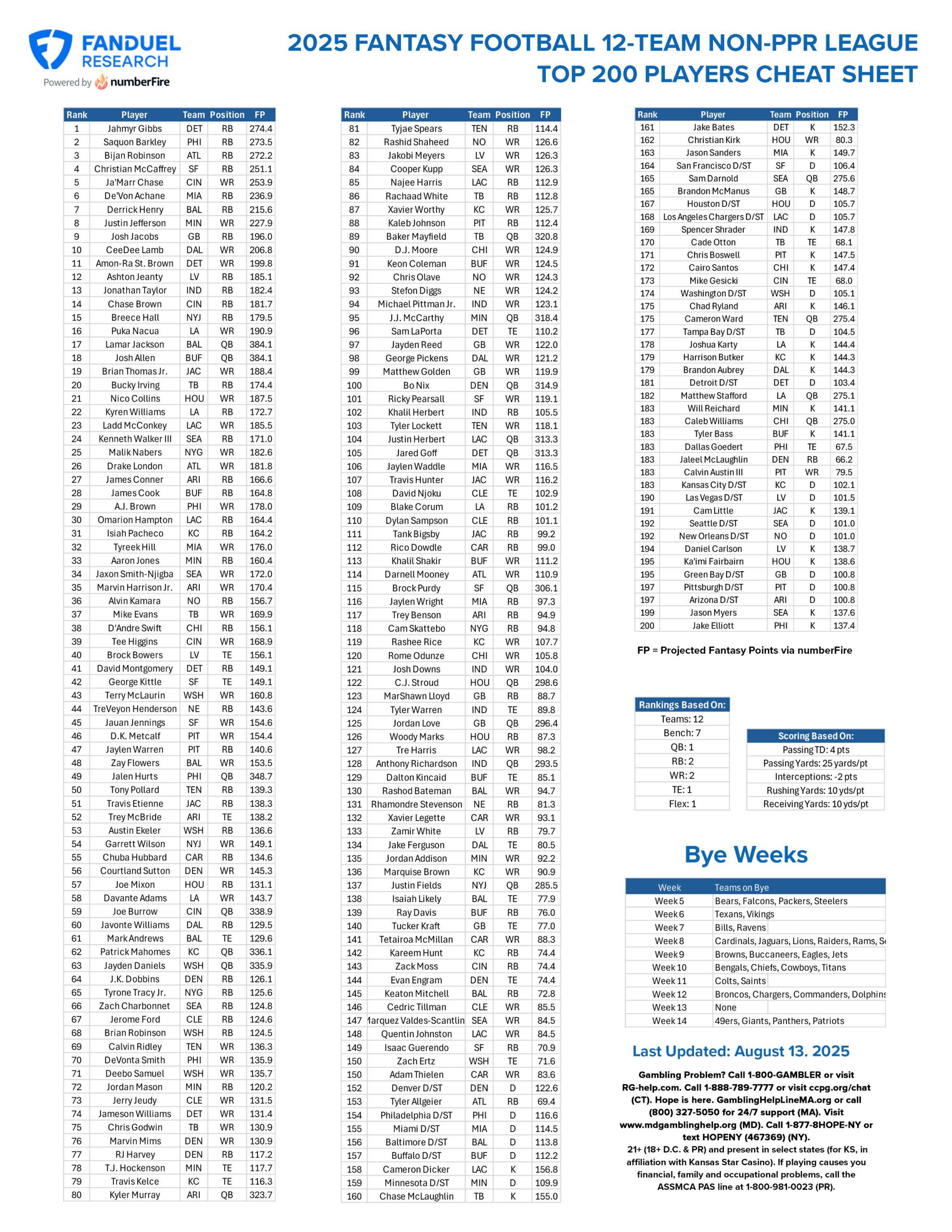
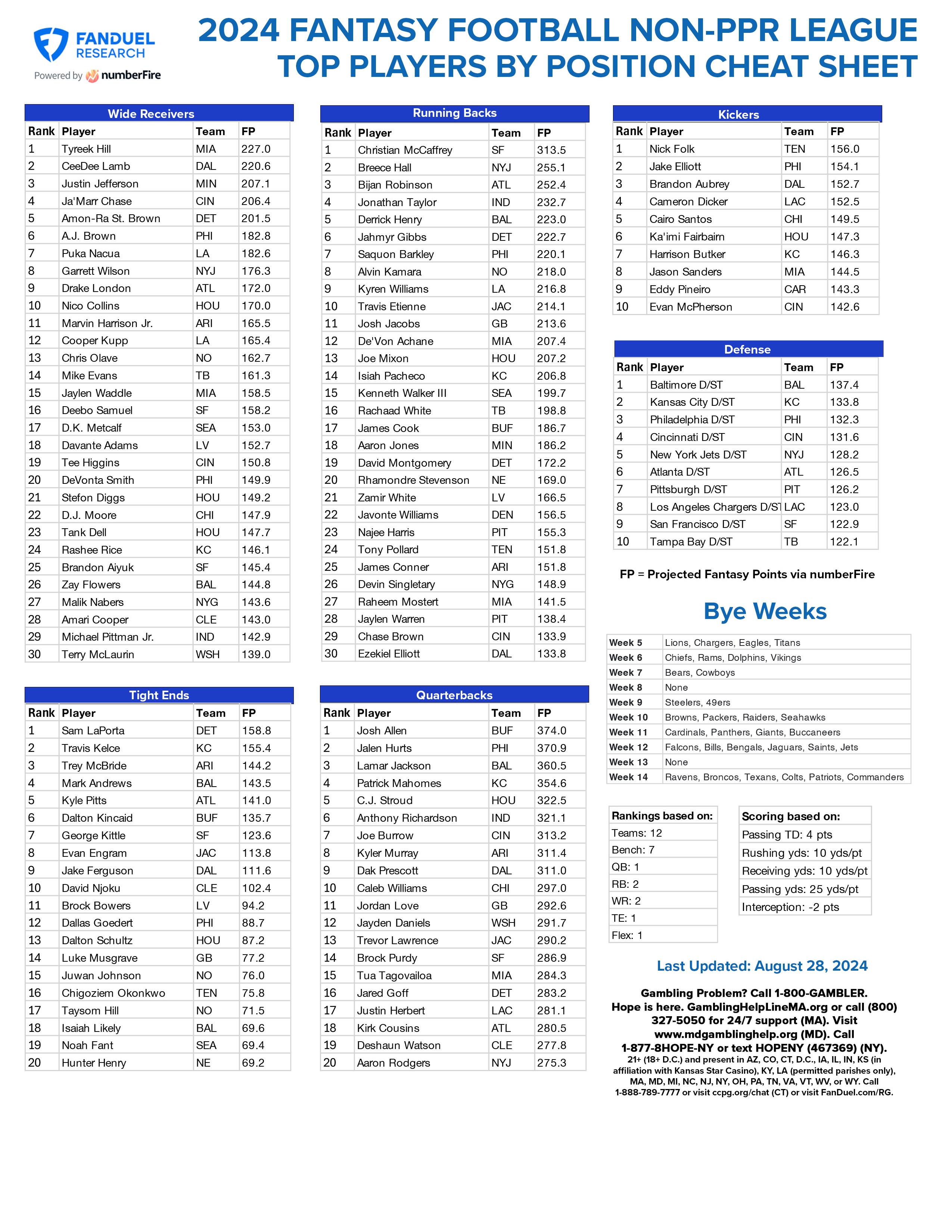
Draft day arrives, and you sit down at the table armed with a multi-page PDF and a fresh yellow highlighter. It feels organized, tangible, and prepared. But if you rely on a generic consensus sheet downloaded from a mainstream sports portal, your draft board is built on quicksand. Understanding why your current printable fantasy football rankings are probably wrong and how to fix them is the single most effective way to turn a frustrating draft into a championship foundation.

Printable cheat sheets are convenient, but convenience often masquerades as strategy. When you treat a flat list of 200 players as gospel, you surrender your draft to blind spots, outdated data, and algorithmic averages that do not reflect your league's reality.
The Fatal Flaws of Generic Printable Cheat Sheets
Most printable rankings represent a compromise. They are engineered to cater to millions of casual players simultaneously, which means they optimize for broad consensus rather than strategic advantage. Here is where they break down:
1. The "One-Size-Fits-All" Scoring Fallacy
The vast majority of downloadable cheat sheets default to standard scoring or vanilla Half-PPR formats. Even when labeled as "PPR," they rarely account for nuanced league settings that radically alter player values, such as:
- Passing touchdown values: A shift from 4-point to 6-point passing touchdowns dramatically boosts elite pocket passers over mid-tier dual-threat quarterbacks.
- Tight End Premium (TEP): Awarding 1.5 or 2.0 points per reception for tight ends shifts top-tier options into round one consideration, yet standard sheets leave them buried in round three.
- Starting lineup requirements: A league requiring three starting wide receivers and two flex spots demands an aggressive early-wideout approach that a standard 1-QB, 2-RB, 2-WR sheet completely obscures.
2. The Preseason Information Lag
A printable sheet is frozen in time the second you hit "Print." In the modern NFL, coaching comments, preseason snap distributions, training camp injuries, and depth chart shakeups happen daily. Drafting from a sheet printed even 72 hours earlier means you risk taking a running back who just lost his goal-line role or reaching for a wide receiver whose target share is evaporating in joint practices.
3. The Linear Ranking Trap
Linear lists (ranking players sequentially from 1 to 200) fool managers into believing that the gap between Player 14 and Player 15 is identical to the gap between Player 44 and Player 45. In reality, player talent and projection drop off in steep cliffs, not smooth gradients. When you draft purely by working down a linear list, you inevitably reach for low-ceiling players simply because they occupy the next numbered slot.
Why Your Current Printable Fantasy Football Rankings Are Probably Wrong And How To Fix Them
Fixing your printable rankings does not mean abandoning the physical sheet altogether. Paper provides an uncluttered, screen-free macro view of the draft board. The solution is transforming your static printout into a customized, dynamic decision matrix before the draft clock starts ticking.
Step 1: Replace Linear Numbers with Distinct Tiers
Tiers group players who project for similar statistical ranges of outcomes. Once your rankings are organized into tiers, draft-day decisions become crystal clear:
- Identify position drop-offs: If four wide receivers remain in Tier 3, but only one running back remains in Tier 2, the running back is the mathematically superior selection.
- Prevent panic reaches: If your target player is drafted one pick ahead of you, but two other players from that identical tier remain available, your strategy stays intact.
Take a black pen and draw thick horizontal lines across your sheet wherever a significant drop-off occurs. This instantly converts a fragile linear list into an actionable tier sheet.
Step 2: Calibrate for Value Over Replacement Player (VORP)
Most consensus sheets rank players based on raw projected points. But raw points do not win fantasy matchups; points scored relative to the baseline replacement player at that position do.

In a 10-team, 1-QB league, the 11th quarterback on the waiver wire will average roughly 16 to 17 fantasy points per game. In contrast, the top available running back on waivers might average only 6 points per game. Because replacement-level quarterbacks are so productive, quarterbacks should be pushed down your board relative to running backs and wide receivers with comparable raw projections.
Step 3: Exploit Platform ADP Inefficiencies
Every fantasy platform—whether Sleeper, ESPN, or Yahoo—features distinct default rankings (Average Draft Position, or ADP). Your league-mates will lean heavily on whatever queue the software shows them on screen.
Compare your customized printable sheet against your host site's default room rankings:
- Identify "Platform Steals": Players you have ranked in round four who sit at overall rank 65 on the platform queue. Do not take them at pick 40; wait until pick 55 to maximize draft capital.
- Identify "Trap Players": Aging veterans elevated into the top 30 on the host site purely based on past name recognition. Cross them off your sheet or highlight them in red to ensure you do not get sucked into an ADP-driven bidding war.
4 Actionable Modifications to Make Right Now
Before you sit down at your draft, perform these four physical edits on your cheat sheet:
1. The 15% Late-Round Purge
Grab a marker and cross out low-ceiling, veteran "depth" players ranked past pick 110. Players who offer guaranteed mediocrity—like a veteran WR4 who averages 4 catches for 45 yards—clog your roster. Replace them in the margins with high-upside backup running backs, ambiguous backfield members, and explosive rookie wideouts who possess legitimate top-24 potential if circumstances break their way.
2. Mark Bye Week Clusters
Never bypass an elite player purely because of a bye week. However, when choosing between two equivalent players in the middle rounds, knowing your roster's bye-week density prevents you from inadvertently drafting an auto-loss during weeks 9 through 12. Circle bye numbers next to tier breaks so they are visible at a glance.
3. Highlight Positional Scarcity Cliffs
Use two distinct highlighter colors: green for positions with deep, stable player pools (frequently wide receiver in modern PPR formats) and orange for positions experiencing an imminent talent cliff (such as reliable volume running backs or every-down tight ends). When draft runs begin, these visual markers tell you exactly when to pivot.
4. Add an Opponent Roster Tracking Grid
The biggest flaw of a static sheet is that it focuses exclusively on you. Leave space on the back or in the margins to track the rosters of the managers drafting immediately before and after your draft turn. If the manager picking after you already drafted two running backs and a quarterback, you can safely wait on a running back until the turn, knowing they are almost guaranteed to target a pass-catcher.
The Hybrid Advantage
A printable sheet should serve as your compass, not your autopilot. The managers who dominate their drafts each season do not follow a generic consensus list down to the letter; they build an adaptive board tailored to their league rules, exploit the algorithmic biases of the draft software, and draft for ceiling rather than safety.
Print your sheet, but take the time to audit, tier, and adjust it before the clock starts running. You will enter round one with a strategic blueprint while your opponents blindly follow a printout designed for someone else's league.