Winklevoss Net Worth Journey: Politics to Billions
From flashy politics to billionaire status – the full Winklevoss net worth journey is one of modern finance's most unusual redemption arcs. Once depicted in popular culture as the aggrieved Ivy League rowing champions who lost Facebook to Mark Zuckerberg, Cameron and Tyler Winklevoss have spent the last two decades systematically reinventing themselves. Today, they stand as venture capitalists, cryptocurrency pioneers, and influential political megadonors commanding a joint fortune that fluctuates between $3 billion and $6 billion.

Their path to immense wealth was neither linear nor accidental. It required turning a disputed intellectual property claim into liquid venture capital, making an audacious bet on an unproven digital token, building a heavily regulated crypto exchange, and using their wealth to shift American political policy. Here is how the identical twins orchestrated one of the most lucrative wealth-building runs in modern history.
The Seed Capital: The $65 Million Facebook Settlement
Before Bitcoin or venture capital, the foundation of the Winklevoss fortune emerged from Harvard University. In 2004, the brothers, alongside classmate Divya Narendra, founded HarvardConnection (later renamed ConnectU) and hired Mark Zuckerberg to finish writing the code. Zuckerberg subsequently launched Facebook, prompting a fierce multi-year legal battle over intellectual theft.
While many legal analysts urged them to take an all-cash settlement, the brothers insisted on equity. In 2008, the dispute was resolved with a settlement valued at $65 million:
- Cash: $20 million
- Facebook Stock: $45 million (valued at roughly $36 per share at the time)
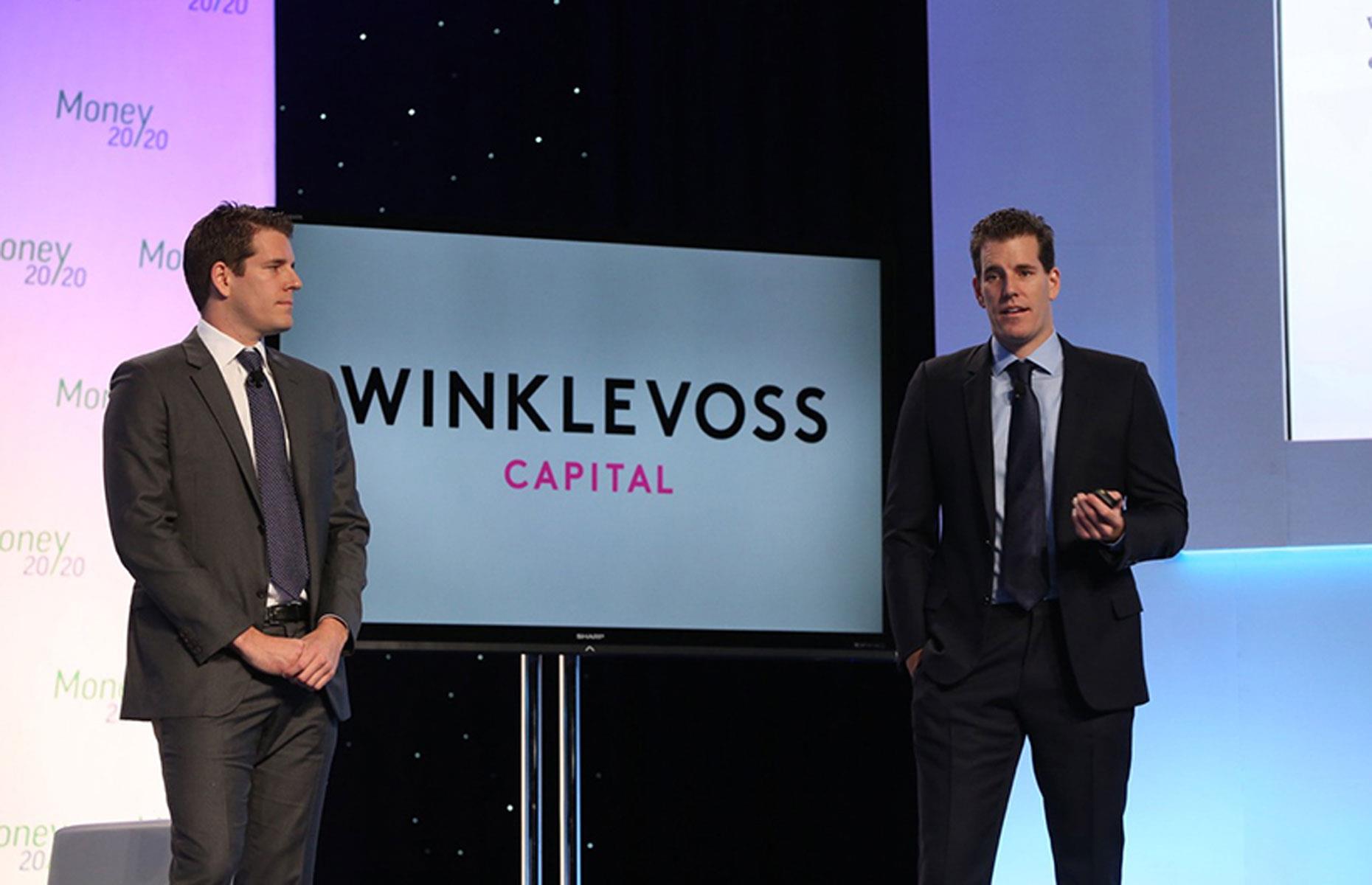
When Meta (then Facebook) went public in May 2012, that modest stock tranche had ballooned to an estimated value of over $300 million. Instead of retiring to private estates, the twins used this liquidity to establish Winklevoss Capital, their family office dedicated to angel investing.
The $11 Million Bitcoin Gamble That Changed Everything
In mid-2012, during a vacation in Ibiza, an angel investor introduced Cameron and Tyler to Bitcoin. At a time when institutional investors dismissed digital assets as play money for illicit dark-web marketplaces, the twins recognized a mathematical scarcity model that mirrored digital gold.
In 2013, they publicly disclosed that they had invested roughly $11 million of their settlement money into Bitcoin, purchasing approximately 1% of all circulating supply at an average cost of roughly $10 per coin. That single thesis yielded roughly 100,000 to 120,000 Bitcoins. As the asset surged past $1,000, then $10,000, and eventually over $90,000 in subsequent market cycles, that early $11 million outlay turned into a multi-billion-dollar bedrock.
From Flashy Politics to Billionaire Status – The Full Winklevoss Net Worth Journey
The twins have never shied away from the public eye. Over the past decade, their identity evolved from collegiate athletes competing in the 2008 Beijing Olympics to tech executives, rock band frontmen (Mars Junction), and outspoken political players.
In recent years, the intersection of finance and politics has become central to their wealth preservation strategy. Faced with an aggressive regulatory clampdown on the crypto industry by agencies like the Securities and Exchange Commission (SEC), the Winklevoss twins transformed into high-profile political powerbrokers.
During the 2024 election cycle, Cameron and Tyler each pledged $1 million in Bitcoin to Donald Trump's presidential campaign, while funneling tens of millions into crypto-focused super PACs, including Fairshake. Their flashy political appearances, private fundraising dinners, and combative commentary on X (formerly Twitter) positioned them at the center of Washington's digital asset debate. For the brothers, high-stakes political maneuvering is not a hobby—it is a strategic initiative designed to protect their financial institutions, secure favorable regulatory frameworks, and propel their business ventures forward.
Building Gemini: From Startup to Regulated Exchange
Video: The Controversial Twins Who Own All The Bitcoin

Holding spot Bitcoin was only the first phase of their master plan. In 2014, the twins founded Gemini, a digital currency exchange and custodian engineered specifically for institutional and compliance-minded retail clients.
Headquartered in New York, Gemini was one of the first exchanges to secure a coveted BitLicense from the New York State Department of Financial Services (NYDFS). In late 2021, Gemini completed a $400 million funding round led by Morgan Creek Digital, valuing the exchange at $7.1 billion and catapulting both brothers onto the Forbes 400 list.
While Gemini faced intense turbulence following the 2022 crypto winter—including the collapse of its Gemini Earn lending partner, Genesis Global Capital—the exchange worked through bankruptcy proceedings to return over $2 billion in crypto to Earn customers in 2024. Despite legal hurdles and regulatory fines, Gemini remains one of the premier custody and trading platforms in North America.
Tyler and Cameron Winklevoss Net Worth Breakdown
Because the brothers keep their individual assets almost perfectly aligned, financial analysts routinely calculate their net worth identically. While exact figures shift alongside the price of volatile digital assets, their wealth profile generally breaks down into three core pillars:
1. Liquid Cryptocurrency Reserves
The vast majority of the twins' fortune resides in cryptocurrency. In addition to their legendary Bitcoin treasury, they hold significant stakes in Ethereum (ETH), Solana (SOL), and various early-stage Web3 protocols. At current market valuations, their liquid digital asset reserves account for the largest share of their individual $1.5 billion to $3 billion valuations.
2. Gemini Equity and Infrastructure
While private secondary market valuations for crypto exchanges contracted significantly after the 2021 peak, Gemini retains substantial value due to its regulated custody business, institutional trading desks, and international operations. The twins collectively own an estimated 75% of Gemini.
3. Winklevoss Capital and Real Estate
Through their family office, the brothers have invested in dozens of successful early-stage startups outside of pure crypto, including companies like Filecoin, Stacks, and AngelList. Their personal balance sheets are further buttressed by prime real estate holdings, including a modern mansion in the Hollywood Hills acquired for $18 million.
Key Financial Lessons from the Winklevoss Playbook
The trajectory of Cameron and Tyler Winklevoss offers clear takeaways for modern investors and entrepreneurs:
- Prioritize Equity Over Cash: Taking Facebook equity over an all-cash settlement provided the leverage needed to fund their subsequent ventures.
- Embrace Asymmetric Bets: Allocating $11 million to Bitcoin in 2012 carried downside risk, but the upside potential was mathematically exponential.
- Regulatory Positioning Pays: Building Gemini around compliance rather than offshore shortcuts allowed the exchange to withstand aggressive domestic enforcement actions.
- Protect Capital Actively: Their aggressive push into political campaign financing demonstrates an understanding that policy and regulation dictate long-term wealth preservation.
From an Ivy League dormitory to Olympic lanes, courtroom dramas, Bitcoin mining rigs, and the corridors of political power, the Winklevoss twins have established an enduring financial legacy that proves early conviction—backed by strategic risk—can reshape an entire financial paradigm.