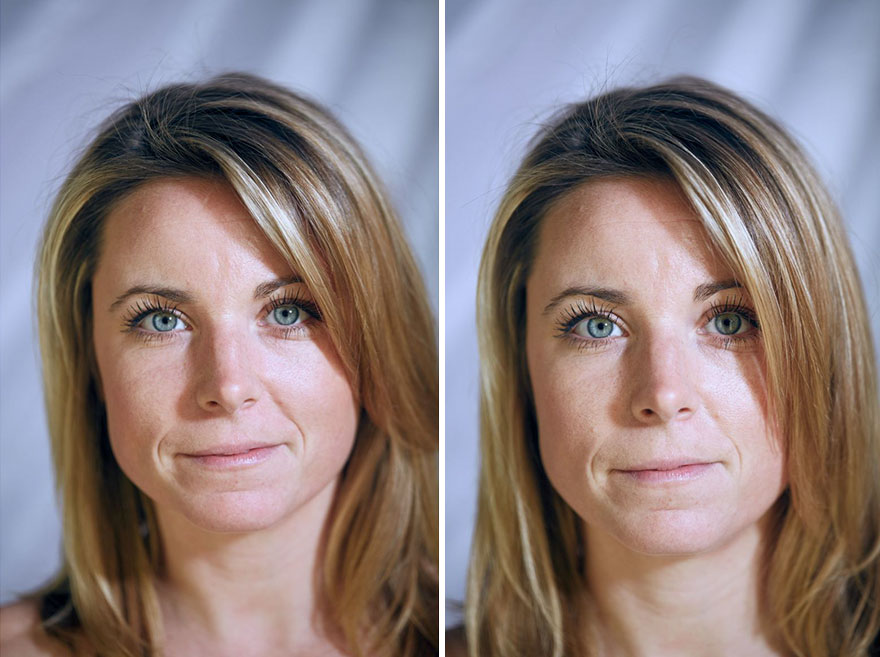
Women Dressed/Undressed: Art, Power, Agency
Throughout visual culture and social history, the representation of women dressed/undressed has served as a mirror for societal values, power dynamics, and shifting ideals of beauty. From classical sculpture and Renaissance portraiture to haute couture runways and contemporary digital media, the female body has rarely existed in a neutral state. Whether shrouded in elaborate textiles or laid bare before the viewer, the decision to conceal or reveal carries profound philosophical and political significance.

Far from being a simple binary between modesty and sensuality, the boundary between clothed and unclothed spaces reveals who holds the power to look, who is being looked at, and what social expectations govern bodily autonomy.
The Evolution of Women Dressed/Undressed in Visual Art
To understand modern perceptions of the female form, one must examine the traditions of Western art history. For centuries, the depiction of women moved between two primary modes: the heavily adorned matriarch or aristocrat, and the idealized mythological nude.
In his seminal 1972 text Ways of Seeing, critic John Berger drew a critical distinction between being naked and being nude. To be naked, Berger argued, is simply to be without clothes—an authentic, vulnerable human state. To be nude, by contrast, is to be transformed into an aesthetic object, arranged for the pleasure and contemplation of a spectator. In classical and academic painting, unclothed women were rarely depicted as autonomous agents; instead, they were framed as allegories—Venus, Eve, or classical nymphs—sanctioning their exposure through the respectable veneer of mythology.
Conversely, when women were depicted fully dressed in formal portraiture, their clothing served as an external ledger of family wealth, dynastic legitimacy, and social rank. The heavy brocades, stiff collars, and jewel-encrusted bodices of the Tudor and Baroque eras were not designed for individual comfort. They were physical manifestations of patriarchal status and social discipline.
Fashion Theory: The Dialectic of Concealment and Exposure
Fashion theory posits that clothing does not merely cover the body; it actively constructs our perception of it. Anthropologist Ted Polhemus described the human body as a canvas upon which culture paints its anxieties and desires. Within this framework, being dressed and being undressed exist in perpetual tension.
Historical fashion has frequently simulated the undressed body while simultaneously encasing it in layers of fabric and structural scaffolding:
- The Corset and Crinoline: Victorian dress simultaneously concealed every inch of lower-body skin while aggressively reshaping the female silhouette, emphasizing the waist and bosom to heighten secondary sexual characteristics.
- The Décolletage: In the 18th century, high court fashion favored dramatic exposure of the neck and chest, paired with vast panniers that completely obscured the hips and legs, balancing visible flesh against monumental architecture.
- Trompe l’œil and Translucent Textiles: Designers throughout the 20th and 21st centuries, from Madame Grès to Jean Paul Gaultier, have deployed pleats, sheer silks, and body-mapping prints to create the optical illusion of nudity beneath formal drapery.
By oscillating between what is hidden and what is displayed, fashion continually renegotiates the boundaries of public decorum and erotic curiosity.
Reclaiming the Gaze: From Passive Muse to Active Subject

For generations, the visual conventions governing how women were presented—whether robed in silk or exposed to the eye—were dictated by a predominantly male class of painters, patrons, and arbiters of taste. However, the late 19th and 20th centuries saw women artists systematically challenge these conventions.
Artists such as Suzanne Valadon, Paula Modersohn-Becker, and Alice Neel broke with academic tradition by painting women without classical idealization. In their work, the unclothed body was not a smooth, passive landscape meant for visual consumption; it was flesh marked by age, labor, pregnancy, and interior psychological life.
In contemporary practice, painters like Jenny Saville have pushed this inquiry further, presenting monumental canvases of female flesh that resist easy categorization. Saville's subjects are neither classically nude nor modestly clothed; they are visceral, monumental, and indifferent to decorative expectation. In doing so, these artists transformed the visual narrative from an inquiry into passive aesthetics to an assertion of physical existence.
The Modern 'Naked Dress' and Bodily Autonomy
In contemporary fashion and red-carpet culture, the dynamic between dressed and undressed states has entered a new phase, epitomized by the ubiquity of the so-called "naked dress." Constructed from micro-mesh, gossamer lace, and strategic crystal embellishments, these garments challenge traditional notions of formal wear.
While critics sometimes dismiss these designs as mere shock value or submission to spectacle, many cultural theorists interpret them as a deliberate exercise in sartorial control. Wearing a garment that deliberately plays with sheer exposure can function as a reclamation of public space, allowing the wearer to command attention on their own terms rather than conforming to rigid doctrines of historical modesty.
The contemporary discourse surrounding clothing rests increasingly on agency: the right of women to choose their level of coverage—whether fully modest, provocatively sheer, or entirely utilitarian—without facing moral judgment, institutional censorship, or assumptions regarding their character.
The Cultural Significance of How Bodies Are Framed
The evolving dialogue around female presentation confirms that clothing is never just fabric, and exposure is never merely the absence of it. Every culture establishes boundaries regarding what may be seen in public and what must remain private, using garments as the primary tool to enforce those boundaries.
Understanding the interplay between covered and uncovered forms requires recognizing that the meaning of the body is never fixed. It changes depending on who holds the brush, who designs the silhouette, and who makes the decision to step into the public square. When women navigate these choices, they are engaging in a centuries-old dialogue about power, perception, and self-definition.