Zillow Home Worth Calculator: Accuracy Guide
When you decide to sell your home, refinance your mortgage, or simply satisfy your curiosity about your net worth, the first place you likely look is online. For millions of homeowners, that search leads directly to the Zillow home worth calculator, universally known as the Zestimate. But how reliable is this automated valuation model, and what factors actually influence the number you see on your screen?
Understanding how online home valuation tools work can help you gauge your financial standing and prepare you for the real estate market. This guide breaks down what the Zillow home worth calculator does well, where it falls short, and how you can get a more accurate picture of your property's true market value.
How the Zillow Home Worth Calculator Works
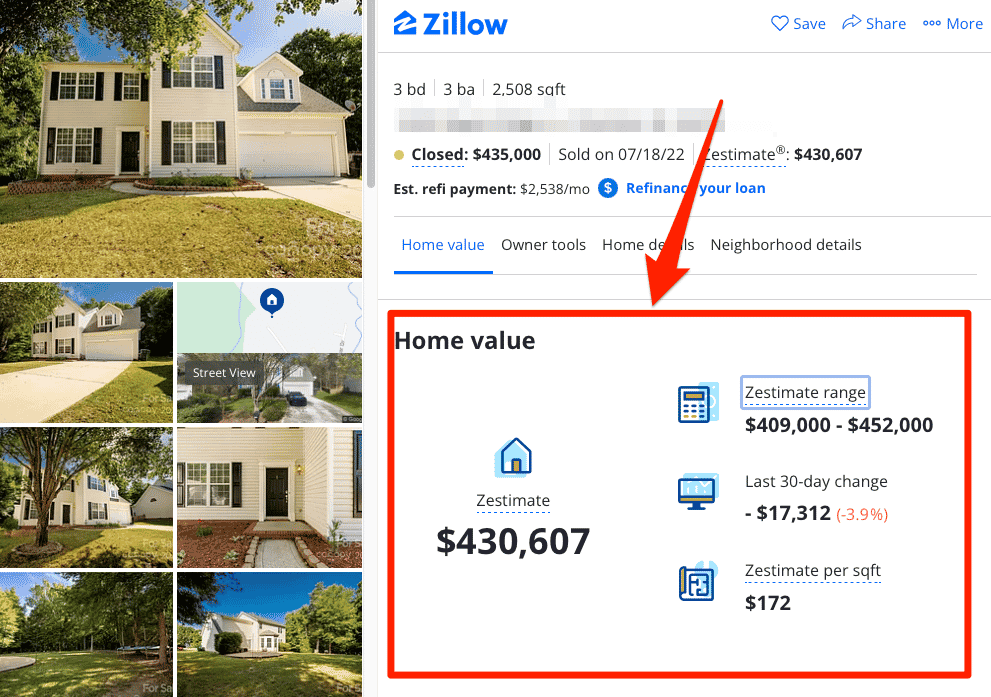
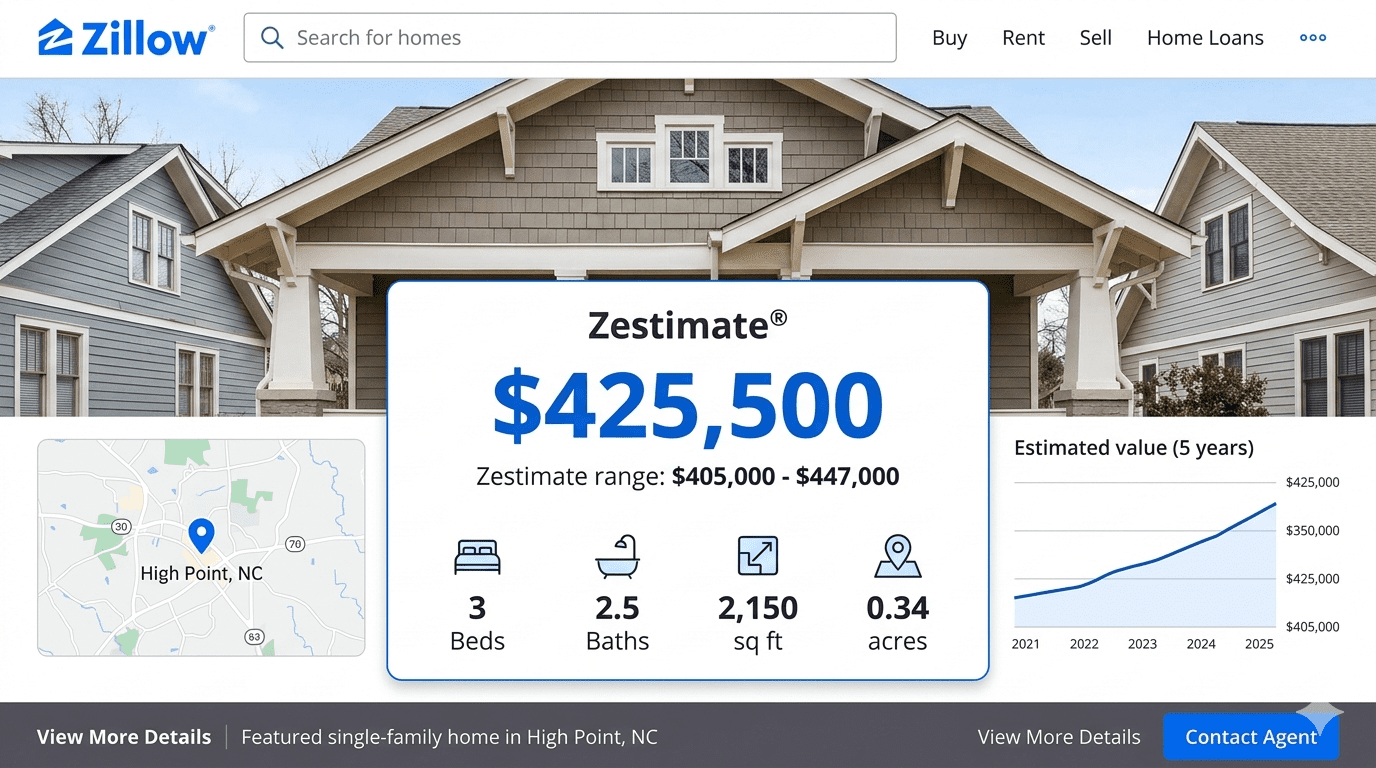
The Zestimate is not an official appraisal. Instead, it is a computer-generated estimate of a home's market value based on public and user-submitted data. Zillow utilizes a proprietary algorithm that constantly analyzes millions of data points to calculate property values in real time.
The system relies on several core inputs to generate its estimate:
- Public Records: Tax assessments, county deeds, prior sales history, and property tax records.
- Property Details: Square footage, lot size, number of bedrooms, bathrooms, and the specific property type (single-family, condo, townhouse).
- Market Trends: Local real estate market dynamics, recent comparable sales (comps) in the surrounding neighborhood, and overall economic shifts.
- User Data: Information updated directly by homeowners through Zillow's owner dashboard, such as recent remodeling projects or interior upgrades.
Because the algorithm updates continuously as new data enters the system, a home's Zestimate can fluctuate from week to week based on shifting neighborhood trends.
Understanding Zillow Zestimate Accuracy
While the tool is incredibly popular, its accuracy varies wildly depending on your geographic location and the availability of local data. Zillow publishes its own accuracy data, tracking the median error rate for both on-market and off-market homes nationwide.
On-Market vs. Off-Market Accuracy
Homes that are actively listed for sale generally feature much more accurate Zestimates. When a home is on the market, the algorithm receives fresh, detailed information—such as professional interior photos, precise room counts, and aggressive pricing feedback—that helps fine-tune the valuation.
Video: How Accurate is Zillow?
Conversely, off-market homes have a higher error rate. If you haven't listed your home or updated your profile in years, the calculator relies strictly on historical tax records and broad neighborhood trends, which may miss crucial interior updates or structural issues.
Geographic Disparities
Accuracy also depends heavily on where you live:
- Urban and Suburban Areas: Cities and dense suburbs typically have high Zillow accuracy. Because homes are similar in style and sell frequently, the algorithm has plenty of recent comparable sales to analyze.
- Rural Areas: In rural markets, properties are often spread far apart, custom-built, or sit on large plots of land. With fewer comparable sales nearby, the algorithm struggles to establish a baseline, leading to wider margins of error.
Limitations of Automated Home Valuations
Automated valuation models (AVMs) like the Zillow home worth calculator are designed for speed and scale, not precision. They come with inherent limitations that every homeowner should keep in mind:
- They miss interior condition: An algorithm cannot see that your kitchen features outdated 1980s laminate countertops, nor can it spot a newly remodeled master suite with luxury finishes unless you manually update the details.
- They ignore deferred maintenance: If a roof is leaking, the foundation has cracks, or the HVAC system is failing, the Zestimate will not reflect these costly detriments to value.
- They cannot measure curb appeal or view: A home backing up to a busy highway will be valued similarly by an algorithm to a home on a quiet cul-de-sac in the same subdivision, even though buyers will pay a significant premium for the quiet location.
How to Find Your Home's True Value
If you need an accurate property valuation—whether for selling your home, applying for a home equity line of credit (HELOC), or contesting your property taxes—you should not rely solely on the Zillow home worth calculator. Instead, use a multi-step approach to cross-reference your value.
- Claim your Zillow profile: If you use Zillow, log in and claim your property. Update facts about recent renovations, finished basements, or upgraded appliances to give the algorithm better data.
- Analyze recent comparable sales: Look at recently sold homes within a half-mile radius of your property that match your square footage, bedroom count, and age. This mirrors how a real estate agent prices a home.
- Consult a local real estate agent: Real estate professionals live in the local market every day. Most agents will provide a free Comparative Market Analysis (CMA) that accounts for neighborhood nuances, buyer demand, and property condition.
- Hire a certified appraiser: If you need a legally binding valuation for a mortgage or legal proceeding, a licensed appraiser will conduct an in-person physical inspection of your home's interior and exterior to determine its precise fair market value.
Conclusion
The Zillow home worth calculator is a fantastic starting point for gauging general real estate trends and getting a ballpark figure for your property. However, it should be treated as a broad estimate rather than a definitive appraisal. By combining the convenience of the Zestimate with local market research and professional expertise, you can confidently determine what your home is truly worth in today's market.